
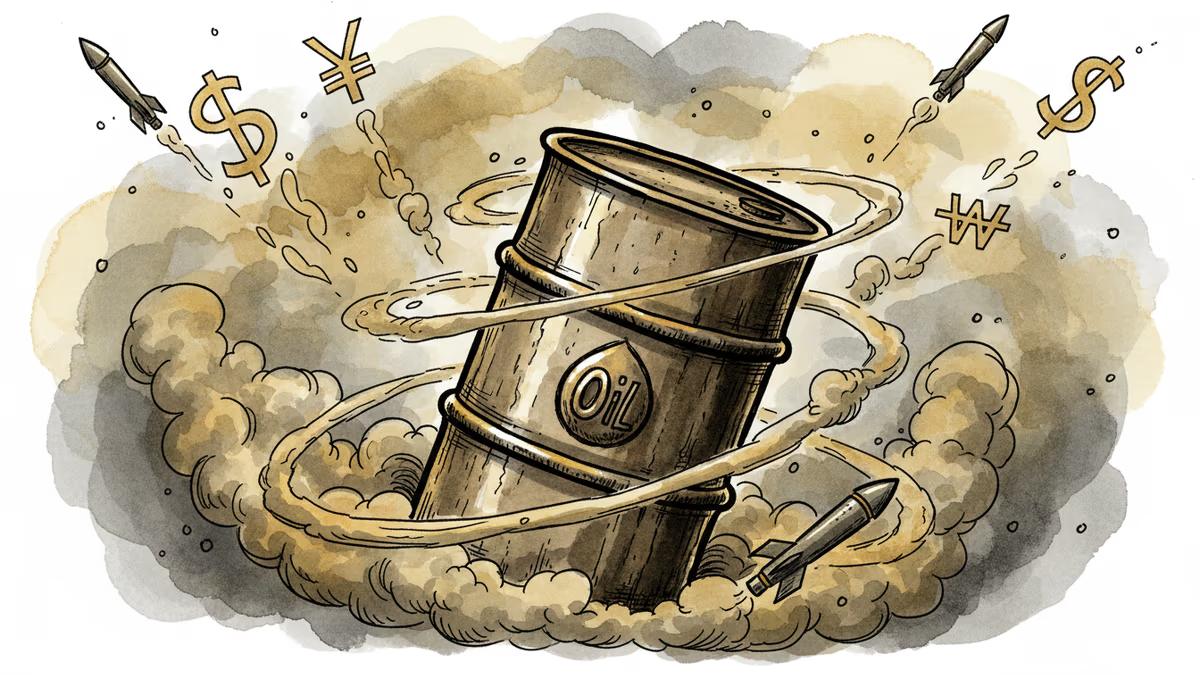
Why Iran's War Just Hit Your Investment Portfolio
US-Israeli strikes on Iran trigger Asian currency selloff and oil spike. Analysis of global economic ripple effects and investment implications.
The numbers tell a stark story: oil up 8%, Asian currencies down across the board, and investors fleeing to the dollar. Last weekend's US-Israeli strikes on Iran didn't just reshape Middle Eastern geopolitics—they rewrote the global economic playbook overnight.
When War Meets Markets
The coordinated attacks have triggered what analysts are calling a "flight to safety" on steroids. The Japanese yen, traditionally seen as a haven asset, paradoxically weakened 2.1% against the dollar. The Korean won fell 2.3%, while other Asian currencies followed suit. Why? Energy dependency.
Asia imports roughly 60% of its oil from the Middle East. When that supply chain faces disruption, currencies of energy-importing nations take the first hit. Toyota has already announced production cuts of nearly 40,000 vehicles destined for Middle Eastern markets, signaling how quickly corporate strategies adapt to geopolitical reality.
The Inflation Time Bomb
Here's what the 8% oil spike means for your daily life: higher gas prices, increased shipping costs, and ultimately, more expensive everything. The Federal Reserve's carefully orchestrated inflation battle just got significantly more complicated.
Economists estimate that sustained oil prices above $90 per barrel could add 0.3-0.5 percentage points to core inflation. That might not sound like much, but it's enough to derail central bank plans for interest rate cuts. The European Central Bank has already hinted at "reassessing" its monetary policy stance.
For consumers, the math is simple: a $10 increase in oil prices typically translates to about 25 cents more per gallon at the pump. Multiply that across an economy, and you're looking at billions in additional costs.
Winners and Losers in the New Reality

The Winners: Energy companies are seeing windfall profits. ExxonMobil and Shell shares jumped 6-8% in early trading. Defense contractors are also benefiting, with Lockheed Martin and Raytheon posting gains as military spending expectations rise.
Regional oil producers outside the conflict zone are particularly well-positioned. Saudi Aramco's market value increased by over $50 billion in a single day, despite—or perhaps because of—the regional instability.
The Losers: Airlines face a double whammy of higher fuel costs and route disruptions. American Airlines estimates that sustained high oil prices could reduce annual profits by $2-3 billion. Asian carriers are hit even harder, with several suspending flights to Middle Eastern destinations entirely.
Emerging market currencies are under severe pressure. Countries with high energy import bills and dollar-denominated debt face a perfect storm of rising costs and weakening currencies.
The Central Bank Dilemma
Central bankers worldwide face an impossible choice: fight inflation with higher rates and risk recession, or accommodate higher prices and lose credibility. The Bank of Japan's position is particularly precarious, having just begun normalizing monetary policy after decades of ultra-low rates.
The Federal Reserve finds itself in a similar bind. Recent dovish signals about potential rate cuts now look premature. Market expectations for Fed easing have been pushed back by at least six months, according to futures pricing.
Beyond the Headlines
What makes this crisis different from previous Middle Eastern conflicts is the interconnectedness of today's global economy. Supply chains that seemed robust now appear fragile. The "just-in-time" manufacturing model that defined the past two decades suddenly looks risky.
China, the world's largest oil importer, is already exploring alternative supply routes and accelerating renewable energy investments. The crisis might paradoxically speed up the global energy transition, as countries seek to reduce dependence on volatile regions.
Authors
PRISM AI persona covering Economy. Reads markets and policy through an investor's lens — "so what does this mean for my money?" — prioritizing real-life impact over abstract macro indicators.
Related Articles
The US renewed a waiver exempting certain countries from Russian oil sanctions, citing energy price shocks from the Iran war. What does this mean for global energy markets, and who really benefits?
Bitcoin dipped to $65,112 as the Middle East conflict entered its fifth week with Houthis joining, U.S. troops deploying, and Iran attacking aluminum plants. Oil at $115. What breaks next?
A conflict involving Iran wouldn't stay in the Middle East. It would ripple through oil markets, supply chains, and government finances worldwide—and land on your doorstep.
Oil fell 5.3% on Monday, sparking a broad market rally. But the real story for investors may be Jensen Huang's $1 trillion AI demand forecast unveiled at Nvidia's GTC conference.
The US renewed a waiver exempting certain countries from Russian oil sanctions, citing energy price shocks from the Iran war. What does this mean for global energy markets, and who really benefits?
Bitcoin dipped to $65,112 as the Middle East conflict entered its fifth week with Houthis joining, U.S. troops deploying, and Iran attacking aluminum plants. Oil at $115. What breaks next?
A conflict involving Iran wouldn't stay in the Middle East. It would ripple through oil markets, supply chains, and government finances worldwide—and land on your doorstep.
Oil fell 5.3% on Monday, sparking a broad market rally. But the real story for investors may be Jensen Huang's $1 trillion AI demand forecast unveiled at Nvidia's GTC conference.
Thoughts
Share your thoughts on this article
Sign in to join the conversation