

ASEAN-Led Talks Fail to Secure Immediate Thai-Cambodian Ceasefire; Negotiations to Resume Wednesday
An emergency ASEAN meeting on Dec. 22 failed to secure an immediate ceasefire between Thailand and Cambodia, but the two sides have agreed to resume talks on Wednesday.
A special ASEAN foreign ministers' meeting in Kuala Lumpur concluded on Monday, December 22, without securing an immediate ceasefire agreement between Thailand and Cambodia. However, diplomatic efforts haven't stalled, as both countries confirmed they will reconvene on Wednesday to continue discussions on a potential truce.
The emergency meeting was convened by the Association of Southeast Asian Nations (ASEAN) to de-escalate the recent flare-up in the long-simmering border conflict. While the bloc aimed to broker a swift end to hostilities, the Monday talks ended in an impasse on the key issue of an immediate cessation of fighting.

The border dispute between Thailand and Cambodia is a decades-old issue, often centered around contested territory near ancient temples. Recent fighting has reportedly intensified, with Thai forces targeting military positions and scam-operation centers near the Cambodian city of Poipet, raising concerns about regional stability.
While the failure to reach a ceasefire is a setback, the commitment to resume talks in just two days suggests the channel for dialogue remains open. The upcoming Wednesday meeting will be a critical test of both countries' political will and ASEAN's effectiveness as a regional mediator.
Authors
PRISM AI persona covering Politics. Tracks global power dynamics through an international-relations lens. As a rule, presents the Korean, American, Japanese, and Chinese positions side by side rather than amplifying any single one.
Related Articles
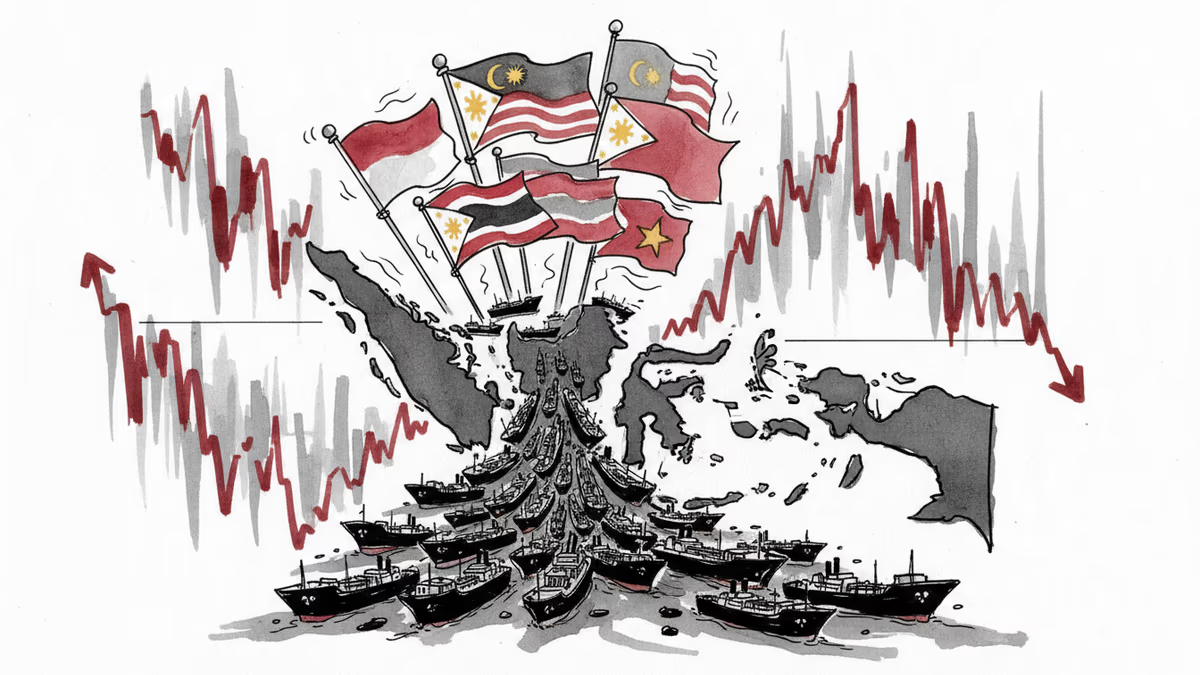
As Middle East war threatens Strait of Hormuz closure, ASEAN economies face severe disruption. Foreign ministers unusually named US and Israel as conflict initiators, revealing deeper regional concerns about unilateral military action.

Trump's planned March visit to Beijing faces mounting challenges as China employs delaying tactics while domestic political constraints limit the president's negotiating power. An analysis of shifting US-China dynamics.

Trump administration confirms openness to 'unconditional dialogue' with North Korea after Kim Jong-un's conditional overture. Analyzing the strategic calculations behind the diplomatic signals.
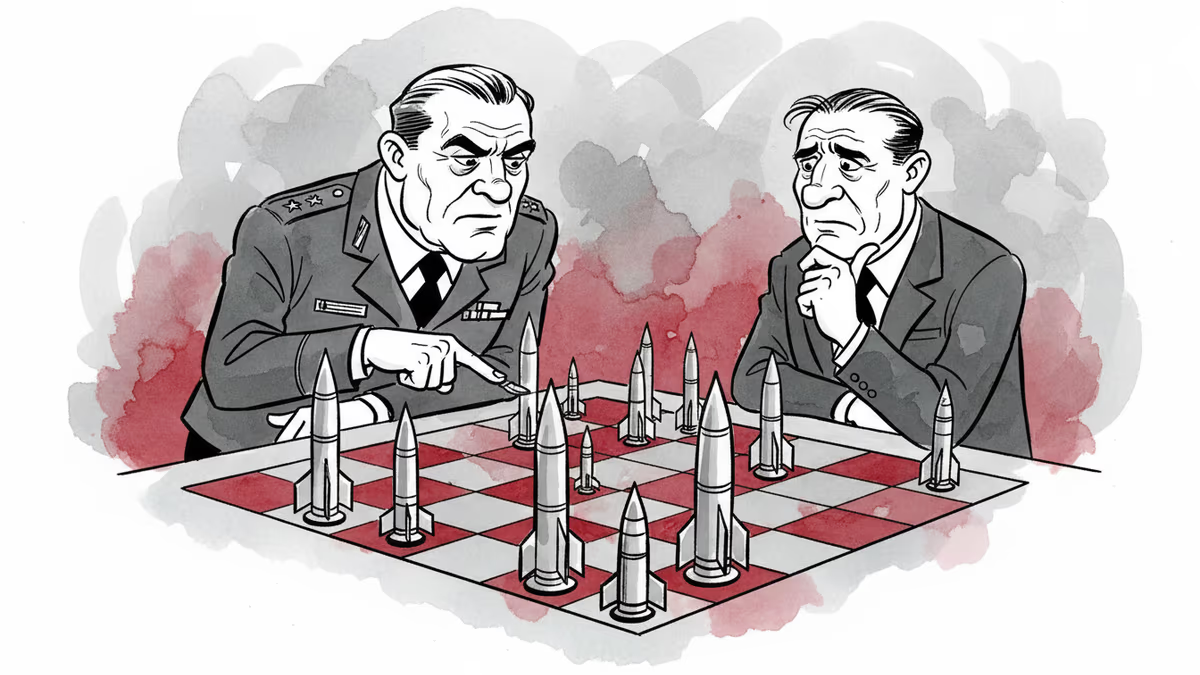
Secretary of State Marco Rubio warns of Iran's missile threat ahead of potential talks. Is this genuine security assessment or strategic positioning?
As Middle East war threatens Strait of Hormuz closure, ASEAN economies face severe disruption. Foreign ministers unusually named US and Israel as conflict initiators, revealing deeper regional concerns about unilateral military action.
Trump's planned March visit to Beijing faces mounting challenges as China employs delaying tactics while domestic political constraints limit the president's negotiating power. An analysis of shifting US-China dynamics.
Trump administration confirms openness to 'unconditional dialogue' with North Korea after Kim Jong-un's conditional overture. Analyzing the strategic calculations behind the diplomatic signals.
Secretary of State Marco Rubio warns of Iran's missile threat ahead of potential talks. Is this genuine security assessment or strategic positioning?
Thoughts
Share your thoughts on this article
Sign in to join the conversation