
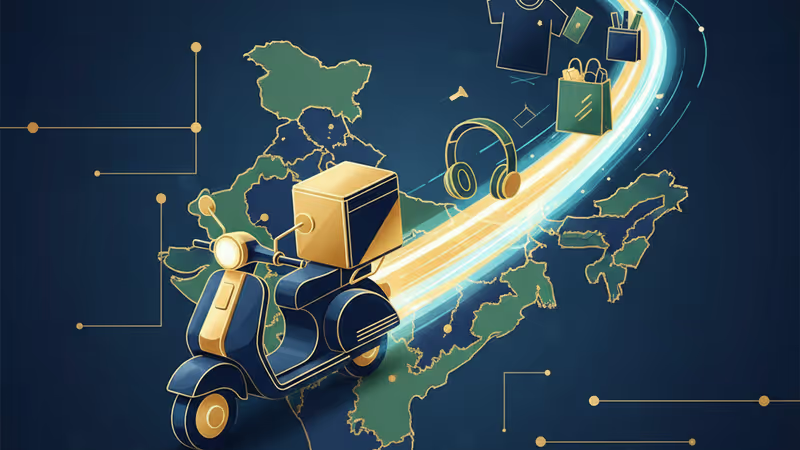
India’s Q-Commerce War Escapes the Grocery Aisle
India's quick commerce sector is expanding beyond groceries to fashion, electronics, and services. But as competition soars, market consolidation is on the horizon.
India's quick commerce sector is rapidly expanding beyond its grocery roots, creating a new battleground for startups vying to deliver everything from fashion to household help in under an hour. For consumers like Ayanangshu Lahiri, a musician in Bengaluru, this meant getting a new outfit from startup Slikk just hours before a show. It's a sign of a market where instant gratification is becoming the baseline expectation.
From Avocados to Apparel
As Indian consumers grow accustomed to on-demand services, a new wave of startups is pushing the boundaries of the q-commerce model. Companies like Snabbit are moving into higher-margin categories like fashion and even facilitating services like housework. This diversification strategy is a direct response to a maturing consumer base that now expects the same level of speed and convenience for a wider range of needs.
Consolidation Looms as Competition Heats Up
While the market is expanding, it's also becoming more crowded and expensive. The quick commerce model is notoriously capital-intensive, requiring significant investment in logistics, technology, and marketing to capture market share. This high-stakes environment is fueling speculation that a market shakeout is inevitable.
This expansion is more than just a revenue play; it's a strategic move to own the customer relationship. By integrating high-frequency purchases with higher-margin goods and services, the ultimate goal is to create a 'super app' that locks users into a single ecosystem, capturing invaluable data and controlling the entire last-mile economy.
This content is AI-generated based on source articles. While we strive for accuracy, errors may occur. We recommend verifying with the original source.
Related Articles

South Korea's Asung Daiso is countering the rise of Chinese e-commerce giants like Temu and AliExpress by investing in large-format physical stores, betting on in-store experience to win over price-sensitive consumers.

China's $30B luxury resale boom is more than a trend; it's a deep economic reset. Our analysis breaks down the impact on LVMH, Kering, and investors.

Hyperliquid, a DEX with $300B+ volume, was built without VC funding. Our analysis explores how this anti-hype model challenges Silicon Valley and redefines DeFi.

The Fed's 'higher for longer' rate stance is a structural reset for tech. PRISM analyzes the end of the ZIRP era and its impact on valuations and strategy.