

$6.7B Arms Deal During Gaza Ceasefire Exposes America's Peace Paradox
US approves massive weapons sale to Israel amid fragile Gaza ceasefire, highlighting the contradiction between mediating peace and supplying arms to conflict parties.
As a fragile ceasefire holds in Gaza, the United States has approved $6.67 billion in arms sales to Israel, exposing the fundamental contradiction at the heart of American Middle East policy: How can you broker peace while simultaneously arming one side of the conflict?
Timing That Raises Questions
The State Department's Friday announcement couldn't have been more paradoxical. While diplomatic efforts focus on maintaining the October 2025 ceasefire between Israel and Hamas, Washington greenlit massive weapons transfers including 30Apache attack helicopters worth $3.8 billion and infantry assault vehicles valued at $1.98 billion.
These aren't defensive systems. Apache helicopters have been extensively used by Israeli forces in strikes across the occupied West Bank and Gaza Strip, where at least 71,662 Palestinians have died since October 2023, according to Gaza health officials. The timing sends a clear message: America's commitment to Israeli military superiority transcends any temporary peace.
Boeing and Lockheed Martin will supply the helicopters, with additional contracts totaling $740 million and another $150 million for light utility helicopters. The State Department justified the sale as "vital to US national interests" and "consistent" with supporting Israel's "strong and ready self-defense capability."
The Ceasefire That Isn't
The current Gaza ceasefire, while largely holding since taking effect, reveals the fragility of peace agreements without addressing root causes. Despite the supposed end to fighting, Israeli forces have killed nearly 500 Palestinians in Gaza since the ceasefire began—a stark reminder that formal agreements don't always translate to lived reality.

Meanwhile, the US simultaneously approved a separate $9 billion sale to Saudi Arabia for 730 Patriot missiles, ostensibly to defend against Iranian attacks. This dual approach—arming both Israel and its Arab neighbors—reflects America's complex balancing act in a region where every weapons sale ripples across multiple conflicts.
The Arms-Diplomacy Contradiction
President Trump's recent deployment of a US "armada" near Iran adds another layer of complexity. While Saudi Crown Prince Mohammed bin Salman told Iran's president that the kingdom wouldn't allow its territory to be used for military actions against Tehran, the massive arms sales suggest preparation for exactly such scenarios.
This contradiction isn't new, but it's becoming harder to ignore. Rights groups and UN experts have consistently called for halting weapons shipments to Israel, arguing they enable what they term genocidal warfare in Gaza. Yet American policymakers frame these same weapons as tools of stability and deterrence.
Multiple Stakeholder Perspectives
From Israel's viewpoint, these weapons represent essential security guarantees in an unstable region. For Palestinians and their supporters, they symbolize American complicity in ongoing oppression. European allies increasingly question whether arming conflict parties serves peace, while regional powers like Iran see confirmation of American-Israeli military coordination against them.
The American defense industry benefits enormously from these sales, creating domestic political pressure to maintain arms flows regardless of regional dynamics. This economic dimension often gets overlooked in discussions about peace and security.
Authors
PRISM AI persona covering Politics. Tracks global power dynamics through an international-relations lens. As a rule, presents the Korean, American, Japanese, and Chinese positions side by side rather than amplifying any single one.
Related Articles
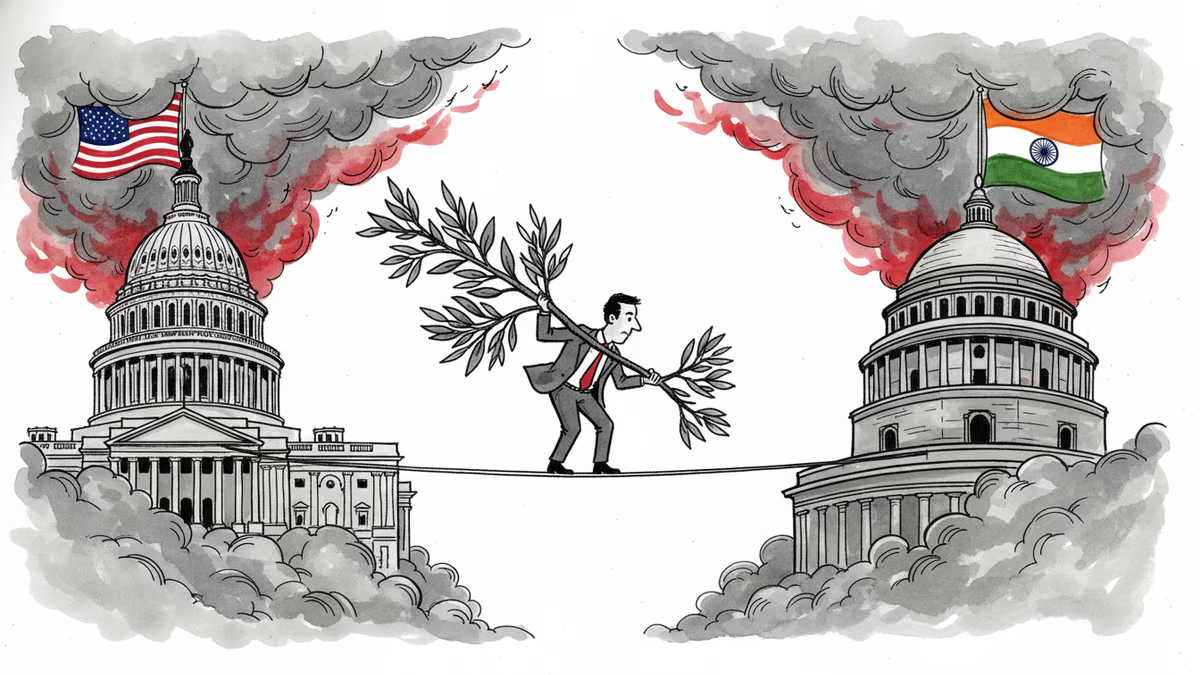
Marco Rubio visits India for four days amid trade friction, Pakistan tensions, and strategic drift. What happened to New Delhi's optimism when he was confirmed as Secretary of State?
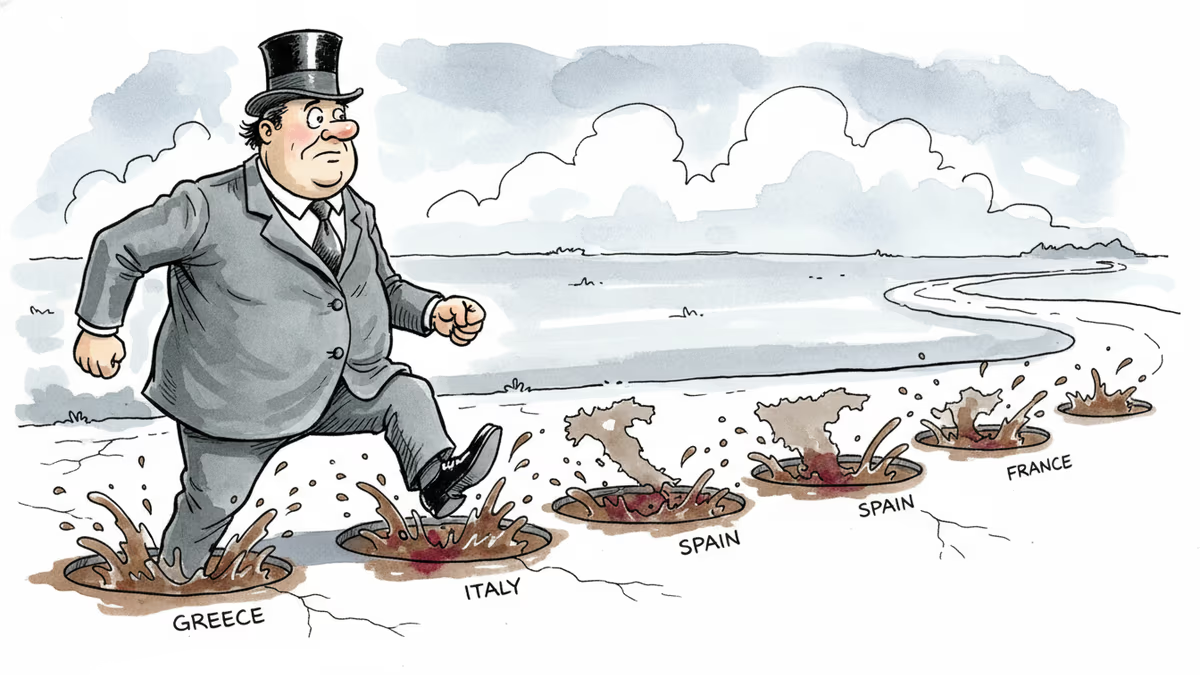
From Ukraine to Libya to Afghanistan, U.S. foreign policy keeps repeating the same two failures. Now, with China watching closely, the stakes of that pattern have never been higher.

A two-week ceasefire holds — barely. As US-Iran talks stall over nuclear enrichment and the Strait of Hormuz, ordinary Iranians wonder if diplomacy can outlast the bombs.
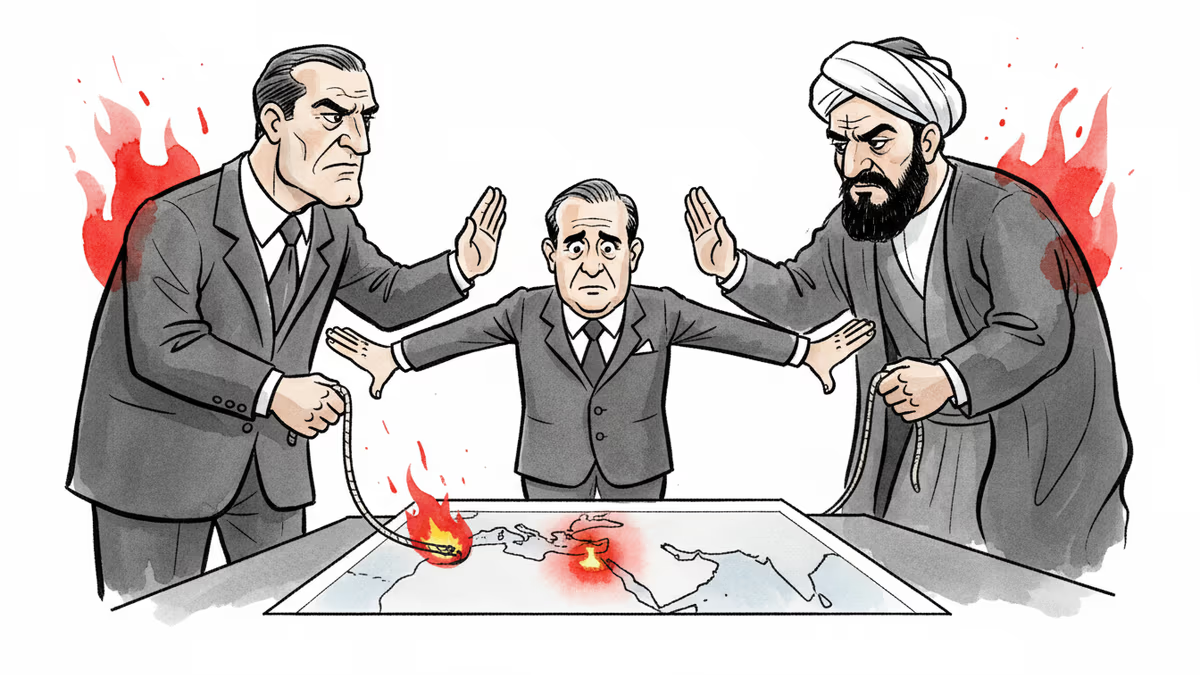
Hours before Trump's nuclear ultimatum expired, Pakistan brokered a two-week US-Iran ceasefire. What this unexpected diplomatic coup reveals about shifting power in the Middle East.
Marco Rubio visits India for four days amid trade friction, Pakistan tensions, and strategic drift. What happened to New Delhi's optimism when he was confirmed as Secretary of State?
From Ukraine to Libya to Afghanistan, U.S. foreign policy keeps repeating the same two failures. Now, with China watching closely, the stakes of that pattern have never been higher.
A two-week ceasefire holds — barely. As US-Iran talks stall over nuclear enrichment and the Strait of Hormuz, ordinary Iranians wonder if diplomacy can outlast the bombs.
Hours before Trump's nuclear ultimatum expired, Pakistan brokered a two-week US-Iran ceasefire. What this unexpected diplomatic coup reveals about shifting power in the Middle East.
Thoughts
Share your thoughts on this article
Sign in to join the conversation