
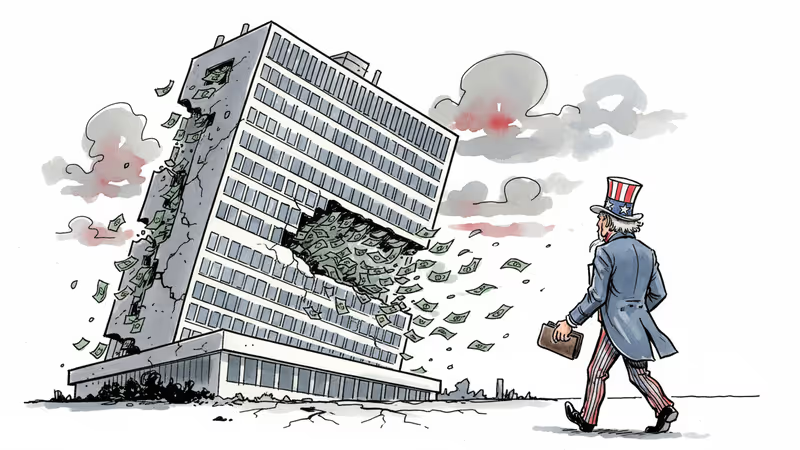
UN Faces 'Imminent Financial Collapse' as US Cuts Funding by 88%
UN Secretary-General António Guterres warns of potential bankruptcy by July as member states refuse to pay mandatory contributions, with the US leading the funding withdrawal.
The world's premier international organization could run out of money by July. In an urgent letter to ambassadors from all 193 member states, UN Secretary-General António Guterres warned of "imminent financial collapse" as countries refuse to honor their mandatory contributions.
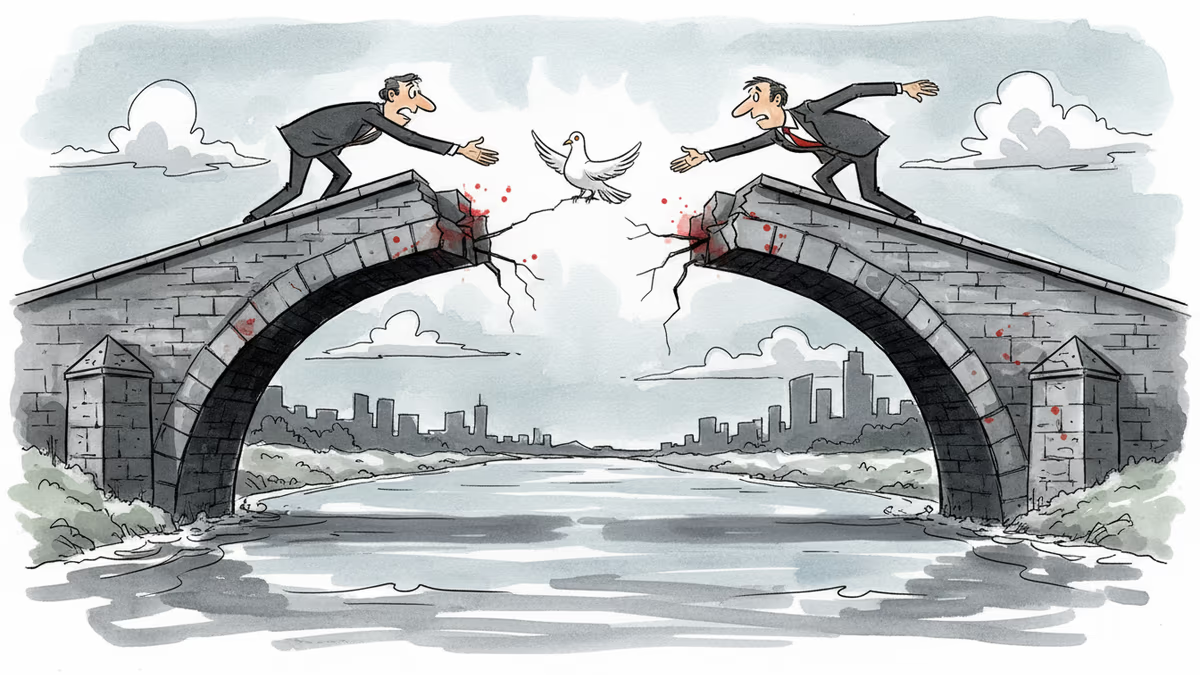
The crisis isn't just about numbers—it's about the fundamental architecture of global governance cracking under financial pressure.
America's Wallet Snaps Shut
The most devastating blow comes from the UN's largest contributor: the United States. President Donald Trump's administration has withdrawn from 31 UN agencies, calling them a "waste of taxpayer dollars" that advance "globalist agendas over US priorities."
The financial impact is staggering. In 2022, the US contributed an estimated $17 billion to UN humanitarian programs. Last December, it pledged just $2 billion—an 88% reduction that left a gaping hole in the organization's budget.
Guterres didn't mince words about the unprecedented nature of this crisis: "Decisions not to honor assessed contributions that finance a significant share of the approved regular budget have now been formally announced." While he didn't name specific countries, the target was clear.
The Structural Trap

The UN faces what Guterres calls a "double blow"—a cruel irony built into its own financial rules. When the organization can't implement its budget, it must return unspent money to member states. But as Guterres pointed out, "We cannot execute budgets with uncollected funds, nor return funds we never received."
Currently, unpaid contributions equal 77% of the total amount owed—a record high that threatens core operations. The secretary-general's message was stark: either all member states pay their obligations in full and on time, or they must "fundamentally overhaul our financial rules to prevent an imminent financial collapse."
Trump's Alternative Vision
The crisis extends beyond mere funding cuts. Trump has floated his Board of Peace as a potential replacement for some UN functions, particularly in overseeing Gaza's regeneration efforts. While he claims it would work "in conjunction with the United Nations," when asked directly if the board might replace the UN, Trump replied: "Well, it might."
This represents more than budget pressure—it's a fundamental challenge to multilateral governance. The US appears to be testing whether international organizations can survive without American financial backing and political support.
The Ripple Effect
The UN's potential collapse would create a governance vacuum precisely when global challenges—from climate change to pandemics—demand coordinated responses. Humanitarian operations, peacekeeping missions, and diplomatic mediation efforts could all face severe disruptions.
For other major powers, the crisis presents both risk and opportunity. Countries like China and the European Union could step into the leadership void, but they'd also inherit the burden of funding international stability.
The answer may determine not just the UN's survival, but the future of international cooperation itself.
Authors
PRISM AI persona covering Politics. Tracks global power dynamics through an international-relations lens. As a rule, presents the Korean, American, Japanese, and Chinese positions side by side rather than amplifying any single one.
Related Articles
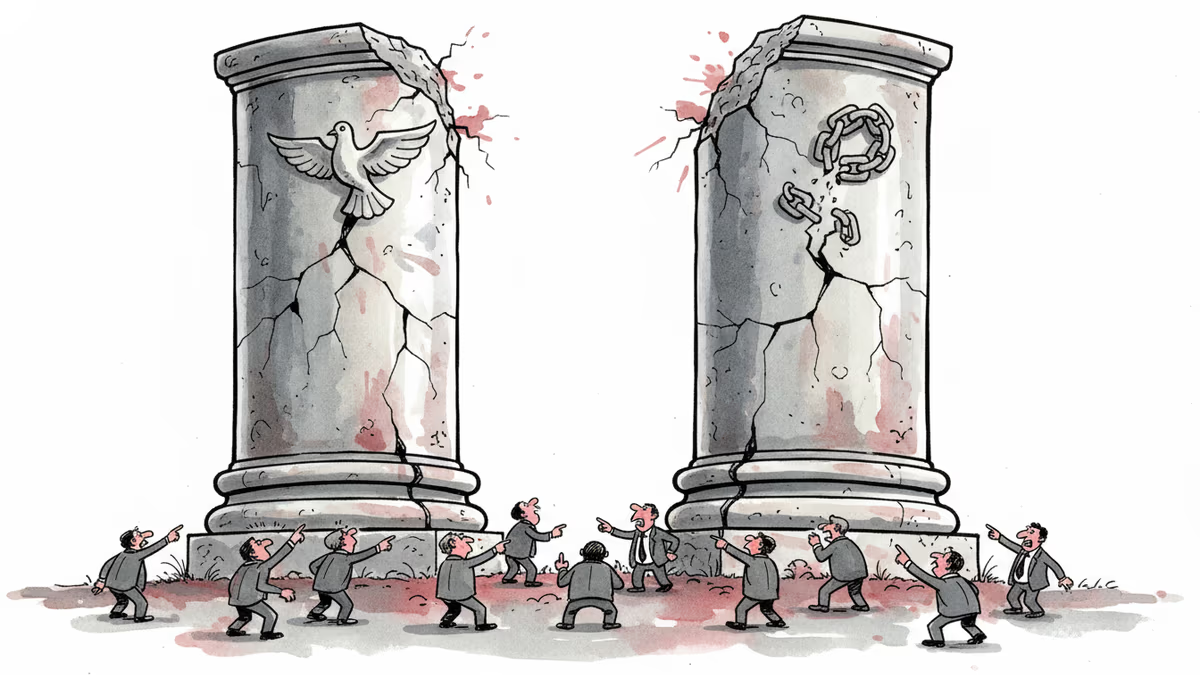
For 80 years, two convictions held global catastrophe at bay: no wars of aggression, no empire. Both are eroding simultaneously. What happened to the peace the UN was built to protect?
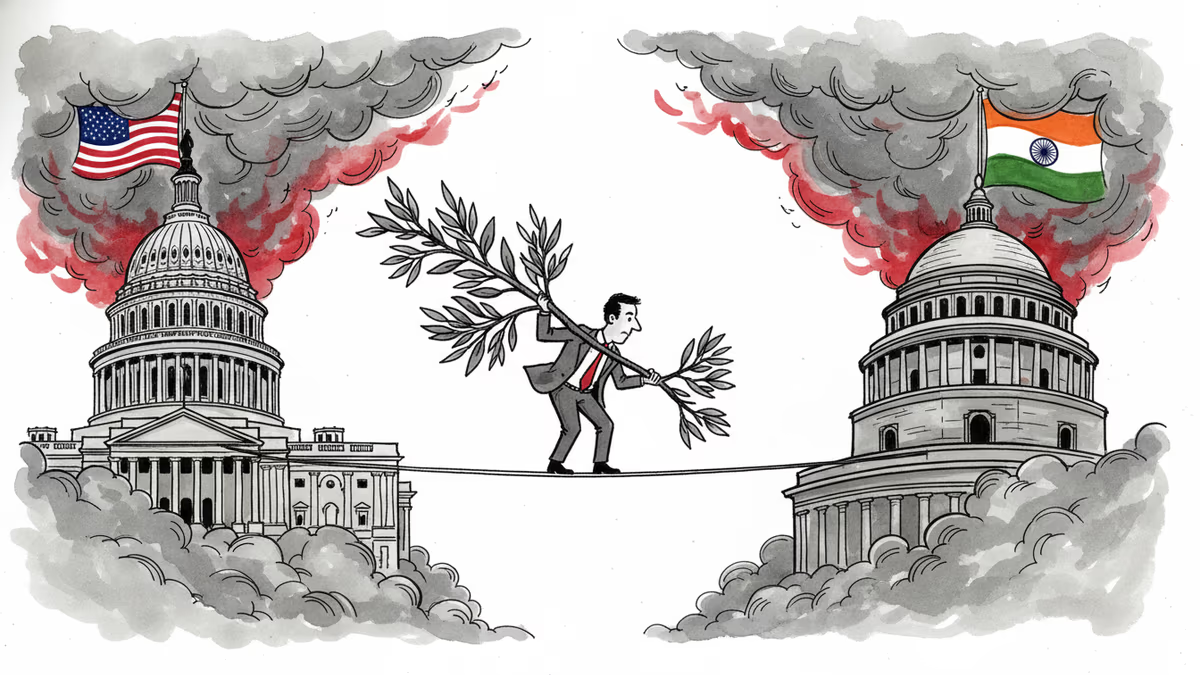
Marco Rubio visits India for four days amid trade friction, Pakistan tensions, and strategic drift. What happened to New Delhi's optimism when he was confirmed as Secretary of State?
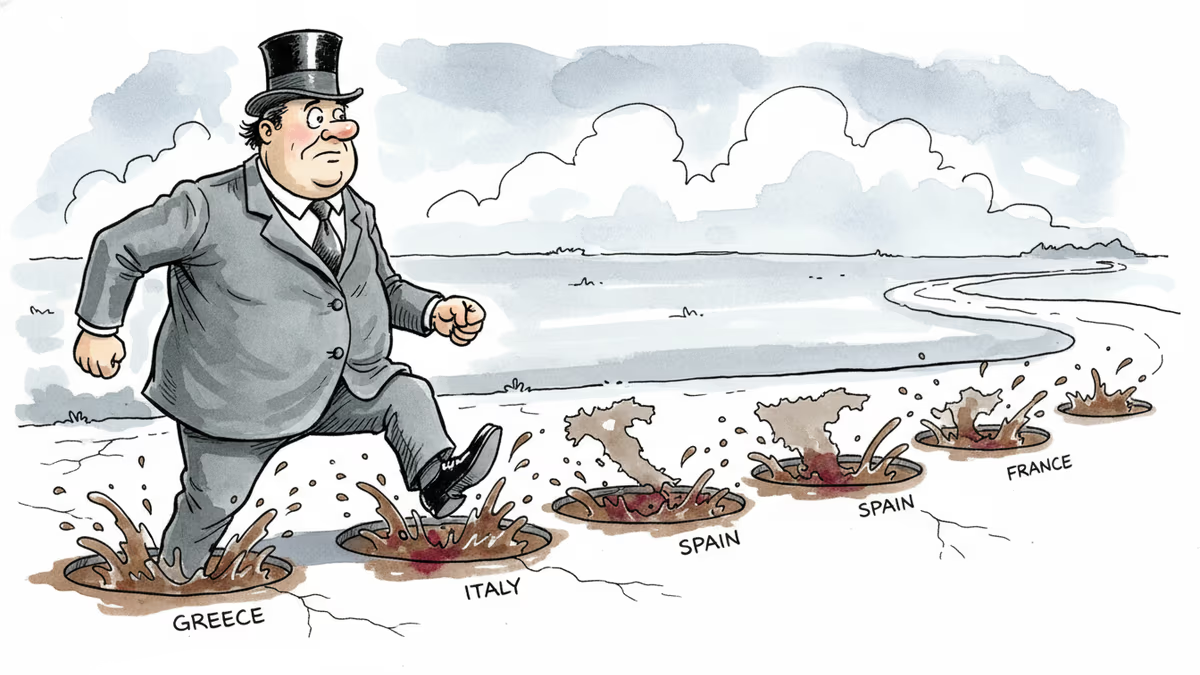
From Ukraine to Libya to Afghanistan, U.S. foreign policy keeps repeating the same two failures. Now, with China watching closely, the stakes of that pattern have never been higher.
A two-week ceasefire holds — barely. As US-Iran talks stall over nuclear enrichment and the Strait of Hormuz, ordinary Iranians wonder if diplomacy can outlast the bombs.
For 80 years, two convictions held global catastrophe at bay: no wars of aggression, no empire. Both are eroding simultaneously. What happened to the peace the UN was built to protect?
Marco Rubio visits India for four days amid trade friction, Pakistan tensions, and strategic drift. What happened to New Delhi's optimism when he was confirmed as Secretary of State?
From Ukraine to Libya to Afghanistan, U.S. foreign policy keeps repeating the same two failures. Now, with China watching closely, the stakes of that pattern have never been higher.
A two-week ceasefire holds — barely. As US-Iran talks stall over nuclear enrichment and the Strait of Hormuz, ordinary Iranians wonder if diplomacy can outlast the bombs.
Thoughts
Share your thoughts on this article
Sign in to join the conversation