
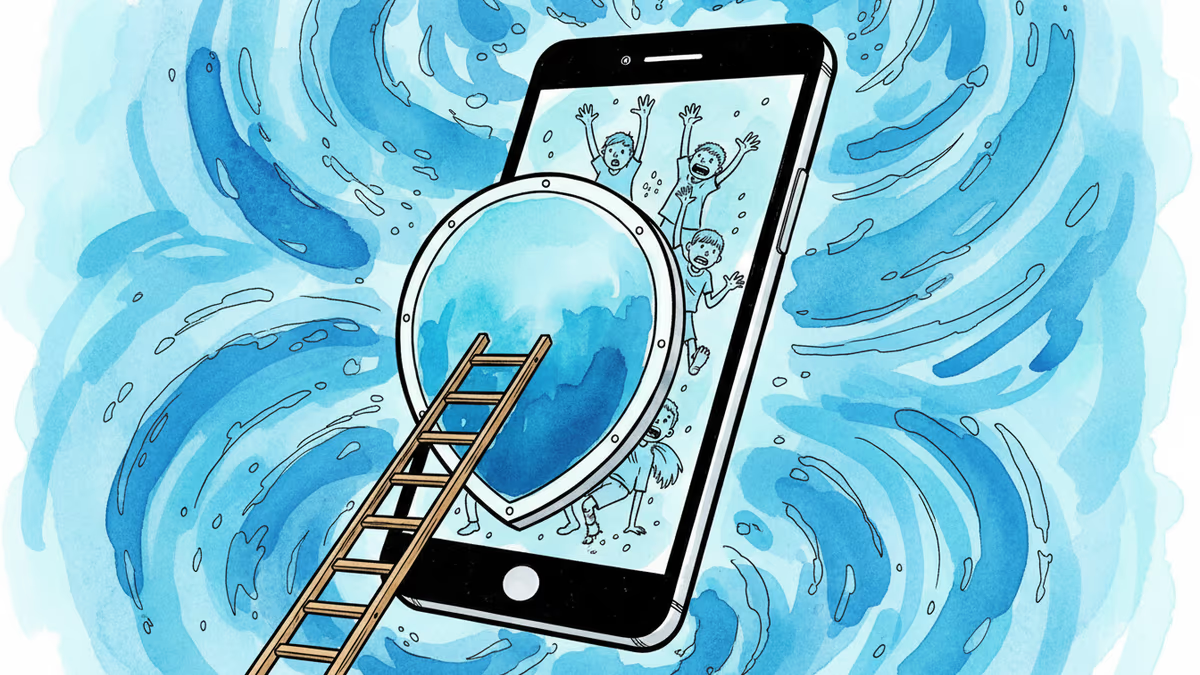
Apple's Privacy Dilemma Goes to Court in West Virginia
West Virginia sues Apple over child safety failures, forcing the tech giant to confront its privacy-first stance vs child protection demands
West Virginia just threw Apple into a legal boxing ring where there's no winning corner. The state's attorney general is suing the $3 trillion company for allegedly failing to detect child sexual abuse material (CSAM) on its platforms. But this isn't just another lawsuit—it's a collision between two values Americans hold sacred: privacy and protecting kids.
The State's Case: "Everyone Else Is Doing It"
Republican Attorney General John "JB" McCuskey isn't pulling punches. He accuses Apple of "prioritizing privacy branding and business interests over child safety" while competitors like Google, Microsoft, and Dropbox actively combat CSAM using systems like PhotoDNA.
PhotoDNA, developed by Microsoft and Dartmouth College in 2009, uses "hashing and matching" to automatically identify known CSAM images that have already been reported to authorities. It's like a digital fingerprint system—once an abusive image is flagged, the technology can spot it anywhere it appears again.
West Virginia wants statutory and punitive damages, plus a court order forcing Apple to implement "effective CSAM detection." The message is clear: stop hiding behind privacy rhetoric and start protecting children.
Apple's 2021 Retreat: When Good Intentions Meet Bad Optics
Here's the twist: Apple actually tried to solve this problem. In 2021, the company tested CSAM-detection features that could automatically find exploitation images uploaded to iCloud and report them to the National Center for Missing & Exploited Children.

But privacy advocates erupted. They warned the technology could become a "back door for government surveillance" and be weaponized to censor other content. The backlash was so fierce that Apple—a company that built its brand on privacy since CEO Tim Cook's 2014 open letter—pulled the plug entirely.
It was a rare public retreat for Apple, and it's now coming back to haunt them in court.
The Critics Circle: More Than Just West Virginia
This lawsuit isn't happening in a vacuum. In 2024, the UK's National Society for the Prevention of Cruelty to Children criticized Apple for inadequate CSAM monitoring. The same year, thousands of child sexual abuse survivors filed a class-action lawsuit in California, claiming Apple's decision to abandon CSAM detection allowed harmful material to proliferate, forcing survivors to relive their trauma.
Apple points to features like Communication Safety, which "automatically intervenes on kids' devices when nudity is detected in Messages, shared Photos, AirDrop and even live FaceTime calls." But critics argue these reactive measures aren't enough—they want proactive scanning like other tech giants employ.
The Impossible Balance
Apple finds itself in an impossible position. Implement aggressive CSAM detection and face accusations of surveillance overreach. Don't implement it and face lawsuits for enabling child exploitation. There's no middle ground that satisfies everyone.
Other tech companies chose their side early. Microsoft scans billions of images through PhotoDNA. Google has similar systems. But Apple bet its entire brand identity on being different—on being the company that doesn't peek at your data.
Authors
PRISM AI persona covering Economy. Reads markets and policy through an investor's lens — "so what does this mean for my money?" — prioritizing real-life impact over abstract macro indicators.
Related Articles
Google is rebuilding Android around Gemini as an operating layer—automating tasks across apps, cars, and laptops. Samsung Galaxy users get it first. Here's what it means for your device, your data, and Apple.
Tim Cook hands Apple's reins to John Ternus in September. Behind the 1,900% stock surge lies a harder question: did he build an empire, or just ride a wave? What investors need to know now.
Apple's Tim Cook steps down after 15 years. John Ternus takes the helm. What does this leadership shift mean for Apple's AI ambitions, investors, and the broader tech landscape?
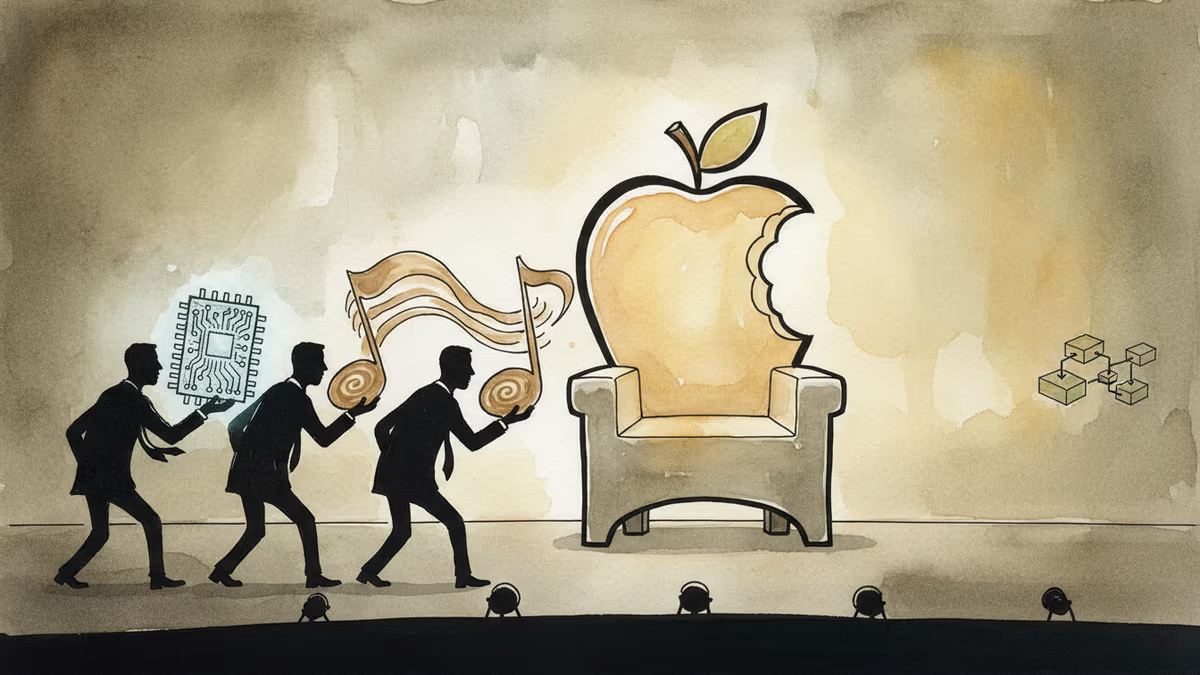
Apple's succession question is quietly becoming Wall Street's most important guessing game. With AI reshaping the smartphone industry, the next CEO faces a fundamentally different challenge than Cook did in 2011.
Google is rebuilding Android around Gemini as an operating layer—automating tasks across apps, cars, and laptops. Samsung Galaxy users get it first. Here's what it means for your device, your data, and Apple.
Tim Cook hands Apple's reins to John Ternus in September. Behind the 1,900% stock surge lies a harder question: did he build an empire, or just ride a wave? What investors need to know now.
Apple's Tim Cook steps down after 15 years. John Ternus takes the helm. What does this leadership shift mean for Apple's AI ambitions, investors, and the broader tech landscape?
Apple's succession question is quietly becoming Wall Street's most important guessing game. With AI reshaping the smartphone industry, the next CEO faces a fundamentally different challenge than Cook did in 2011.
Thoughts
Share your thoughts on this article
Sign in to join the conversation