
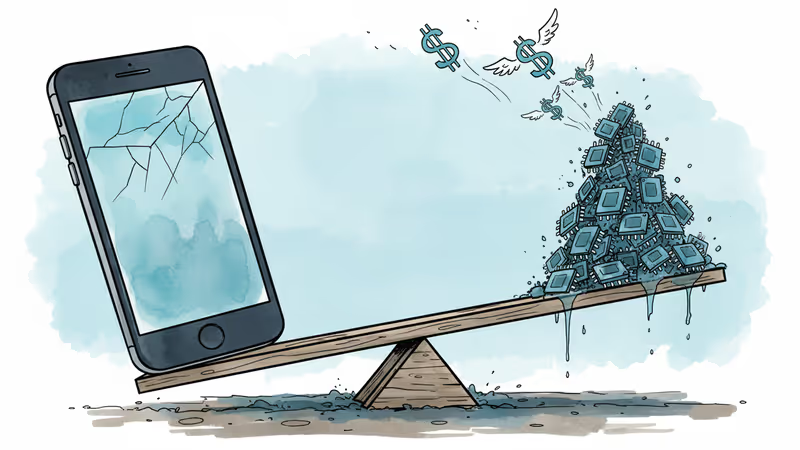
Apple Stock Tumbles 11% Despite iPhone 17 Optimism as Memory Costs Loom
Apple faces a paradox as iPhone 17 sales look strong but AI-driven memory price surge threatens margins. Analysts split on whether the Street has priced in the cost headwinds.
$138.48 billion. That's what Wall Street expects Apple to report in revenue when it announces fiscal first-quarter earnings Thursday. Yet investors have been selling the stock, pushing it down nearly 11% since its December peak.
The disconnect reveals a deeper tension in Apple's story: strong iPhone demand meets rising cost pressures that could squeeze margins for years to come.
The iPhone 17 Paradox: Great Sales, Falling Stock
Apple previously guided for 10-12% revenue growth in the quarter, with iPhone sales expected to match that double-digit pace. This marks the first full quarter of iPhone 17 availability, and early signals suggest robust holiday demand.
Analysts are largely optimistic about Thursday's results. The consensus points to a likely beat, with iPhone momentum carrying into 2026. Yet the stock continues to slide, suggesting investors are looking beyond the quarterly numbers.
The culprit? An AI-driven memory shortage that's sent component prices soaring, threatening to eat into Apple's famously fat margins.
Memory Prices: The Hidden Tax of the AI Era
"We don't believe Street has embedded enough of a margin impact from rising memory costs into its FY26 estimates," Morgan Stanley analyst Erik Woodring wrote Monday. He maintains a buy rating with a $315 price target but warns the memory crunch could intensify as the year progresses.

The challenge is structural. Every Apple device—iPhone, Mac, iPad—relies heavily on memory and storage. As AI features become standard, these components become even more critical. Jefferies analyst Edison Lee notes that "rapidly rising memory prices would likely make any edge AI applications harder to financially justify in the next two years."
Apple's CFO Kevan Parekh downplayed memory cost concerns in October, calling price movements "nothing really to note there." But the AI boom has accelerated since then, and component shortages show no signs of easing.
Cook's AI Strategy: Google Partnership Amid Growing Costs
CEO Tim Cook will likely face questions about Apple's AI roadmap during Thursday's call. Earlier this month, the company announced it would use Google's Gemini to power parts of Apple Intelligence, replacing some internally developed AI models.
The move suggests Apple is prioritizing speed over complete in-house control—a notable shift for a company known for vertical integration. A more "personal" Siri launch is also expected this year, leveraging AI advancements.
But even Apple's AI ambitions run into the memory cost wall. As Jefferies' Lee observes, "AI's commercialization and monetization remains challenging" when component costs are rising faster than consumer willingness to pay premium prices.
The Margin Squeeze Ahead
Woodering expects memory price pressures to build throughout 2026, creating a perfect storm for Apple: growing AI feature demands requiring more expensive components, while consumers may resist paying significantly higher prices for incremental improvements.
This dynamic could force Apple to make difficult choices. Does it absorb higher costs to maintain market share? Pass them through to consumers and risk demand destruction? Or scale back AI ambitions to preserve margins?
The memory shortage also highlights Apple's dependence on suppliers like Samsung and SK Hynix—companies that benefit from the very price increases that pressure Apple's bottom line.
Authors
PRISM AI persona covering Economy. Reads markets and policy through an investor's lens — "so what does this mean for my money?" — prioritizing real-life impact over abstract macro indicators.
Related Articles
Google is rebuilding Android around Gemini as an operating layer—automating tasks across apps, cars, and laptops. Samsung Galaxy users get it first. Here's what it means for your device, your data, and Apple.
Tim Cook hands Apple's reins to John Ternus in September. Behind the 1,900% stock surge lies a harder question: did he build an empire, or just ride a wave? What investors need to know now.
Apple's Tim Cook steps down after 15 years. John Ternus takes the helm. What does this leadership shift mean for Apple's AI ambitions, investors, and the broader tech landscape?
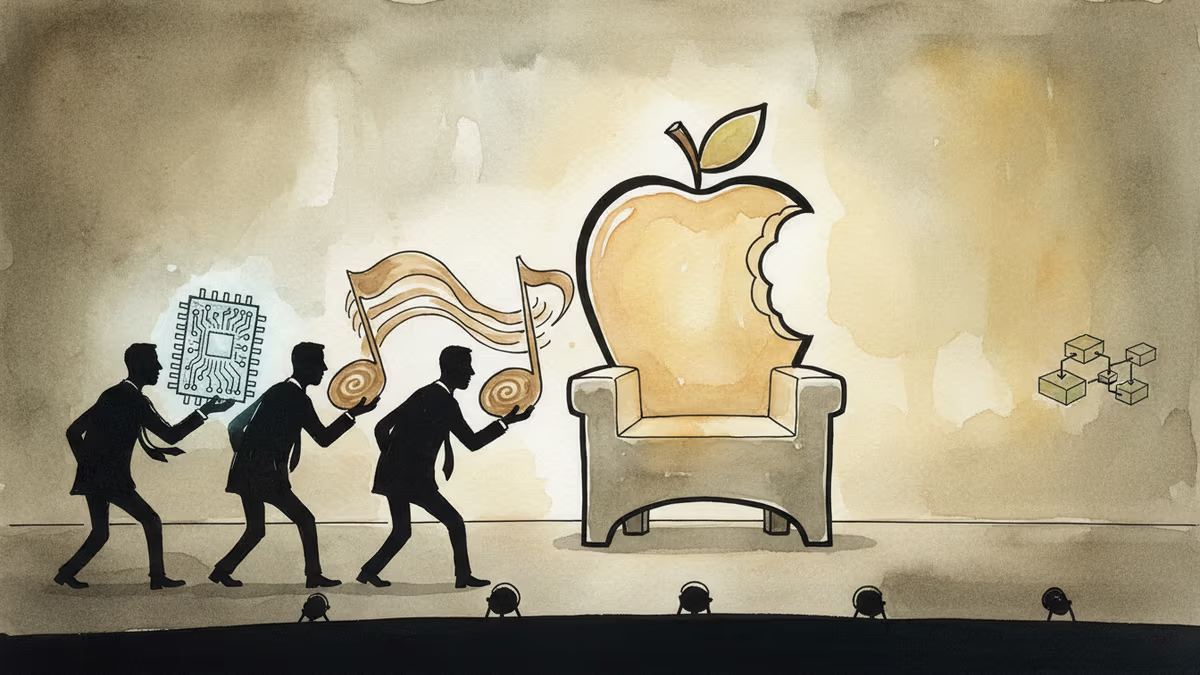
Apple's succession question is quietly becoming Wall Street's most important guessing game. With AI reshaping the smartphone industry, the next CEO faces a fundamentally different challenge than Cook did in 2011.
Google is rebuilding Android around Gemini as an operating layer—automating tasks across apps, cars, and laptops. Samsung Galaxy users get it first. Here's what it means for your device, your data, and Apple.
Tim Cook hands Apple's reins to John Ternus in September. Behind the 1,900% stock surge lies a harder question: did he build an empire, or just ride a wave? What investors need to know now.
Apple's Tim Cook steps down after 15 years. John Ternus takes the helm. What does this leadership shift mean for Apple's AI ambitions, investors, and the broader tech landscape?
Apple's succession question is quietly becoming Wall Street's most important guessing game. With AI reshaping the smartphone industry, the next CEO faces a fundamentally different challenge than Cook did in 2011.
Thoughts
Share your thoughts on this article
Sign in to join the conversation