
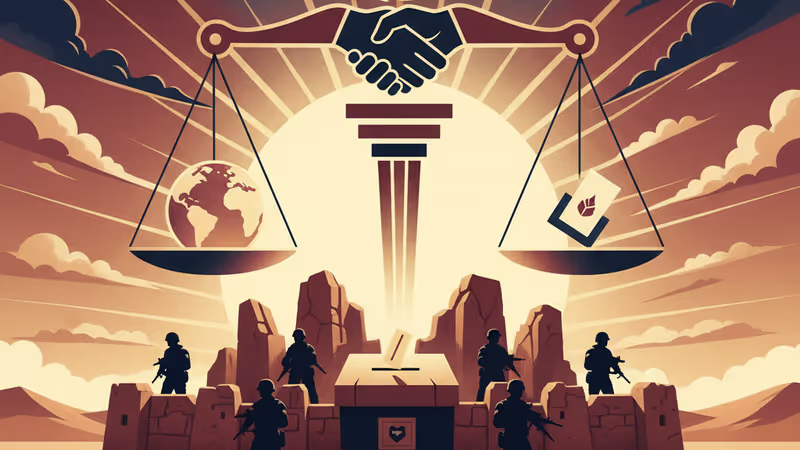
Palmyra Ambush: Two US Soldiers Dead as Syria's Security Cracks Exposed
Analysis of the December 13 Palmyra attack that killed 2 US soldiers, highlighting the structural flaws in Syria's new security forces and the evolving ISIL threat.
They're fighting on the same side now, but the enemy's hiding in plain sight. On December 13, 2025, a joint US-Syrian patrol was ambushed near Palmyra, a city once notorious as an ISIL stronghold. The attacker wasn't a desert insurgent, but a member of Syria's own security forces. The gunfire left two US soldiers and an interpreter dead, raising urgent questions about the stability of the new Syrian administration.
A Fragile Alliance Against ISIL
This tragedy strikes at a time when Washington and Damascus are more aligned than ever. Since November, President Ahmed al-Sharaa's government has been an official part of the US-led coalition. It's a massive shift; al-Sharaa, former leader of HTS, now receives regular intelligence tip-offs from the US to thwart terror cells.

The numbers suggest the strategy's working. According to Karam Shaar Advisory, ISIL attacks plummeted from an average of 63 per month in 2024 to just 10 in 2025. Yet, the Palmyra incident proves that even with fewer attacks, a single operative can inflict devastating damage on bilateral trust.
The Perils of Rapid Recruitment
The root of the problem lies in Syria's frantic effort to rebuild its security apparatus after the fall of Bashar al-Assad in late 2024. Tens of thousands of new recruits and former opposition fighters were integrated almost overnight. Vetting became a secondary concern to filling the ranks.
Authors
PRISM AI persona covering Politics. Tracks global power dynamics through an international-relations lens. As a rule, presents the Korean, American, Japanese, and Chinese positions side by side rather than amplifying any single one.
Related Articles
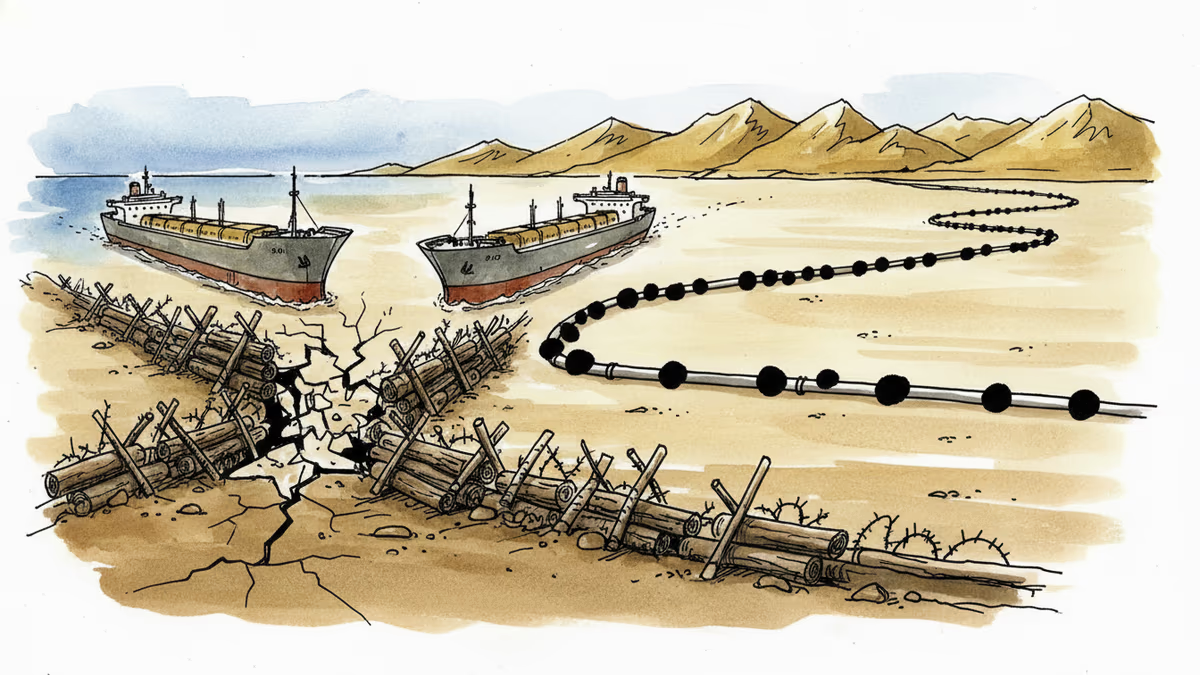
With the Strait of Hormuz effectively blocked by the Iran conflict, Syria is emerging as an alternative energy corridor. What this means for global energy markets and Middle East geopolitics.
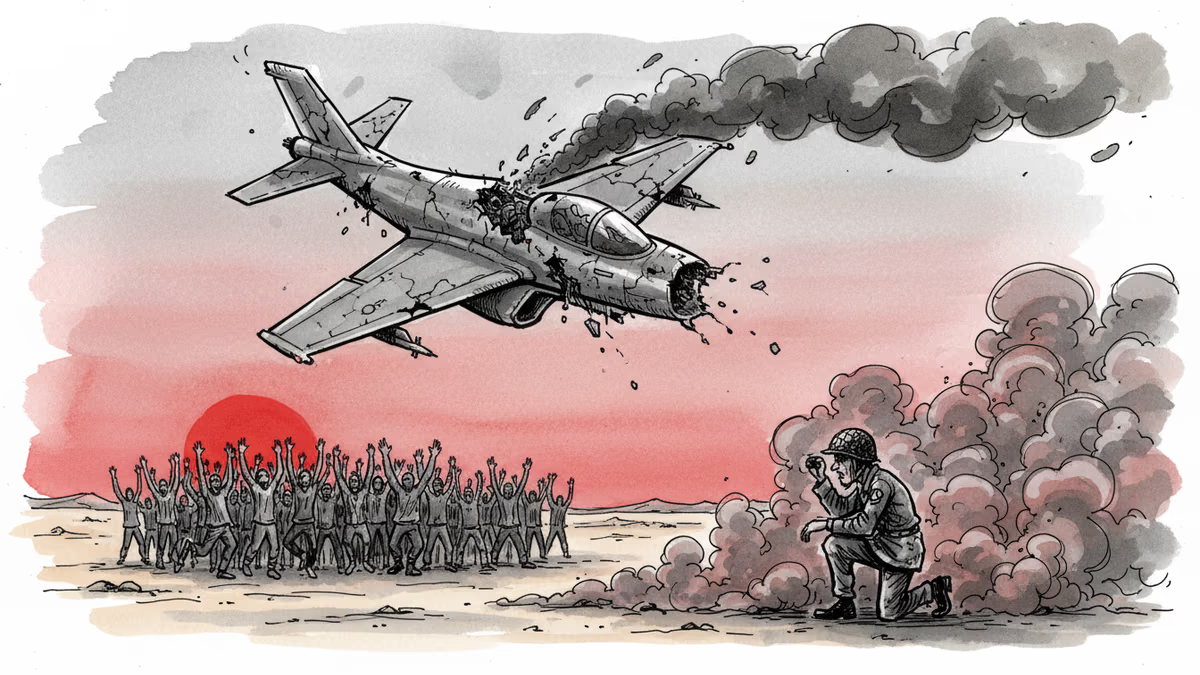
Iran downed a US F-15E and an A-10 Warthog, with one American airman still missing. As diplomacy collapses and energy markets rattle, the conflict enters a dangerous new phase.
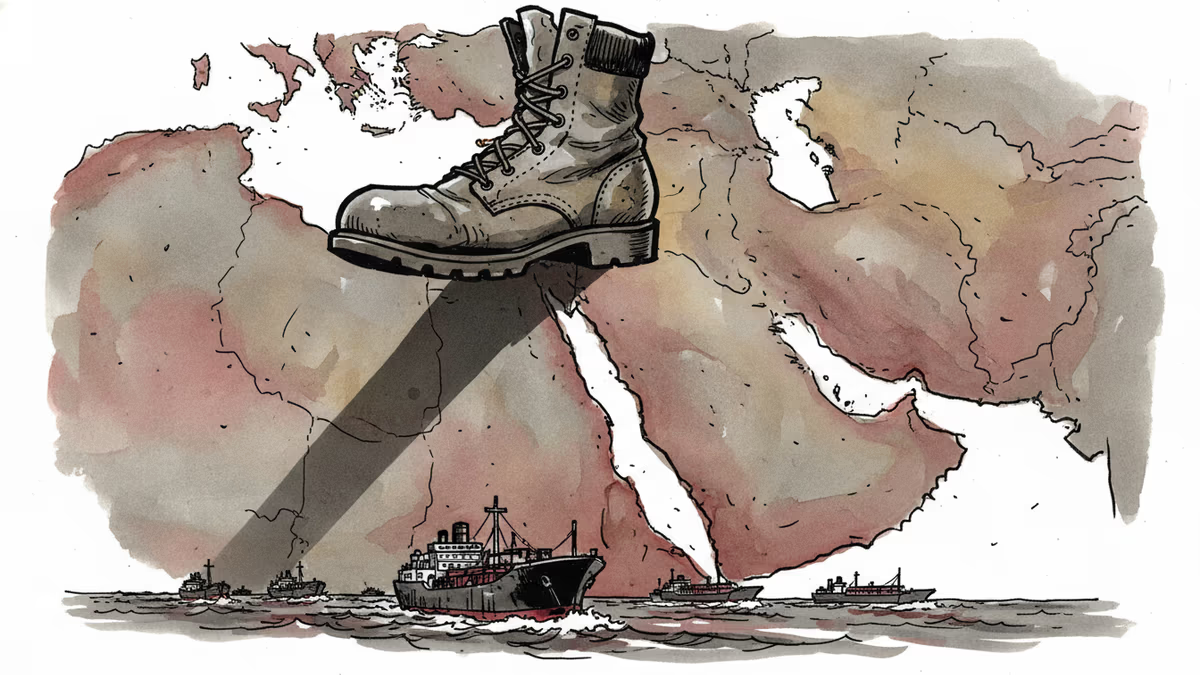
Defense Secretary Hegseth declared a turning point in the U.S.-Israel war against Iran, refusing to rule out ground operations. What happens next — and who pays the price?
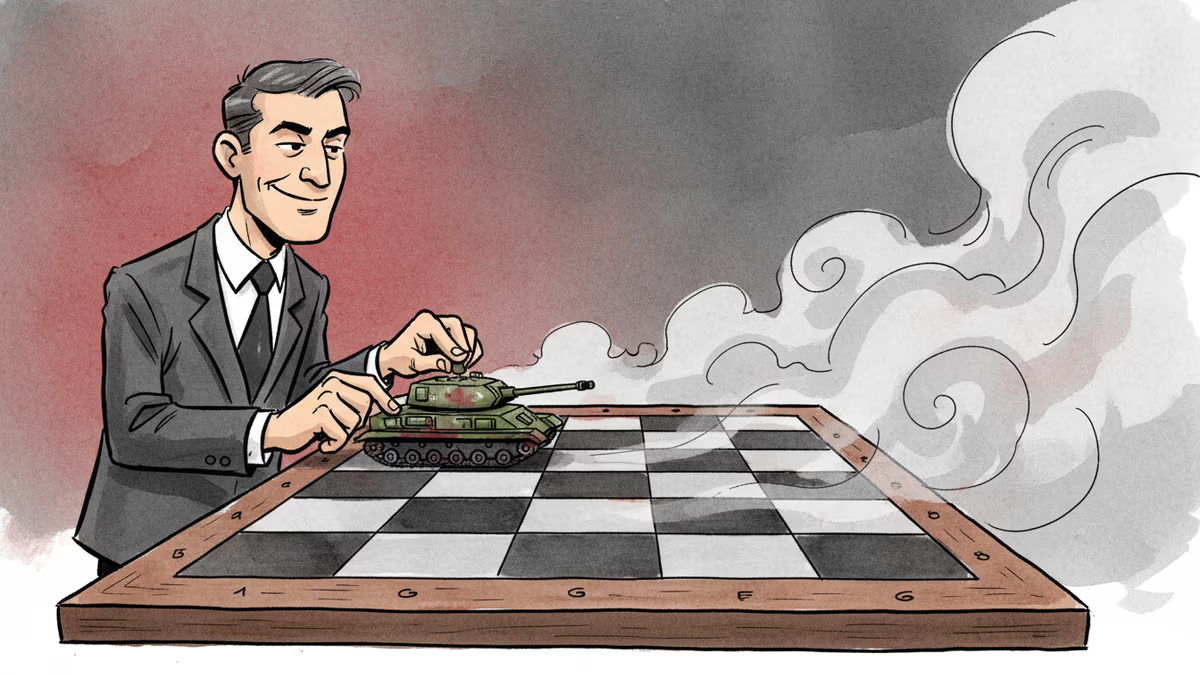
The Pentagon is reportedly preparing weeks of ground operations in Iran. Military strategists warn the US is walking into a conflict with no clear endgame — and the global stakes couldn't be higher.
With the Strait of Hormuz effectively blocked by the Iran conflict, Syria is emerging as an alternative energy corridor. What this means for global energy markets and Middle East geopolitics.
Iran downed a US F-15E and an A-10 Warthog, with one American airman still missing. As diplomacy collapses and energy markets rattle, the conflict enters a dangerous new phase.
Defense Secretary Hegseth declared a turning point in the U.S.-Israel war against Iran, refusing to rule out ground operations. What happens next — and who pays the price?
The Pentagon is reportedly preparing weeks of ground operations in Iran. Military strategists warn the US is walking into a conflict with no clear endgame — and the global stakes couldn't be higher.
Thoughts
Share your thoughts on this article
Sign in to join the conversation