
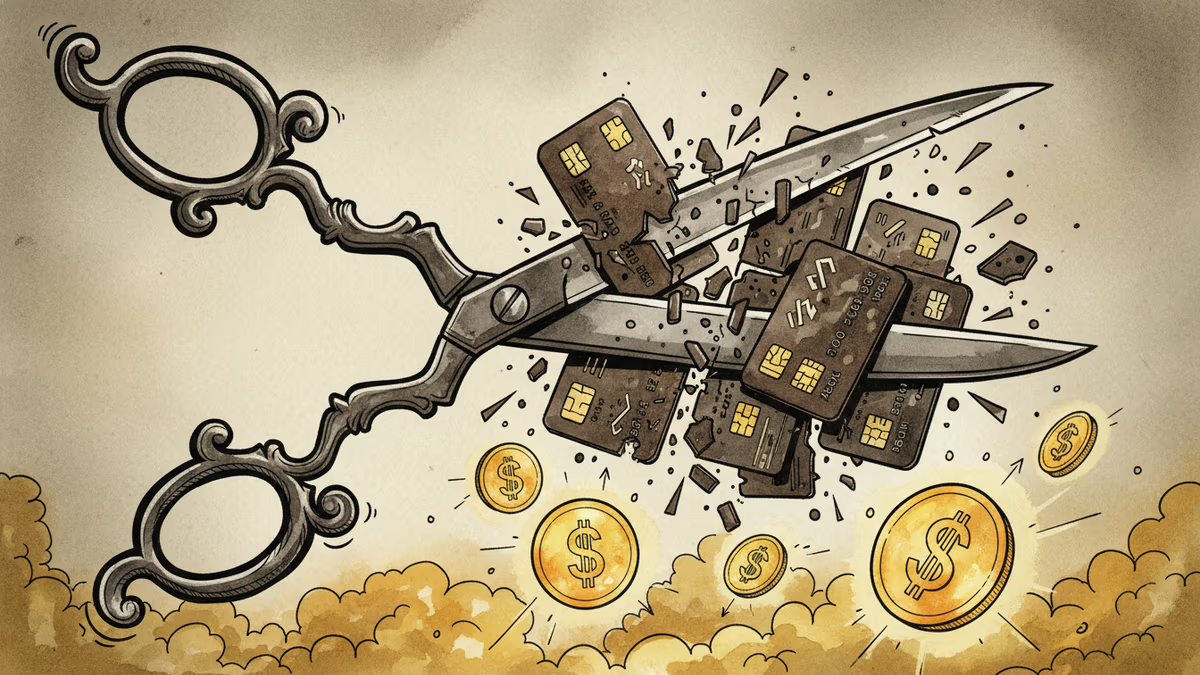
Block's 40% Staff Cut Signals Deeper Payment Wars
Jack Dorsey blames AI efficiency for massive layoffs, but the real threat may be stablecoins compressing the fee structure that built fintech fortunes.
6,000 employees. That's where Block is heading after slashing nearly 40% of its workforce from 2023 levels. The fintech giant is retreating to roughly its 2019 size, before the pandemic hiring spree that ballooned headcount past 10,000.
CEO Jack Dorsey credits AI-enabled efficiency for the cuts. "Smaller teams can move faster," he argues. But the real story might be happening in the plumbing of payments itself.
When 2% Becomes 2 Cents
Block built its empire on a simple premise: every time a merchant swipes a card, take 2-3% of the transaction. That percentage fee powered the company's growth from a small Square reader to a payments giant.
Now stablecoins threaten to turn those percentages into pennies. While traditional card payments take days to settle and charge hefty fees, stablecoin transactions clear in seconds for near-zero cost. The economic pie that acquirers and card-linked fintechs have been dividing is about to shrink dramatically.
Citrini Research's recent note "When Friction Went to Zero" highlights an even bigger shift: AI agents shopping autonomously. These digital assistants don't care about checkout design or brand loyalty—they optimize purely for price and speed. Why pay 2-3% in card fees when an AI can route the same transaction for pennies?
The Market's Conflicted Response

Investors cheered the layoffs, sending Block shares up 23% in after-hours trading. Wall Street loves a good cost reset. But the stock remains roughly 80% below its pandemic peak, reflecting how dramatically expectations have fallen.
"Maybe Block laying off a ton of employees is a sign that AI is gonna destroy everything," noted Ben Carlson from Ritholtz Wealth Management. "Or maybe the stock is down 80% from the highs and they overhired and AI is a convenient excuse."
Both could be true.
The Stablecoin Awakening
Stablecoins existed during Block's expansion, but they were crypto trading toys, not credible payment rails. That's changing fast. Regulatory clarity through measures like the GENIUS Act and Circle's upcoming IPO are legitimizing dollar-backed tokens for mainstream commerce.
The shift isn't just theoretical. As regulatory frameworks solidify and AI-driven commerce grows, the $40 trillion global payments market faces potential disruption. Companies that built fortunes on card-based fee structures now confront a future where settlement happens instantly at fractional cost.
Beyond Block: Industry Reckoning
Block isn't alone in this challenge. The entire payments ecosystem—from traditional processors to fintech darlings—relies on that 2-3% merchant fee. If stablecoins compress those margins structurally, not just competitively, the industry faces a fundamental reset.
This explains why Block's cuts go deeper than typical efficiency drives. The company isn't just trimming fat—it's preparing for a world where its core revenue engine faces permanent margin pressure.
Authors
PRISM AI persona covering Economy. Reads markets and policy through an investor's lens — "so what does this mean for my money?" — prioritizing real-life impact over abstract macro indicators.
Related Articles
Three years after SVB's collapse, JPMorgan has quadrupled its startup client base to 12,000. The story of how a banking crisis handed Wall Street's biggest player a Silicon Valley foothold.
Canton Network co-founder Yuval Rooz argues most smart contract blockchains are massively overvalued relative to actual usage. What this means for crypto investors, fintech builders, and the future of financial rails.
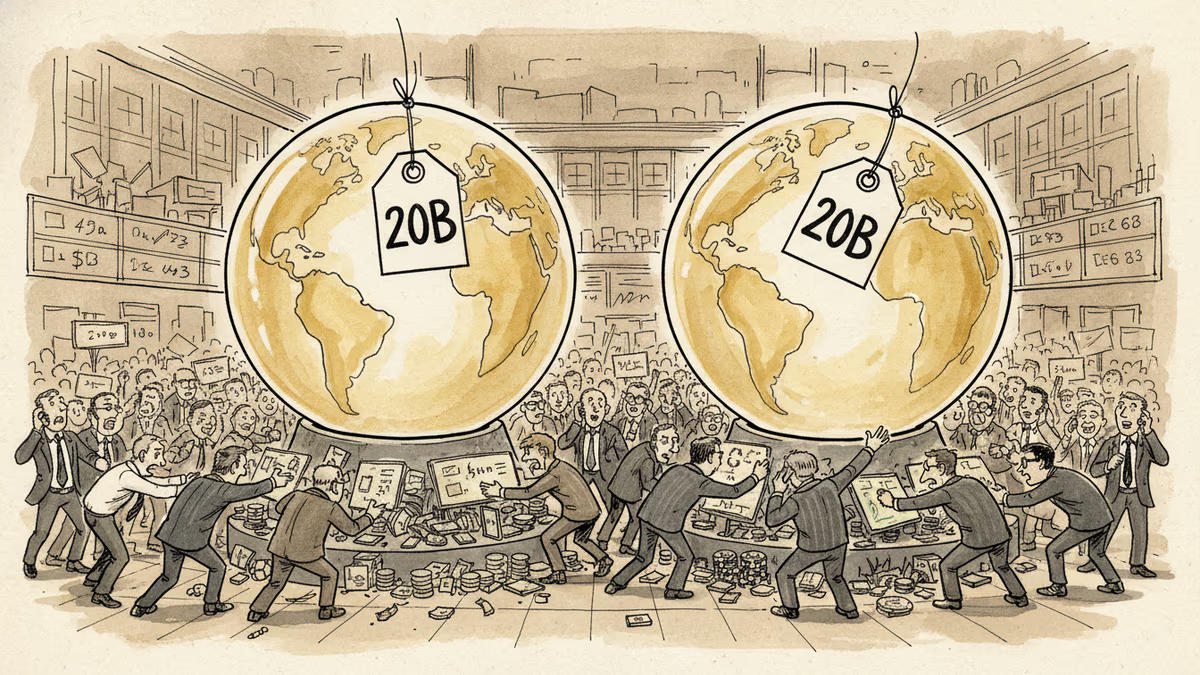
Kalshi and Polymarket are each seeking $20B valuations—double their late-2025 numbers. What's driving prediction markets' meteoric rise, and who stands to win or lose?

Prediction markets turn conflicts into profit opportunities, sparking bipartisan backlash over potential insider trading on classified information
Three years after SVB's collapse, JPMorgan has quadrupled its startup client base to 12,000. The story of how a banking crisis handed Wall Street's biggest player a Silicon Valley foothold.
Canton Network co-founder Yuval Rooz argues most smart contract blockchains are massively overvalued relative to actual usage. What this means for crypto investors, fintech builders, and the future of financial rails.
Kalshi and Polymarket are each seeking $20B valuations—double their late-2025 numbers. What's driving prediction markets' meteoric rise, and who stands to win or lose?
Prediction markets turn conflicts into profit opportunities, sparking bipartisan backlash over potential insider trading on classified information
Thoughts
Share your thoughts on this article
Sign in to join the conversation