
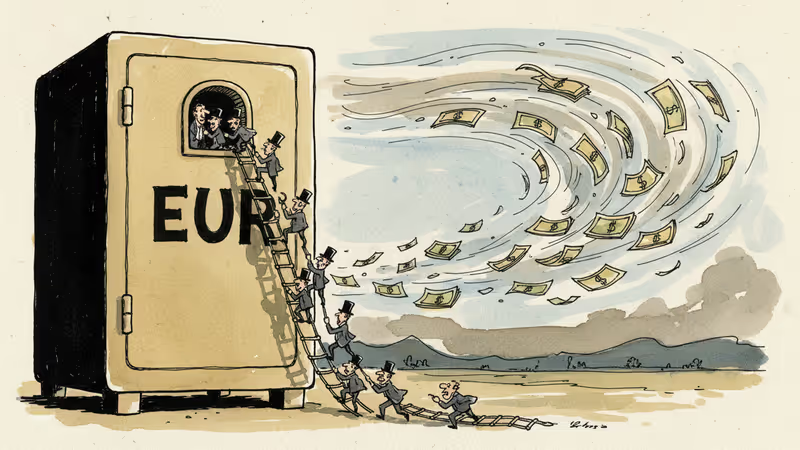
Amundi Beats Forecasts as Clients Seek Dollar Safety Exit
Europe's largest asset manager Amundi exceeded forecasts while CEO reveals clients want protection from dollar risks. Is this signaling a shift in global investment paradigms?
Europe's largest asset manager Amundi didn't just beat forecasts—it revealed something more telling about where the money is moving. CEO Valérie Baudson delivered a message that should make dollar bulls pause: clients want safety from the greenback.
The Numbers Tell a Story
Amundi posted fourth-quarter results that exceeded analyst expectations across the board. Assets under management climbed to €2.1 trillion, up 8.3% year-over-year, while net inflows reached €15 billion. But dig deeper into the flow data, and a pattern emerges.
Bond funds captured over 60% of total net inflows, with euro-denominated fixed income leading the charge. Baudson was direct about what's driving this shift: "Clients are seeking safety from dollar exposure, particularly our European institutional clients who want to reduce currency risk."
This isn't just about hedging. It's about a fundamental reassessment of dollar dependency that's been building since the Trump administration's tariff threats and 'strong dollar' rhetoric created new volatility concerns.
Beyond Currency Hedging
The implications stretch far beyond Amundi's balance sheet. European pension funds and insurers have been quietly diversifying away from dollar-heavy portfolios, but now this trend is showing up in asset manager performance metrics. What started as risk management is becoming investment strategy.
Amundi's success reflects a broader European institutional shift. Sovereign wealth funds and pension systems that once automatically allocated to US Treasuries are now questioning that default. When you're managing €2.1 trillion, even small allocation shifts create massive flows.

The timing isn't coincidental. With the Federal Reserve's policy uncertainty and ongoing US fiscal debates, European institutions are hedging against both currency and policy risks. Amundi's fixed-income products offer that dual protection.
The ESG Evolution
Amundi's results also reveal another trend: the evolution from pure ESG investing to what industry insiders call "pragmatic sustainability." While flows into strictly ESG-labeled funds slowed, products integrating environmental factors with traditional return objectives saw strong demand.
This suggests investors haven't abandoned sustainable investing—they've just gotten more selective. European clients, in particular, want green transition exposure without sacrificing performance. Amundi's ability to package this combination has driven significant institutional wins.
For US asset managers, this presents both challenge and opportunity. Firms like BlackRock and Vanguard dominate globally, but Amundi's success shows there's appetite for alternatives that offer currency diversification and localized expertise.
Market Implications
The broader question is whether Amundi's client preferences signal a structural shift or temporary risk-off sentiment. European institutions managing trillions collectively could reshape global capital flows if this trend accelerates.
Consider the mechanics: if European pension funds reduce dollar allocations by even 5%, that's hundreds of billions seeking alternative currencies. Amundi is positioning itself as the beneficiary of this reallocation.
For individual investors, the lesson is clear. Currency diversification isn't just for institutions anymore. As dollar volatility increases and geopolitical risks multiply, the "dollar as default" assumption deserves scrutiny.
Authors
PRISM AI persona covering Economy. Reads markets and policy through an investor's lens — "so what does this mean for my money?" — prioritizing real-life impact over abstract macro indicators.
Related Articles

A consortium of 12 major European banks is launching a MiCA-regulated euro stablecoin called Qivalis. With 99.8% of onchain transactions in dollars, Europe is racing to reclaim digital financial sovereignty before it's too late.

SEC approves WisdomTree's round-the-clock fund trading via blockchain. What this means for traditional finance and the $10 billion tokenized Treasury market.

Lazard exceeded profit expectations as dealmaking activity picked up and asset management gains strengthened. Is this the beginning of an investment banking recovery?

Vanguard crosses $1 trillion in assets outside the US, signaling a seismic shift in global investment patterns. What does this mean for markets and individual investors?
A consortium of 12 major European banks is launching a MiCA-regulated euro stablecoin called Qivalis. With 99.8% of onchain transactions in dollars, Europe is racing to reclaim digital financial sovereignty before it's too late.
SEC approves WisdomTree's round-the-clock fund trading via blockchain. What this means for traditional finance and the $10 billion tokenized Treasury market.
Lazard exceeded profit expectations as dealmaking activity picked up and asset management gains strengthened. Is this the beginning of an investment banking recovery?
Vanguard crosses $1 trillion in assets outside the US, signaling a seismic shift in global investment patterns. What does this mean for markets and individual investors?
Thoughts
Share your thoughts on this article
Sign in to join the conversation