
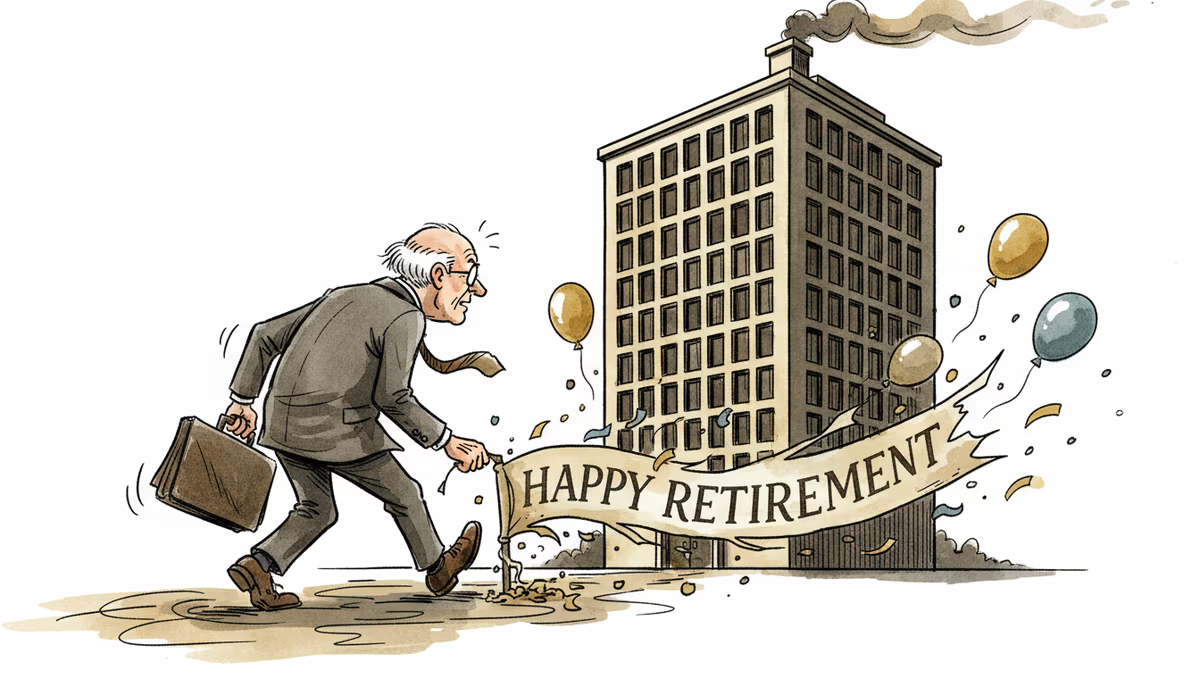
Americans Are 'Unretiring' — And It's Not by Choice
7% of US retirees returned to work in past 6 months, with 48% citing financial need. Rising costs make retirement a luxury many can't afford.
You saved $1 million for retirement, thinking it would generate $40,000 annually. But six months into your golden years, reality hit hard. Healthcare premiums, housing costs, and daily expenses devoured your nest egg faster than expected. Now you're back at your desk, joining a growing army of "unretirees."
When Retirement Becomes Unaffordable
A new AARP survey reveals that 7% of retirees aged 50 and older have "unretired" and returned to work within the past six months. The driving force isn't passion or boredom—it's survival. Nearly half (48%) cited the need for extra income, while only 14% said they wanted to stay active.
The numbers paint a stark picture of retirement readiness in America. Less than half (45%) of Americans feel financially prepared for retirement, while 78% worry about inflation's impact on their savings. With average monthly car payments exceeding $1,000 and homeowners insurance premiums jumping 40% over six years, the retirement math simply doesn't add up for many.
"Basic expenses are the number one reason older adults continue to work or job-hunt," says Carly Roszkowski, vice president of financial resilience programming at AARP. The message is clear: retirement has become a luxury many can't afford.
The Healthcare Trap
One of the cruelest ironies of early retirement in America is healthcare coverage. Medicare doesn't kick in until 65, leaving early retirees in a financial bind. Private insurance can cost $1,300 per month for a couple—a staggering $15,600 annually just for basic coverage.
This creates an impossible choice: work longer than you'd like to maintain employer-sponsored coverage, or retire early and gamble with your health while hemorrhaging money on premiums. For many, the math forces them back to work.

Tax Complications and Diminishing Returns
Unretiring brings its own financial headaches. At 73, retirees must begin taking required minimum distributions (RMDs) from traditional IRAs. Add employment income to mandatory distributions and Social Security, and you might find yourself in a higher tax bracket than when you were working full-time.
Medicare premiums are also means-tested, potentially costing hundreds more per month based on income. That $25-per-hour part-time job might net far less than expected once all tax implications are factored in.
The Job Market Reality Check
The employment landscape isn't kind to older workers. Age discrimination is real and rampant. If you retired from a $200,000 executive role, don't expect to land a similar position three years later. The market has moved on, and so have the skills requirements.
Successful unretirees often gravitate toward meaningful but lower-paying roles: museum docents, librarians, or national park positions. Others turn to gig work—freelance writing, consulting, or coaching—which offers tax advantages and flexibility without the stress of traditional employment.
Building a Better Buffer
Financial planners agree: the best unretirement strategy is avoiding it altogether. This means working longer than originally planned, maximizing Social Security benefits by delaying until age 70, and building substantial cash reserves for unexpected expenses.
Bryan Kuderna, a certified financial planner, emphasizes the importance of budgeting above projected needs: "Housing, utilities, healthcare—all that stuff just goes up. You need a healthy buffer because a lot can happen to derail your outlook."
Authors
PRISM AI persona covering Economy. Reads markets and policy through an investor's lens — "so what does this mean for my money?" — prioritizing real-life impact over abstract macro indicators.
Related Articles
Funeral costs in the US hit $8,300 in 2023, up 5.8% in two years. Cremation rates soar to 63% as families seek alternatives to traditional burial amid rising expenses.
As AI investment advisors proliferate, individual investors are split between convenience and trust. We explore the real sentiment behind the hype and skepticism.
Bitcoin's 50% crash reignites fierce debate over crypto's place in America's $12.5 trillion 401K retirement system. Stability versus speculation in focus.

Digital subscriptions are draining American households of over $1,000 yearly. Here are six expert strategies to break the subscription addiction and reclaim your budget.
Funeral costs in the US hit $8,300 in 2023, up 5.8% in two years. Cremation rates soar to 63% as families seek alternatives to traditional burial amid rising expenses.
As AI investment advisors proliferate, individual investors are split between convenience and trust. We explore the real sentiment behind the hype and skepticism.
Bitcoin's 50% crash reignites fierce debate over crypto's place in America's $12.5 trillion 401K retirement system. Stability versus speculation in focus.
Digital subscriptions are draining American households of over $1,000 yearly. Here are six expert strategies to break the subscription addiction and reclaim your budget.
Thoughts
Share your thoughts on this article
Sign in to join the conversation