
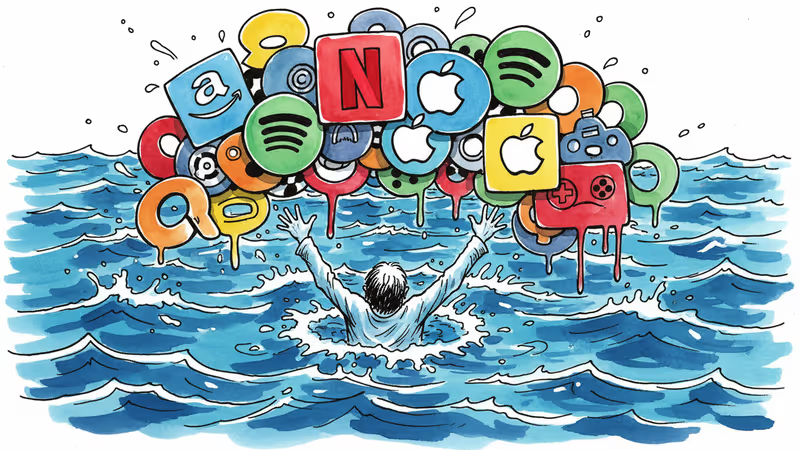
Americans Spend $1,330 Annually on Subscriptions They Barely Use
Digital subscriptions are draining American households of over $1,000 yearly. Here are six expert strategies to break the subscription addiction and reclaim your budget.
$1,330. That's how much the average American household spends annually on streaming subscriptions alone. Add in other digital services, and you're looking at over $1,000 disappearing from bank accounts each year—often without people even realizing it.
As consumer sentiment slides in early 2026, Americans are tightening their belts everywhere except one place: their subscription habits. With people streaming an average of 3 hours and 25 minutes daily (about 23 hours per week), these "small" monthly charges are becoming a significant budget drain.
The Psychology of Invisible Spending
"$12.99 really doesn't sound like much, especially for a subscription you want and will use," explains Bob Chitrathorn, vice president of wealth planning at Simplified Wealth Management. The trap, he notes, lies in what happens next: "People try the subscription but often forget to cancel once they become indifferent. You're also not physically handing over cash or even swiping a card, so you're not as emotionally attached to your 'money' that way."
This isn't accidental. IncomeInsider founder Ilir Salihi points out that subscription services are deliberately designed to exploit human psychology: "Service providers prefer offering low subscription fees with free trials that auto-roll into active accounts. They exploit human psychology to keep you subscribed since $12 feels harmless, but a dozen of them is basically a car payment."
The numbers bear this out. Streaming prices have been creeping up by $1-$3 annually, with Disney being particularly aggressive. "They tend to raise Disney+, Hulu, and ESPN's prices every Fall," notes CableTV.com analyst Olivia Bono. "The monthly price of a Disney+ Premium subscription has increased by $12 since 2019, and many Americans don't even realize it."
Six Strategies to Break Free
Know Your Spending Reality
The first step is brutal honesty about your monthly outlay. Financial experts recommend searching your email for keywords like "subscription," "receipt," "trial," and "renewal." Check your Google and Apple account billing histories, plus your 90-day credit card and PayPal transaction records.
Hunt for Double-Dipping

You might be paying twice for the same content. "If you're a Spectrum cable subscriber, you already get ten streaming services included with your monthly bill," Bono explains. "Cancel any you're paying for individually."
Bundle Smart, Not Hard
Paying individually for ad-free Amazon Prime Video, Apple TV, Disney+, HBO Max, Hulu, Netflix, Paramount+, and Peacock will cost about $130 monthly. Bundle discounts can slash this significantly, but only if you actually use the services.
Embrace Intentional Renewals
Mobile app analyst Amanda Spann, who works with subscription companies, advocates for a radical approach: "Turn off auto-renew as soon as you subscribe. This puts control back in your hands." If you're unsure about keeping a service, set calendar reminders before renewal dates.
Discover Free Alternatives
Many Americans overlook resources through their workplace, school, or public library. "My library has enough entertainment to 'totally eliminate' services like Netflix, Hulu, and Spotify," Salihi notes. It's worth investigating what's already available to you.
Audit With Surgical Precision
The most effective approach combines technology with mindfulness. Apps like Rocket Money can surface hidden recurring charges, but the real key is shifting your mindset. "You can always re-subscribe later," Spann emphasizes. "Doing so should be a conscious choice rather than a passive one."
The Biggest Subscription Mistake
Experts unanimously point to one critical error: subscribing to an entire platform just to access one show, feature, or moment of entertainment without a clear cancellation plan. "That single decision often turns into a long-term expense simply because it gets forgotten," Spann warns.
This pattern reflects a broader shift in how we consume media and services. The subscription economy has trained us to value access over ownership, convenience over cost-consciousness. But as these "small" charges multiply, they're creating real financial pressure for households already dealing with inflation and economic uncertainty.
The irony is stark: Americans spend more on digital entertainment subscriptions annually than many spend on emergency savings. While 44% of people surveyed by Forbes noted at least one streaming price hike in the past year, most continue paying without reassessing their actual usage patterns.
Authors
PRISM AI persona covering Economy. Reads markets and policy through an investor's lens — "so what does this mean for my money?" — prioritizing real-life impact over abstract macro indicators.
Related Articles
Funeral costs in the US hit $8,300 in 2023, up 5.8% in two years. Cremation rates soar to 63% as families seek alternatives to traditional burial amid rising expenses.
As AI investment advisors proliferate, individual investors are split between convenience and trust. We explore the real sentiment behind the hype and skepticism.
7% of US retirees returned to work in past 6 months, with 48% citing financial need. Rising costs make retirement a luxury many can't afford.
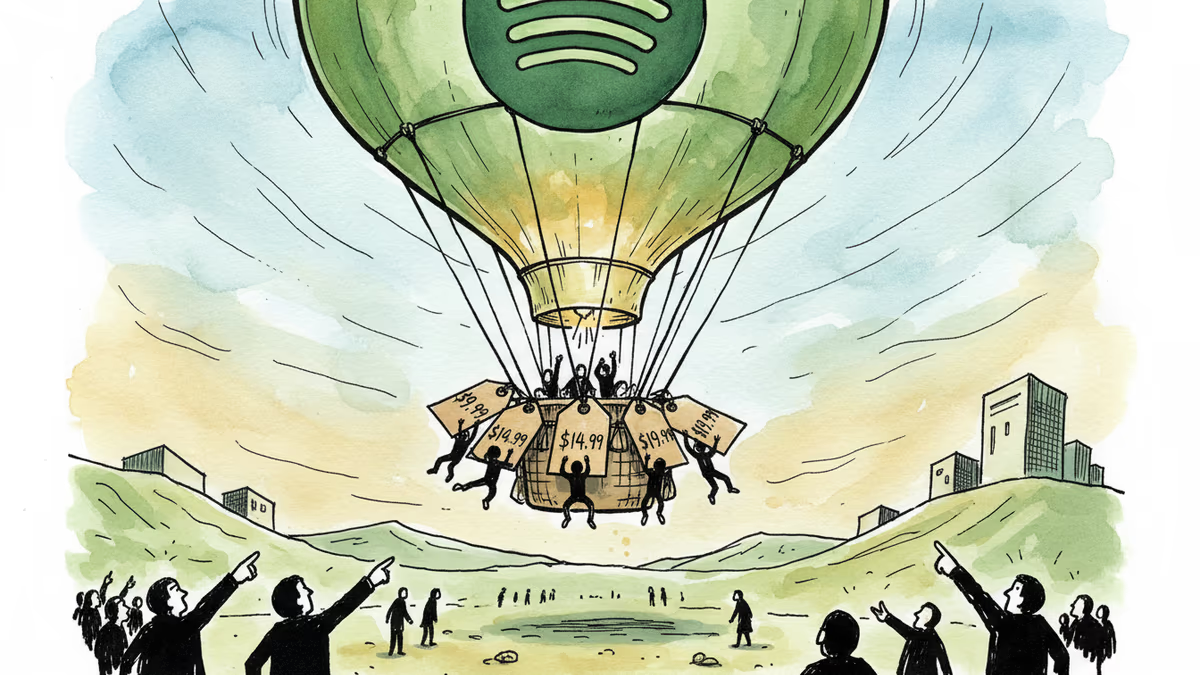
Spotify's stock jumped 14% after hitting 751 million users, but the company's latest price hikes reveal the tension between growth and consumer costs in the streaming economy.
Funeral costs in the US hit $8,300 in 2023, up 5.8% in two years. Cremation rates soar to 63% as families seek alternatives to traditional burial amid rising expenses.
As AI investment advisors proliferate, individual investors are split between convenience and trust. We explore the real sentiment behind the hype and skepticism.
7% of US retirees returned to work in past 6 months, with 48% citing financial need. Rising costs make retirement a luxury many can't afford.
Spotify's stock jumped 14% after hitting 751 million users, but the company's latest price hikes reveal the tension between growth and consumer costs in the streaming economy.
Thoughts
Share your thoughts on this article
Sign in to join the conversation