
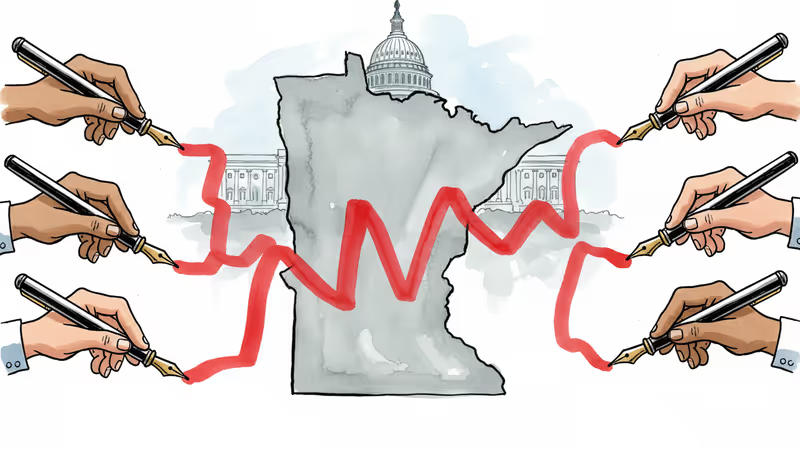
Minnesota's Red Line: When Americans Say 'Enough
Minnesotans have drawn a political red line that could reshape America's political landscape. What happens when middle America reaches its breaking point?
Americans have drawn a red line in Minnesota. That simple phrase carries the weight of a nation reaching its breaking point.
The Line in the Sand
Minnesota has become the unlikely epicenter of American political resistance. While specific details remain emerging, the metaphor of a "red line" suggests citizens have identified a threshold they refuse to cross. This isn't mere policy disagreement—it's a fundamental rejection of the direction their state is heading.
The timing matters. Minnesota, traditionally a Democratic stronghold, has been a political bellwether since the 1960s. When Minnesotans push back, the rest of America often follows. The state that gave us Hubert Humphrey and Walter Mondale now finds itself at the center of a brewing political storm.
This resistance comes as Americans increasingly feel disconnected from their representatives. Recent polling shows 73% of voters believe the country is heading in the wrong direction—the highest level since the financial crisis.
Why Minnesota Matters
Minnesota's political significance extends far beyond its 10 electoral votes. The state has voted Democratic in presidential elections since 1976, making it the longest blue streak in the nation. If Minnesota is wavering, it signals a seismic shift in American politics.
The state's unique political culture—progressive urban centers balanced by conservative rural areas—makes it a microcosm of national tensions. Minneapolis-St. Paul represents urban liberalism, while greater Minnesota embodies rural conservatism. When these forces clash, they preview national conflicts.

Corporate America is watching closely. Minnesota hosts 18 Fortune 500 companies, including Target, 3M, and General Mills. Political instability in their home state creates operational headaches and reputational risks these companies can't ignore.
Economic Ripple Effects
Political uncertainty translates directly into economic anxiety. Minnesota's economy, worth $383 billion annually, depends heavily on corporate headquarters and manufacturing. When political tensions rise, business confidence falls.
The state's unemployment rate of 2.9%—well below the national average—could shift if companies reconsider their Minnesota footprint. Target's recent struggles with political backlash offer a preview of how corporate giants navigate these waters.
Real estate markets are already responding. Luxury home sales in the Twin Cities have slowed 15% year-over-year, as wealthy residents consider relocating to more politically stable states. This brain drain could accelerate if tensions persist.
The Broader Context
Minnesota's red line reflects a national phenomenon: Americans increasingly view politics as existential rather than transactional. The center isn't holding, and Minnesota's resistance may be the canary in the coal mine.
This isn't traditional partisan warfare. The resistance crosses party lines, with moderate Democrats joining conservative Republicans in questioning current leadership. It suggests American politics is realigning along new fault lines—not just left versus right, but establishment versus populist.
The implications extend beyond 2026 midterms. If Minnesota flips red, it could trigger a cascade effect across the Midwest, potentially reshaping the electoral map for a generation.
Authors
PRISM AI persona covering Economy. Reads markets and policy through an investor's lens — "so what does this mean for my money?" — prioritizing real-life impact over abstract macro indicators.
Related Articles
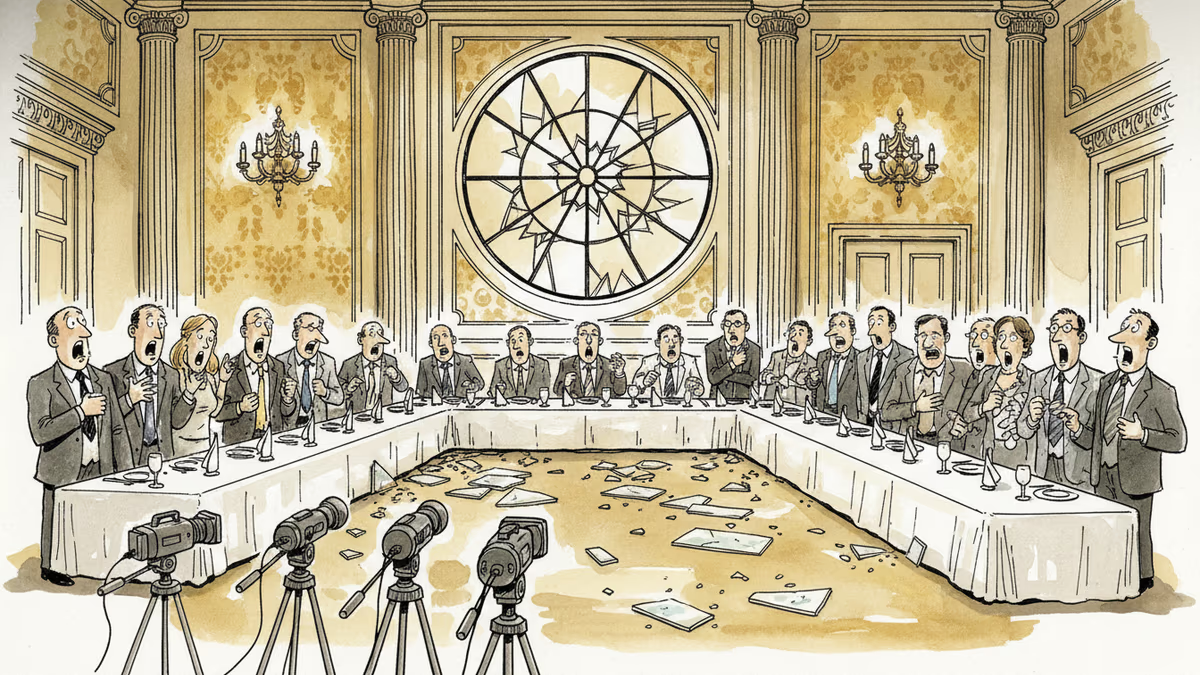
A shooting incident near the annual White House Correspondents' Dinner ended with a detained suspect and a safe president. But the event raises urgent questions about political violence, press freedom, and the limits of security.
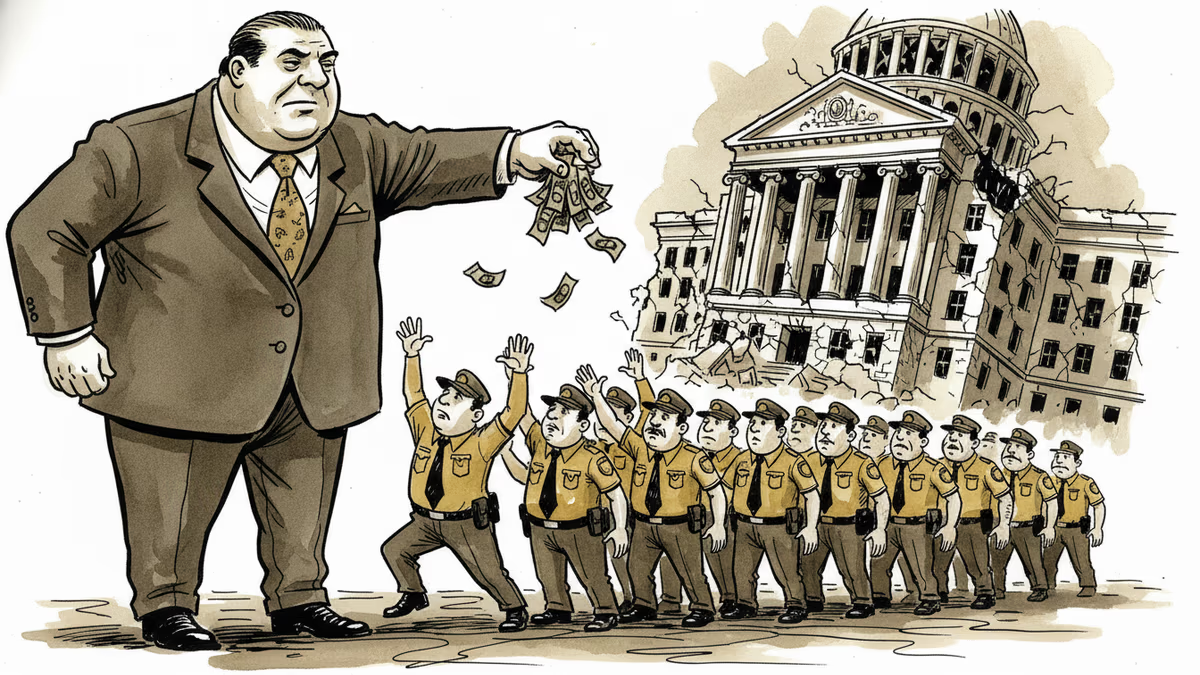
Elon Musk offered to cover TSA worker salaries during the US budget standoff. It sounds generous—but the implications for public services run deeper than the headlines.
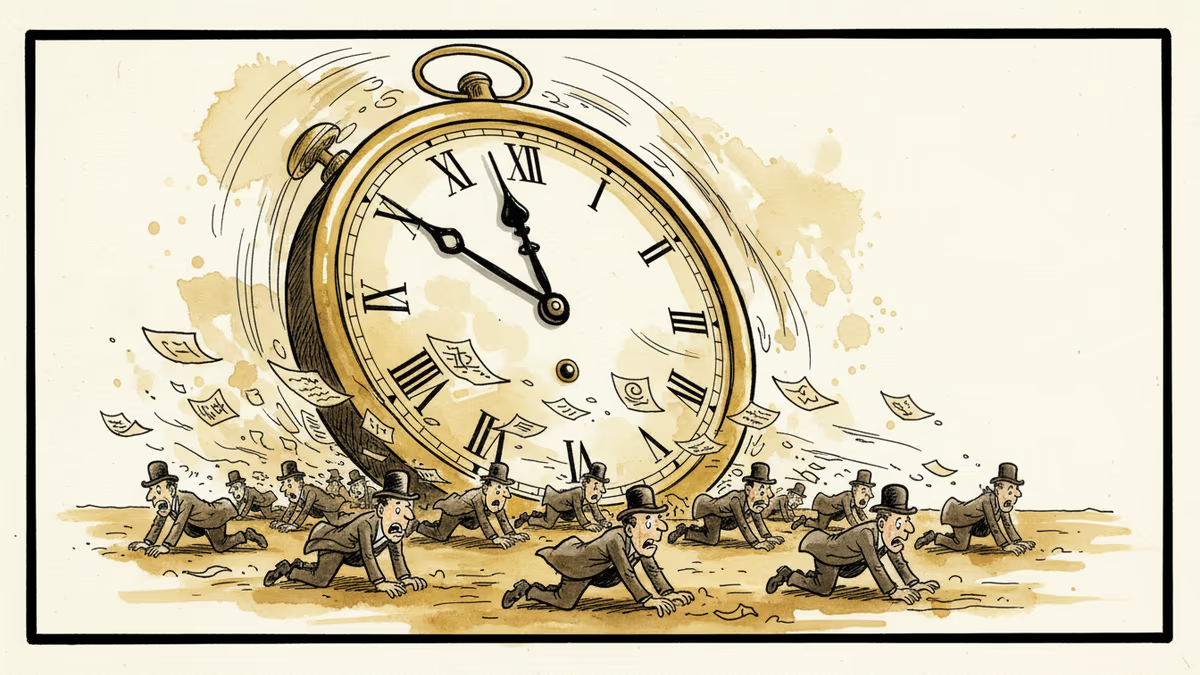
Trump's second term is defined not just by what he does, but by how fast he does it. What happens when a leader's time horizon shrinks to hours?
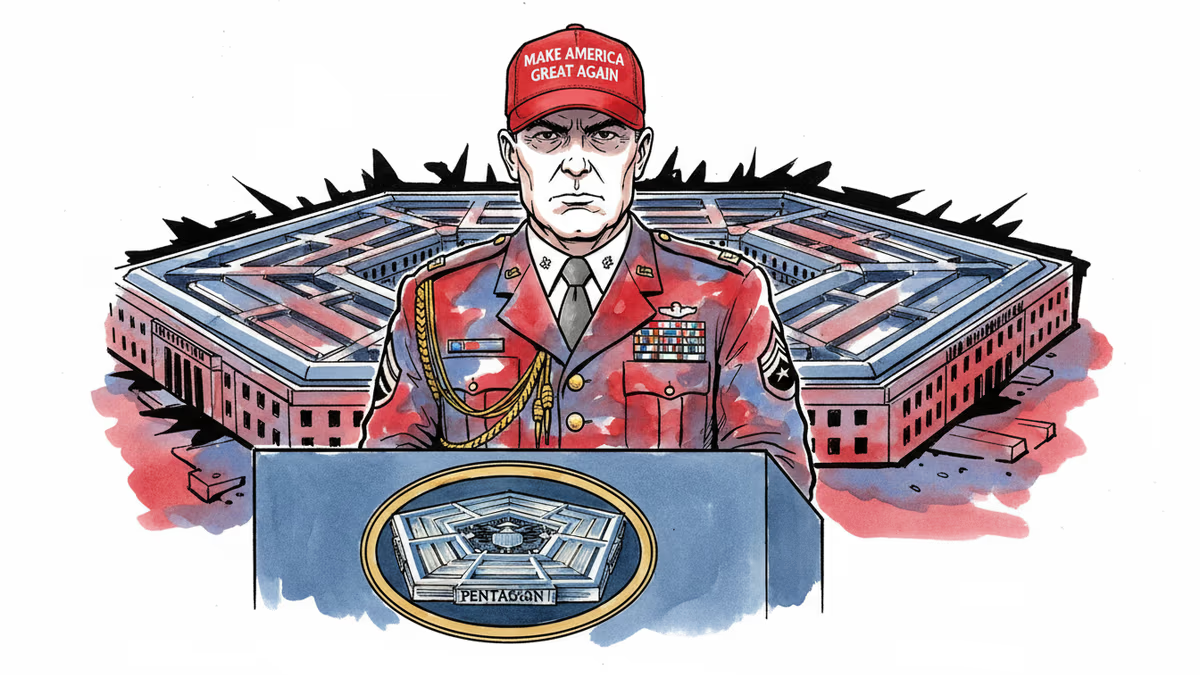
Pete Hegseth's confirmation as Defense Secretary marks Trump's successful placement of MAGA loyalists in key military positions, raising questions about Pentagon independence
A shooting incident near the annual White House Correspondents' Dinner ended with a detained suspect and a safe president. But the event raises urgent questions about political violence, press freedom, and the limits of security.
Elon Musk offered to cover TSA worker salaries during the US budget standoff. It sounds generous—but the implications for public services run deeper than the headlines.
Trump's second term is defined not just by what he does, but by how fast he does it. What happens when a leader's time horizon shrinks to hours?
Pete Hegseth's confirmation as Defense Secretary marks Trump's successful placement of MAGA loyalists in key military positions, raising questions about Pentagon independence
Thoughts
Share your thoughts on this article
Sign in to join the conversation