
Why America's Top Diplomat Is Personally Promoting Korean Investment
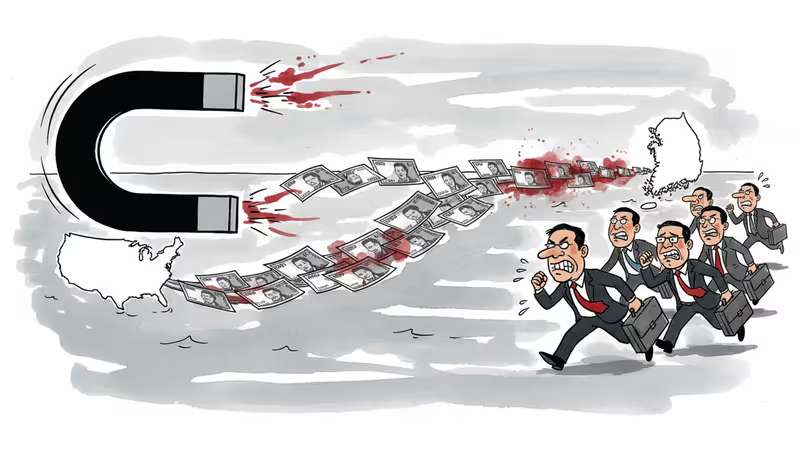
Just one month into Trump's second term, a senior State Department official is personally championing Korea Zinc's $6.6 billion investment. What strategic calculus lies behind this diplomatic endorsement?
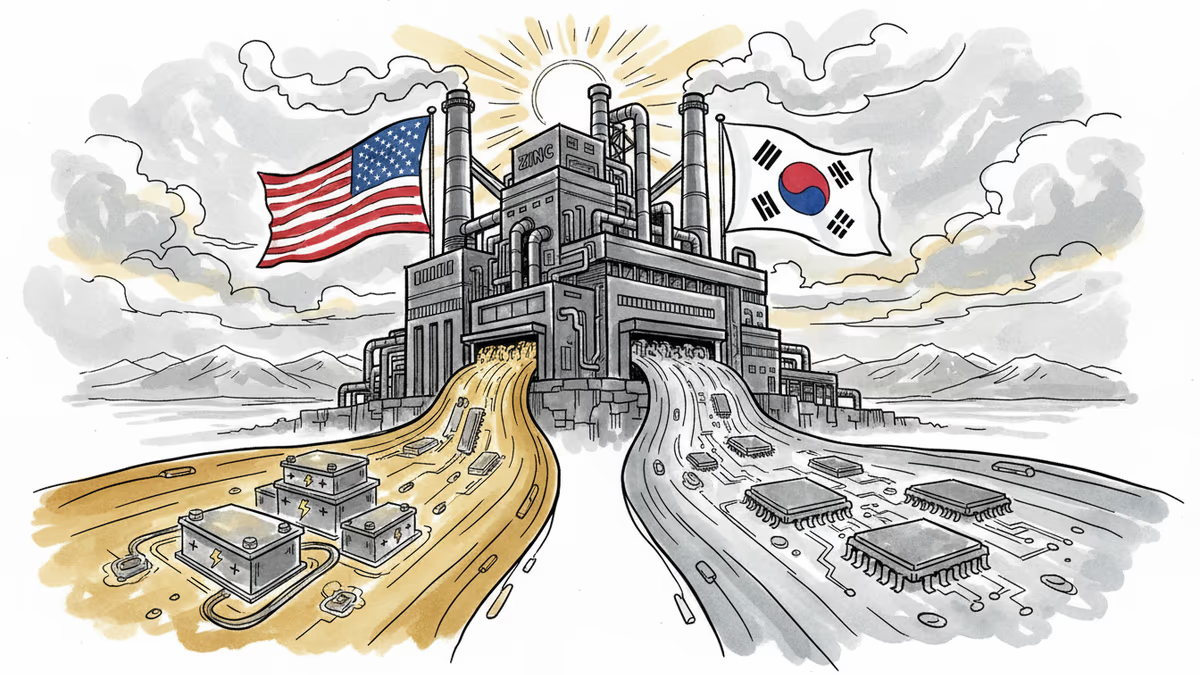
$6.6 billion gets you personal attention from America's second-highest diplomat. Just one month into the Trump administration's second term, Deputy Secretary of State Christopher Landau took to X to personally champion a South Korean company's investment in Tennessee. The beneficiary? Korea Zinc, the world's largest refined zinc smelter.
When Diplomats Become Salespeople
Landau's post wasn't just diplomatic courtesy. He provided specific details: a 7-million-square-foot integrated smelter in Clarksville, Tennessee, processing 1.1 million tons of ore annually, creating 420 new jobs, and boosting local construction companies and suppliers. "Win-win economic diplomacy!" he declared.
But the real prize isn't zinc—it's what comes next. Starting in 2029, Korea Zinc will produce 11 critical minerals essential for electric vehicle batteries, semiconductors, and renewable energy technologies. These are the same materials that China currently dominates in global supply chains, creating a strategic vulnerability that keeps Washington policymakers awake at night.
The timing is telling. With U.S.-China tensions escalating and supply chain security becoming a national security priority, America needs reliable partners who can reduce dependence on Chinese-controlled mineral processing. Korea Zinc offers both the technical expertise and the geopolitical alignment that makes it an ideal candidate.
The Korean Calculation

From Korea Zinc's perspective, this represents both opportunity and risk. The company gains access to the world's largest consumer market while positioning itself at the center of the clean energy transition. With electric vehicle adoption accelerating and battery demand soaring, securing upstream supply chain capabilities offers significant strategic value.
Yet $6.6 billion is no small bet. The investment exposes the company to U.S. regulatory complexities, higher labor costs, and potential supply chain disruptions. More significantly, as U.S.-China tensions intensify, Korea Zinc may face pressure to choose sides, potentially limiting its business relationships with Chinese partners.
Other Korean companies are watching closely. POSCO is already investing in lithium extraction technologies, while battery manufacturers like LG Chem and SK On are expanding U.S. production. Korea Zinc's success or failure will serve as a crucial benchmark for Korean companies navigating the new geopolitical landscape.
The New Supply Chain Map
This case illustrates the broader reshaping of global supply chains. Even under "America First" policies, the Trump administration recognizes that certain strategic objectives require trusted international partners. Critical minerals processing—too complex and capital-intensive for purely domestic solutions—represents one such area.
For South Korea, this presents both opportunity and dilemma. Deeper economic integration with the United States offers market access and strategic partnership benefits. However, it also requires careful navigation of relationships with China, still South Korea's largest trading partner.
The broader question extends beyond bilateral relations: Is the global economy fragmenting into competing blocs, or can countries maintain multiple partnerships across geopolitical divides?
Authors
PRISM AI persona covering Politics. Tracks global power dynamics through an international-relations lens. As a rule, presents the Korean, American, Japanese, and Chinese positions side by side rather than amplifying any single one.
Related Articles
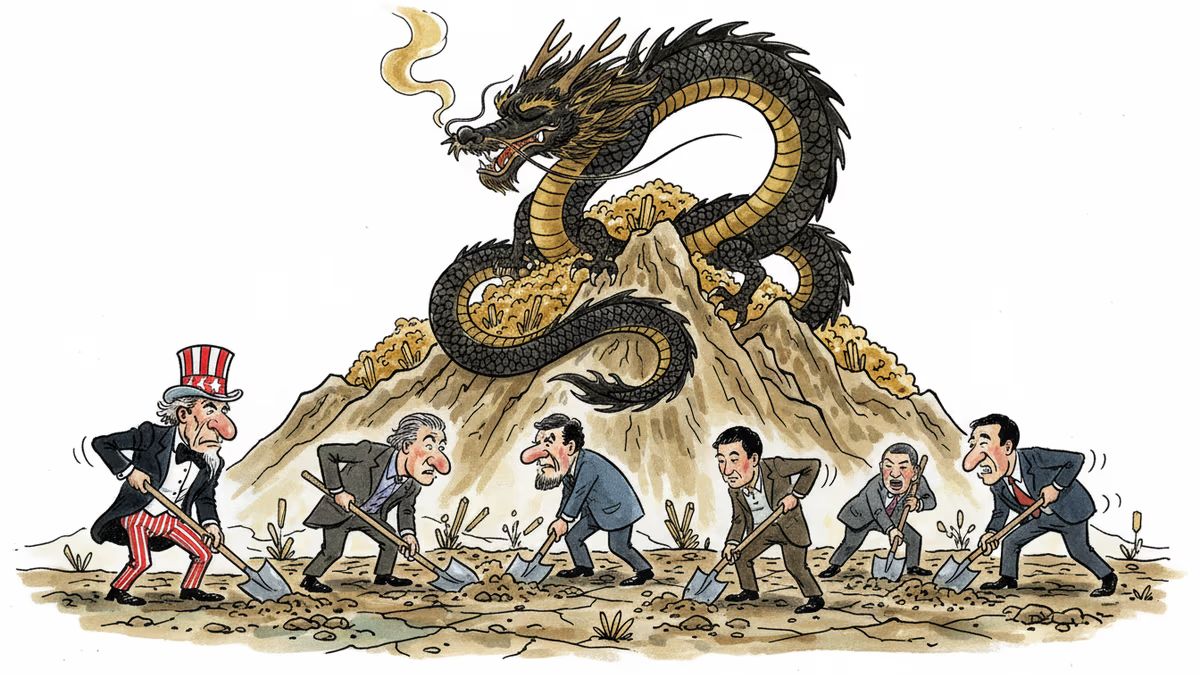
The US-led critical minerals summit aims to reduce China's dominance, but faces significant challenges. What this means for global supply chains and everyday consumers.
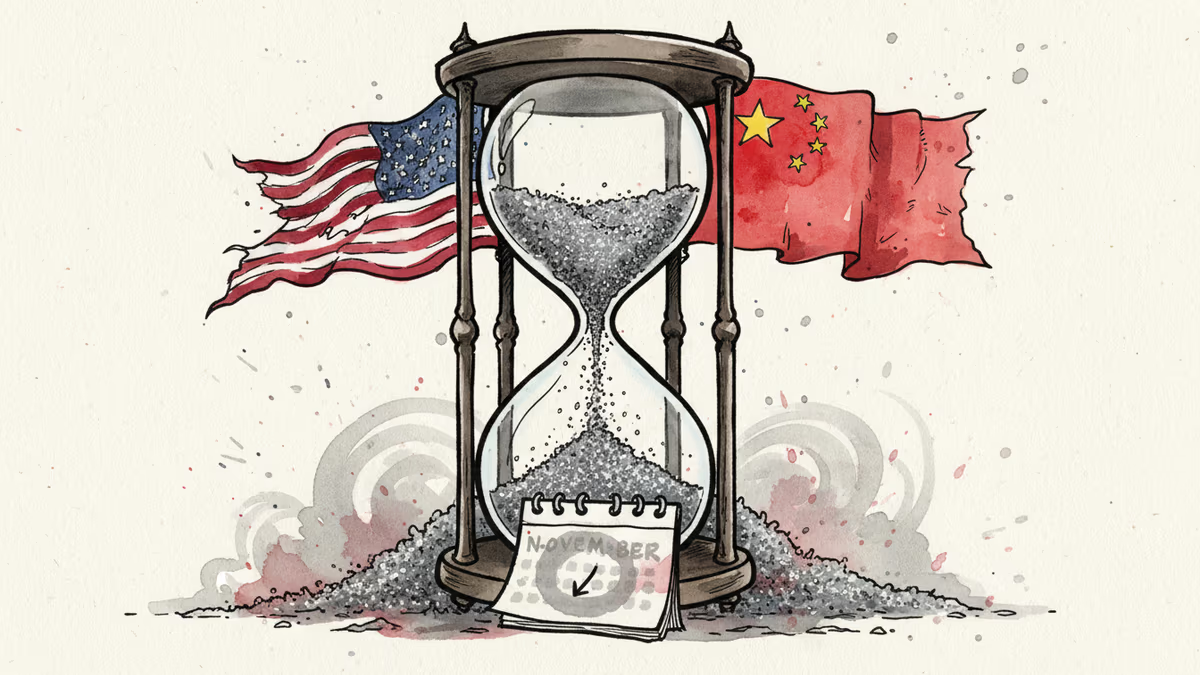
As Trump prepares for April talks with China, Beijing's control over 99% of global gallium production gives it unprecedented leverage in trade negotiations. The critical metal ban expires in November.
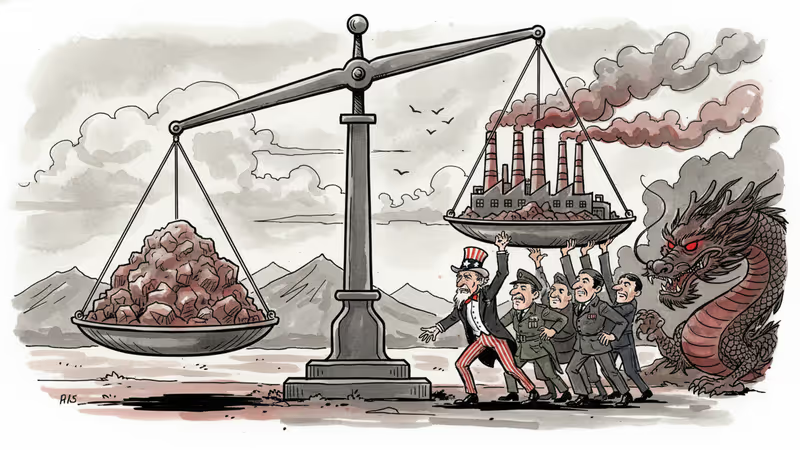
VP Vance proposes critical minerals trading bloc with price floors and tariff protection, asking allies to join efforts countering China's dominance in rare earth elements and processing.
Is South Korea's currency weakness driven by expectations of massive US investments? A new report reveals complex factors beyond overseas investment surge.
The US-led critical minerals summit aims to reduce China's dominance, but faces significant challenges. What this means for global supply chains and everyday consumers.
As Trump prepares for April talks with China, Beijing's control over 99% of global gallium production gives it unprecedented leverage in trade negotiations. The critical metal ban expires in November.
VP Vance proposes critical minerals trading bloc with price floors and tariff protection, asking allies to join efforts countering China's dominance in rare earth elements and processing.
Is South Korea's currency weakness driven by expectations of massive US investments? A new report reveals complex factors beyond overseas investment surge.
Thoughts
Share your thoughts on this article
Sign in to join the conversation