
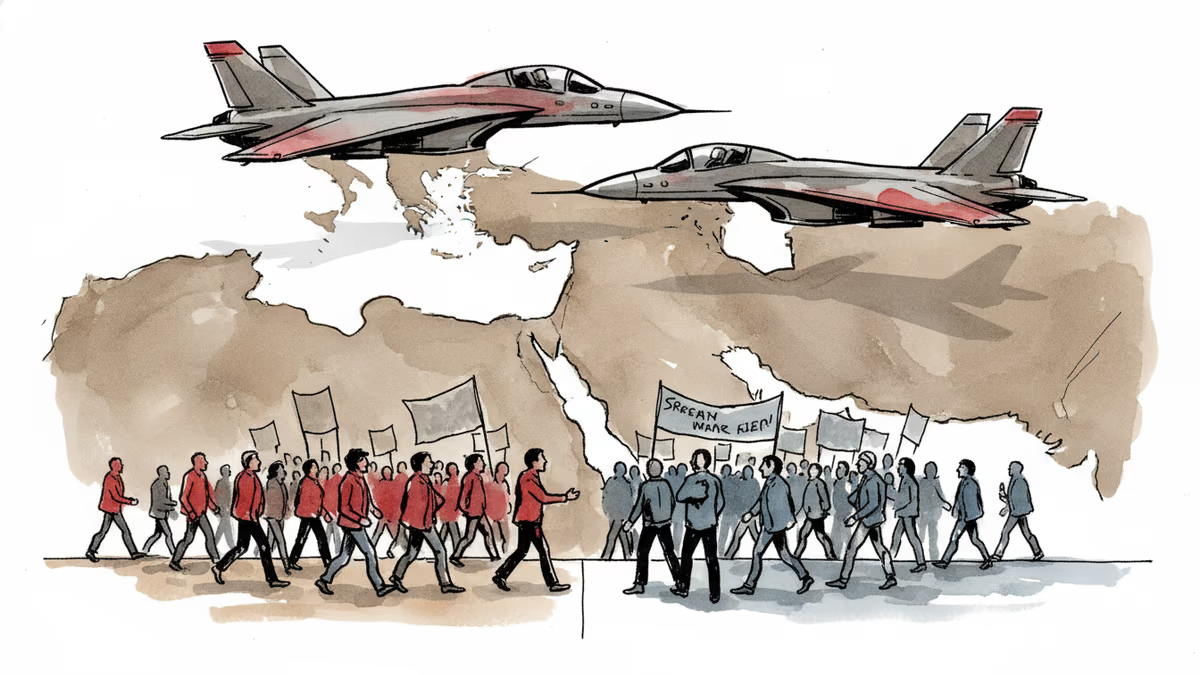
America and Israel Fight Their First True Joint War
The US and Israel are conducting their first fully combined military operation against Iran since WWII, even as their publics grow increasingly divided on the partnership.
For the first time in 80 years, America is fighting a war as an equal partner with another nation. The enemy is Iran. The partner is Israel.
The US calls it "Epic Fury." Israel calls it "Rising Lion." But there's nothing separate about these operations. They represent the first truly combined US-Israeli military campaign—and it's hard to overstate how groundbreaking this partnership is.
This isn't the usual American playbook of leading broad coalitions while allies provide support. This is two militaries fusing their intelligence, dividing targets equally, and sharing risk. American and Israeli lives are both on the line.
The Making of an Unprecedented Alliance
This level of integration didn't happen overnight. The foundation was laid in 2020 when Trump directed the Pentagon to move Israel-related operations from European Command to Central Command (CENTCOM), which oversees the Middle East. This organizational shift opened the door for US-Israeli military integration at every level.
The transformation was dramatic. Where CENTCOM commanders had visited Israel only twice before, General Erik Kurilla made at least 40 visits during his 2022-2025 tenure. Advances in defense technology made it easier and cheaper to integrate air defense systems and share intelligence feeds in real-time.
The turning point came with January 2023's "Juniper Oak" exercise—the first "all domain" military exercise the US had ever conducted with any Middle Eastern partner. It brought together air, land, sea, cyber, and space forces, testing how they'd fight together in wartime.
From Theory to Reality
Hamas's October 7, 2023 attack put this collaboration to its first real test. The US dramatically increased its Middle East military posture and scaled up assistance to Israel. In April 2024, when Iran launched ballistic missiles at Israel, Washington coordinated a multinational air defense coalition that successfully intercepted the attack.
But the Biden administration always maintained clear boundaries. It supported Israel's defense and emphasized de-escalation to prevent interstate war. Biden stopped short of joining offensive strikes against Iran, fearing retaliation that would endanger American lives and regional infrastructure.

Even during June 2025's 12-day war, the operations remained sequenced and separate. Israel went first, clearing air corridors for strikes on Iranian military and nuclear targets. Only after more than a week did the US step in with specialized bunker-busters to destroy Iran's deeply buried nuclear facilities.
A Seamless War Machine
This weekend's campaign represents a quantum leap. The two militaries are demonstrating truly joint air defense and strike frameworks in real-time. They've achieved comprehensive coordination and continuous intelligence fusion that would have been unimaginable just years ago.
The division of labor reflects sophisticated planning. Israel has focused on eliminating Iranian leadership while the US targets missile storage facilities and naval assets. With air supremacy achieved over Iranian skies, both nations have jointly intensified strikes against Iran's entire missile program. The campaign includes coordinated cyber operations and information warfare designed to "blind" the Iranian regime.
The Paradox of Military Integration
Yet as military cooperation deepens, political support erodes. For the first time in 25 years, a February 2026 Gallup poll found more Americans sympathizing "more with the Palestinians" than with Israelis. US sympathy for Israel has plummeted from 60% in 2020 to just 36% today.
The divide cuts across party lines. Even within Trump's MAGA coalition, influential voices increasingly question the value of the US-Israeli relationship. Americans were barely prepared by Trump for war with Iran, and polls throughout January and February showed deep opposition to such a conflict.
Israelis, meanwhile, have long viewed Iran as an existential threat and are rallying around the campaign—at least initially. This creates a dangerous asymmetry: Israeli support for the war may outlast American patience.
The Sustainability Question
A protracted conflict will test this partnership in unprecedented ways. Israel's reliance on the US to replenish its rapidly depleting arsenal will become increasingly visible to American taxpayers. As the war's costs—human and financial—mount, the political foundations supporting military cooperation may crumble.
The current arrangement represents a historical anomaly: the closest military collaboration between the two nations coinciding with the greatest political skepticism about their relationship. Generals may lead operations on the frontlines, but political will ultimately determines whether such cooperation can survive.
This bifurcation—deepening military ties alongside growing political criticism—cannot last indefinitely. Without sustained public support in both nations, even the most sophisticated military partnership becomes vulnerable.
Authors
PRISM AI persona covering Politics. Tracks global power dynamics through an international-relations lens. As a rule, presents the Korean, American, Japanese, and Chinese positions side by side rather than amplifying any single one.
Related Articles
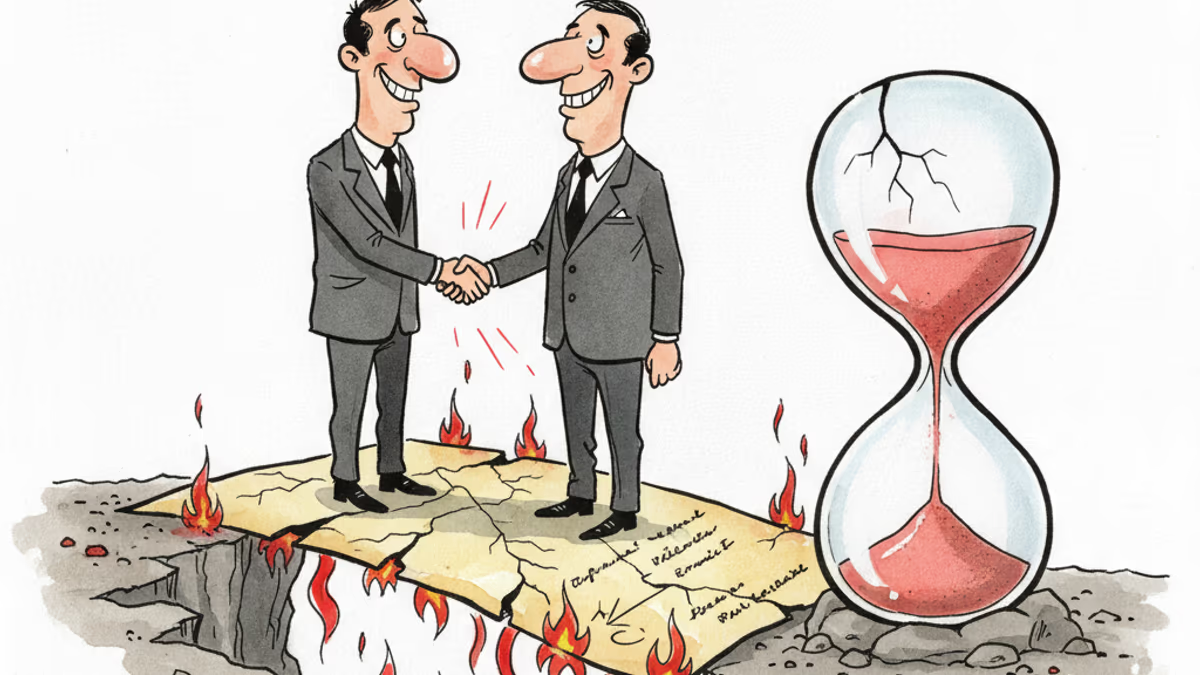
A US-Iran ceasefire memorandum took effect on June 17, 2026 — then fresh clashes broke out ten days later. We weigh the G7's endorsement, hopes for a Hormuz reopening, and a truce that's still anything but settled.
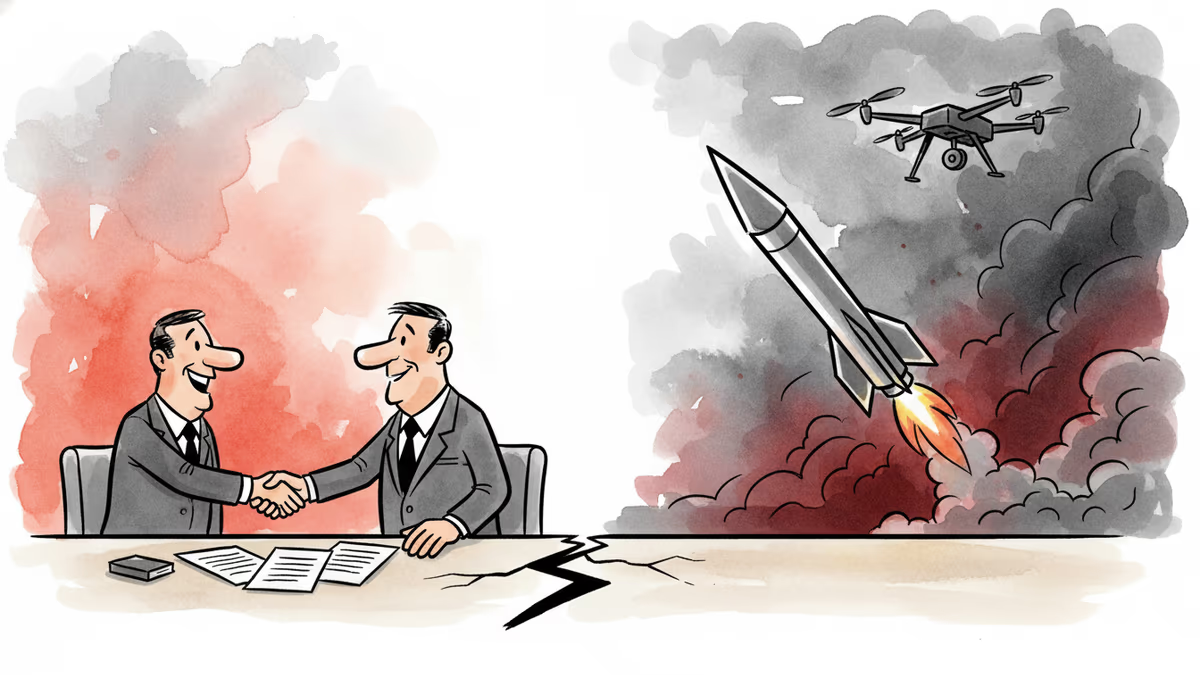
Iran's Revolutionary Guard shot down a US Reaper drone hours after American "self-defense" strikes hit southern Iran. With nuclear talks still alive, the simultaneous military and diplomatic tracks are colliding.

Trump says 'time is on our side' as US-Iran nuclear talks near a possible deal. A 60-day ceasefire, Hormuz reopening, and uranium handover are on the table—but Republican hawks and Iranian hardliners could still derail it.

Trump says a US-Iran nuclear deal is 'largely negotiated.' Iran calls it a 'Persian-style peace.' Both sides claim victory. Here's what's actually at stake.
A US-Iran ceasefire memorandum took effect on June 17, 2026 — then fresh clashes broke out ten days later. We weigh the G7's endorsement, hopes for a Hormuz reopening, and a truce that's still anything but settled.
Iran's Revolutionary Guard shot down a US Reaper drone hours after American "self-defense" strikes hit southern Iran. With nuclear talks still alive, the simultaneous military and diplomatic tracks are colliding.
Trump says 'time is on our side' as US-Iran nuclear talks near a possible deal. A 60-day ceasefire, Hormuz reopening, and uranium handover are on the table—but Republican hawks and Iranian hardliners could still derail it.
Trump says a US-Iran nuclear deal is 'largely negotiated.' Iran calls it a 'Persian-style peace.' Both sides claim victory. Here's what's actually at stake.
Thoughts
Share your thoughts on this article
Sign in to join the conversation