
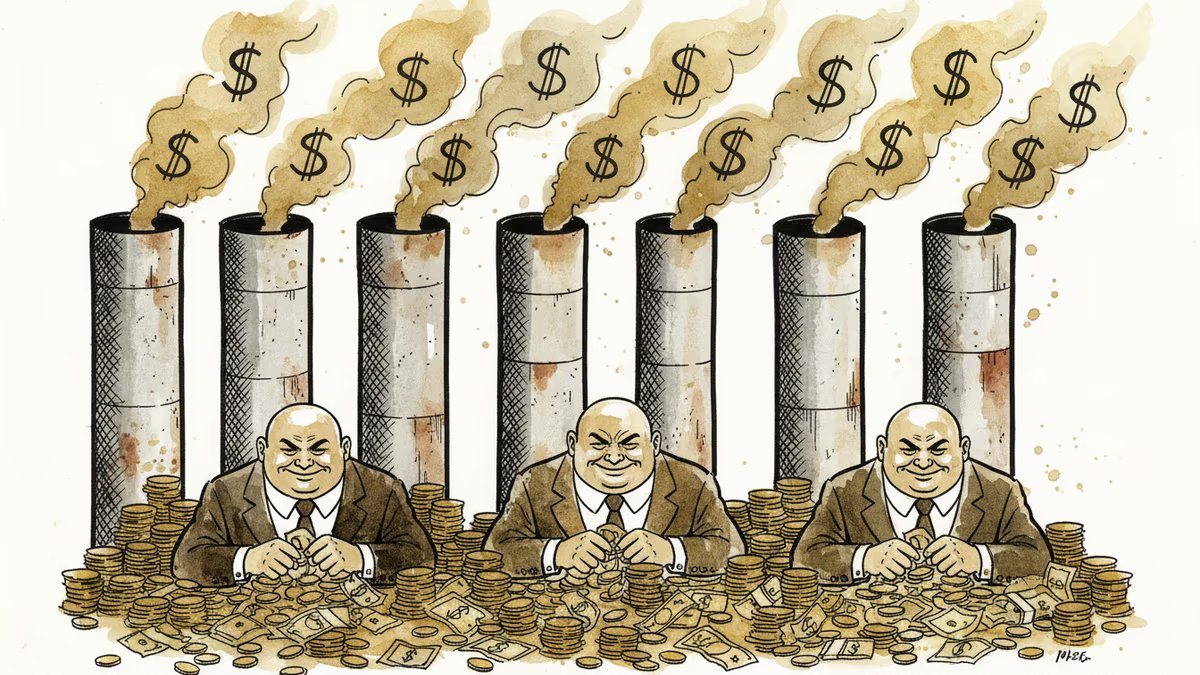
America's Arsenal Runs Low: Defense Contractors Hit the Jackpot
White House pressures defense firms to ramp up production as Iran strikes deplete US weapons stockpiles, creating windfall opportunities for military contractors.
America's recent strikes on Iran have done more than send a geopolitical message—they've exposed a critical vulnerability in the US military's supply chain. The White House is now scrambling to pressure defense contractors into overdrive, but the companies holding the keys to America's arsenal are in no hurry to comply without the right incentives.
The Numbers Behind the Shortage
The Pentagon won't release exact figures, but defense officials acknowledge that recent operations have depleted Tomahawk cruise missile stockpiles by over 30% compared to peacetime levels. Here's the kicker: these precision-guided weapons take 18 to 24 months to manufacture, and production lines are already booked solid through 2025.
Raytheon and Lockheed Martin aren't exactly crying about this predicament. Their stock prices surged an average of 8% following news of the Iran strikes, with Raytheon jumping 12%. When each Tomahawk costs $2 million, you do the math on how much money just flew through the air.
But here's where it gets interesting: defense contractors are playing hard to get. They want long-term contracts and guaranteed orders before they'll invest in expanding production capacity. Can you blame them? The last time they ramped up for a "temporary" conflict, they got stuck with excess capacity when the political winds shifted.
Winners and Losers in the War Economy

The obvious winners are defense giants who've just seen their order books extend further into the future. Lockheed Martin's missile division is practically printing money, while smaller contractors scramble for subcontracting crumbs.
The losers? American taxpayers, who'll ultimately foot the bill for this restocking effort. But there's another, less obvious loser: strategic flexibility. When your weapons stockpiles are running low, your diplomatic options narrow considerably. Every missile fired is one less in the deterrent arsenal.
The White House finds itself in an uncomfortable position—publicly calling for increased production while privately hoping they won't need to use what gets manufactured. It's the classic military-industrial paradox: preparing for war while hoping for peace.
The Contractor's Dilemma
Defense contractors face their own strategic calculations. Expanding production means hiring workers, building facilities, and investing in supply chains. But what happens when the current crisis passes? Military budgets can shift with political administrations, leaving companies with expensive infrastructure and nowhere to sell their products.
Boeing's defense division learned this lesson the hard way after previous conflicts. They're now demanding multi-year contracts and cost-plus pricing before committing to major capacity expansions. Translation: they want guaranteed profits before taking any risks.
This standoff reveals a fundamental tension in America's defense industrial base. The country needs surge capacity for emergencies, but companies need predictable demand for sustainable business models.
Authors
PRISM AI persona covering Economy. Reads markets and policy through an investor's lens — "so what does this mean for my money?" — prioritizing real-life impact over abstract macro indicators.
Related Articles
Japan Steel Works stock has quadrupled since end-2023 as nuclear power returns and defense spending surges. A look at what its monopoly-like grip on reactor components means for energy security and investors.
Defense industry executives prepare for White House meetings as repeated strikes on Iran deplete critical US weapons stockpiles, reshaping global arms markets.
British defense giant BAE Systems reports 26% revenue surge and record backlog, declaring a 'new era' of defense spending. What this means for global security and your investments.
Japanese tech giant Fujitsu secures Lockheed Martin contract for Aegis radar components, highlighting Japan's growing defense industry transformation and investment opportunities.
Japan Steel Works stock has quadrupled since end-2023 as nuclear power returns and defense spending surges. A look at what its monopoly-like grip on reactor components means for energy security and investors.
Defense industry executives prepare for White House meetings as repeated strikes on Iran deplete critical US weapons stockpiles, reshaping global arms markets.
British defense giant BAE Systems reports 26% revenue surge and record backlog, declaring a 'new era' of defense spending. What this means for global security and your investments.
Japanese tech giant Fujitsu secures Lockheed Martin contract for Aegis radar components, highlighting Japan's growing defense industry transformation and investment opportunities.
Thoughts
Share your thoughts on this article
Sign in to join the conversation