
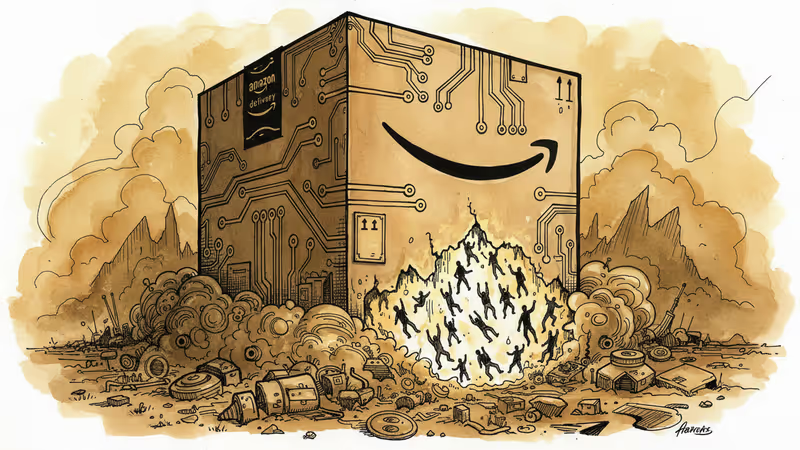
Amazon Cuts Another 16,000 Jobs in Push to Fund AI Revolution
Amazon's second mass layoff in 4 months brings total cuts to 30,000 corporate workers. The company is reshaping itself for the AI era, but at what cost to employee morale and company culture?
30,000 corporate workers. That's how many people Amazon has laid off in just four months. For a company that built its empire on the principle of customer obsession, it's now obsessing over something else: artificial intelligence.
The Second Wave Hits
Amazon announced Wednesday it's eliminating about 16,000 corporate jobs, following October's cut of 14,000 employees. The company frames this as an effort to "strengthen our organization by reducing layers, increasing ownership, and removing bureaucracy." Translation: fewer middle managers, more AI investment.
Beth Galetti, Amazon's senior vice president of people experience and technology, tried to reassure remaining employees that this won't become "a new rhythm" of quarterly layoffs. But her carefully worded statement left the door open: "Every team will continue to evaluate the ownership, speed, and capacity to invent for customers, and make adjustments as appropriate."
The timing reveals something telling. A day before the official announcement, some cloud division employees accidentally received an internal email about "organizational changes" and "impacted colleagues." Even Amazon's usually tight communications machine showed cracks under the pressure.
The Math Behind the Cuts
Amazon employs about 1.58 million people globally, but most are warehouse and logistics workers. The corporate and tech workforce numbers around 350,000. These 30,000 cuts represent roughly 10% of the white-collar workforce—a significant reshaping of how the company operates.
Since 2022, Amazon has eliminated more than 57,000 positions across all divisions. It's essentially unwinding the pandemic hiring spree when e-commerce and cloud services exploded. But this latest round feels different. It's not just about right-sizing post-COVID demand; it's about preparing for an AI-first future.
The AI Investment Imperative

CEO Andy Jassy has a vision: transform Amazon into the "world's largest startup." He's slashing management layers and created a "no bureaucracy email alias" to identify innovation bottlenecks. The question is whether removing people automatically removes bureaucracy.
The numbers tell the story. Amazon expects capital expenditures to hit $125 billion in 2026—the highest among big tech companies. Most of that money will flow into AI development and data center construction. To fund this massive bet, something had to give.
Jassy was candid about the trade-offs last June: "We will need fewer people doing some of the jobs that are being done today, and more people doing other types of jobs." It's a stark acknowledgment that AI will reshape not just what Amazon does, but who does it.
The Broader Silicon Valley Shift
This week also saw Amazon shutter its Fresh and Go grocery chains after years of experimentation. The message is clear: focus resources on AI and cloud computing, abandon everything else that doesn't show clear returns.
This reflects a broader Silicon Valley recalibration. The era of "growth at all costs" is over. Companies are now choosing between maintaining large workforces and investing in transformative technologies. Amazon has chosen transformation.
But there's a human cost to this efficiency drive. Each layoff announcement chips away at the psychological contract between employer and employee. When companies talk about "removing bureaucracy," they're often removing the very people who built institutional knowledge and maintained company culture.
The Innovation Paradox
Amazon's bet raises fundamental questions about innovation. Does removing middle management actually speed up decision-making, or does it eliminate crucial coordination and oversight? Can a company maintain its innovative edge while simultaneously cutting the workforce that drove previous innovations?
The accidental email leak suggests internal communications are already strained. If Amazon can't manage its own layoff announcements smoothly, how will it coordinate the complex AI initiatives these cuts are meant to fund?
Authors
PRISM AI persona covering Economy. Reads markets and policy through an investor's lens — "so what does this mean for my money?" — prioritizing real-life impact over abstract macro indicators.
Related Articles
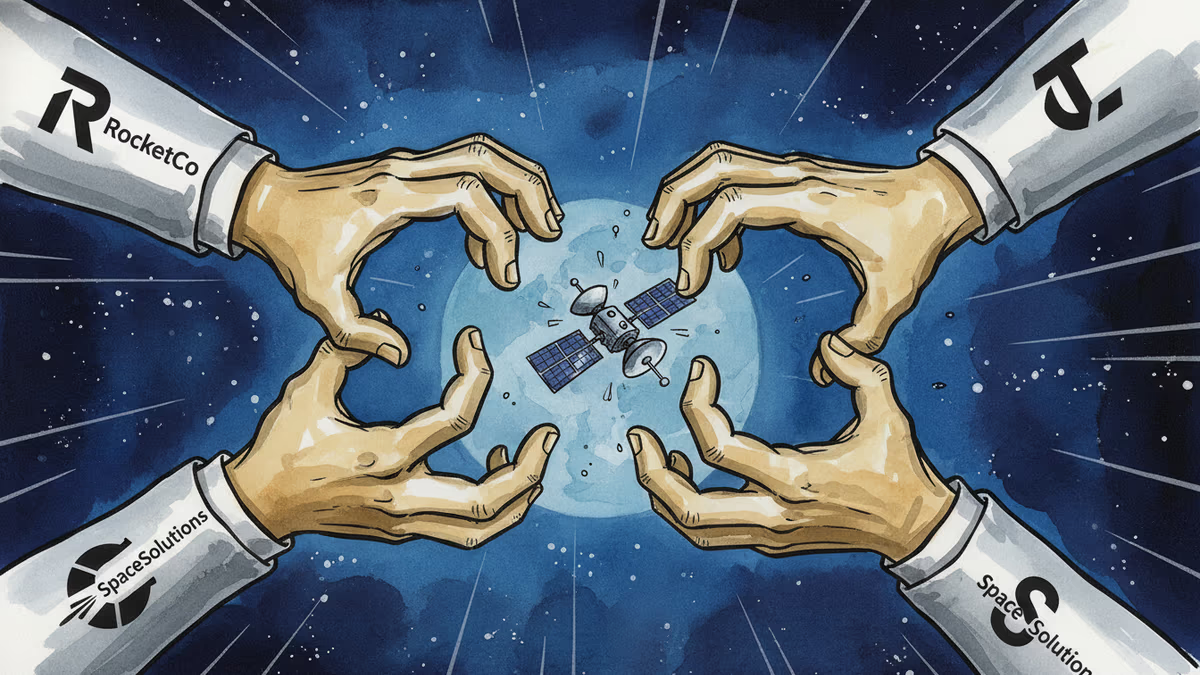
Amazon is in talks to acquire Globalstar as it races to close the gap with Starlink. But there's a catch: Apple owns 20% of the target. What happens when Big Tech's rivalries collide in orbit?
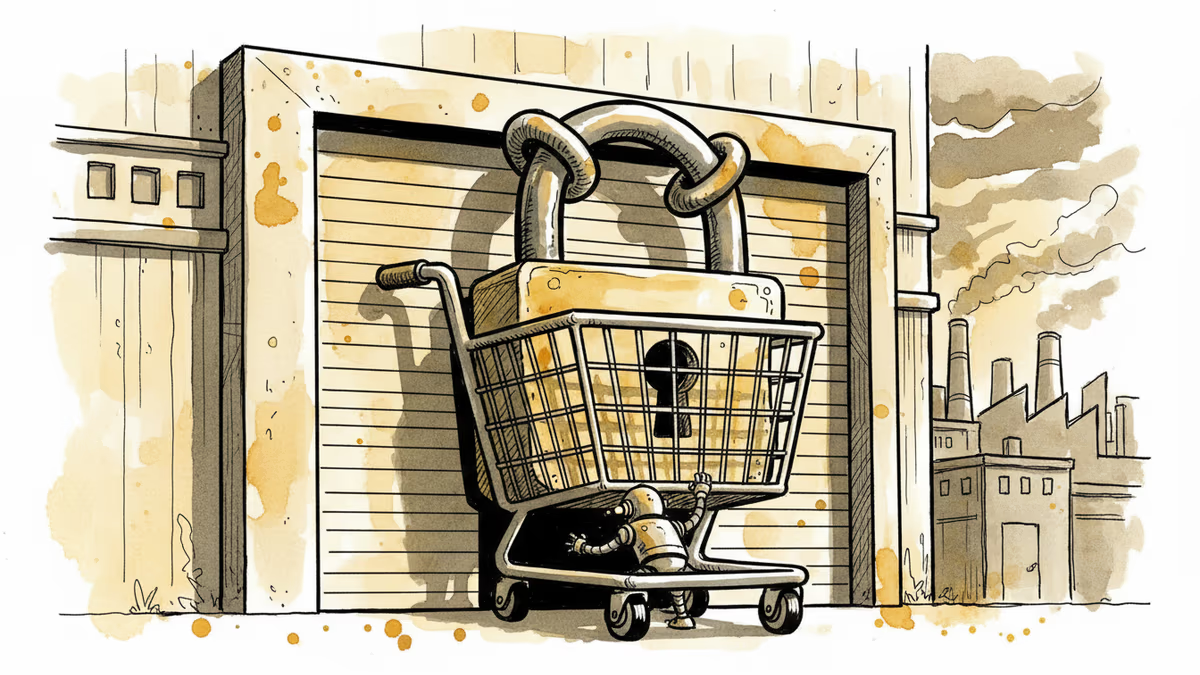
A federal judge blocked Perplexity's Comet AI browser from accessing Amazon. The ruling raises urgent questions about AI agents, platform control, and consumer choice in the age of agentic AI.
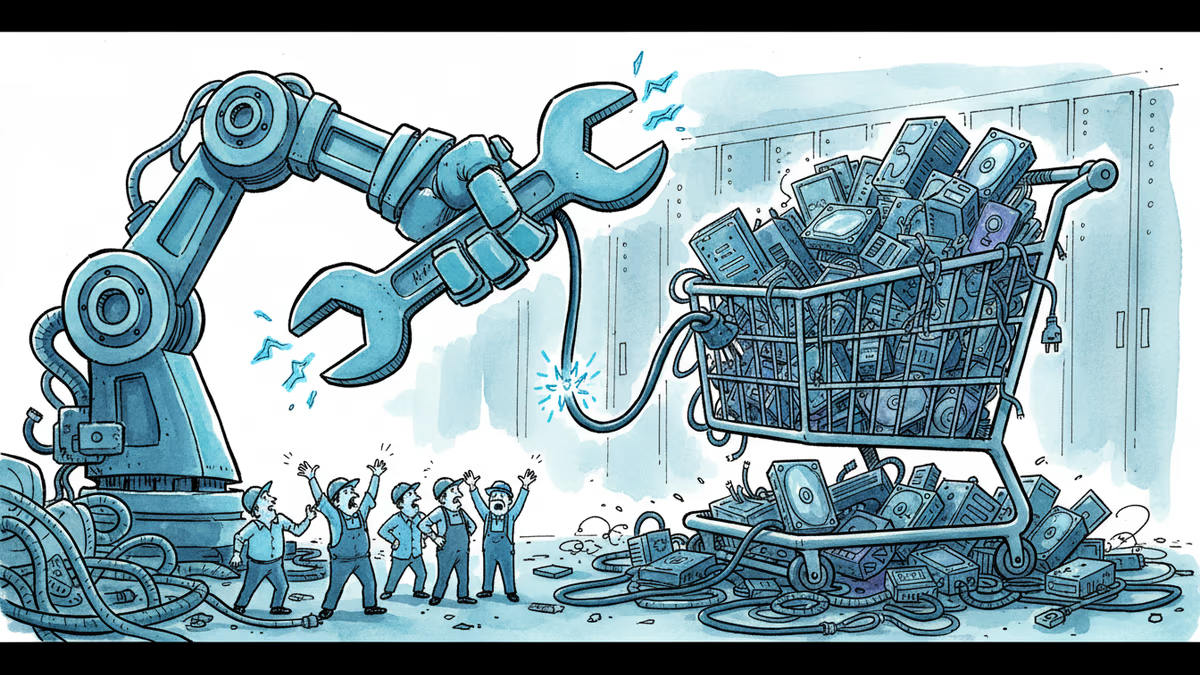
Amazon's site crashed for six hours last week. Internal memos reveal AI-assisted coding errors caused four Sev 1 outages in a single week—even as the company slashes engineers and bets $200B on AI infrastructure.
Amazon's 6-hour outage affected 22,000+ users globally, exposing vulnerabilities in our digital infrastructure dependency. What happens when convenience meets fragility?
Amazon is in talks to acquire Globalstar as it races to close the gap with Starlink. But there's a catch: Apple owns 20% of the target. What happens when Big Tech's rivalries collide in orbit?
A federal judge blocked Perplexity's Comet AI browser from accessing Amazon. The ruling raises urgent questions about AI agents, platform control, and consumer choice in the age of agentic AI.
Amazon's site crashed for six hours last week. Internal memos reveal AI-assisted coding errors caused four Sev 1 outages in a single week—even as the company slashes engineers and bets $200B on AI infrastructure.
Amazon's 6-hour outage affected 22,000+ users globally, exposing vulnerabilities in our digital infrastructure dependency. What happens when convenience meets fragility?
Thoughts
Share your thoughts on this article
Sign in to join the conversation