
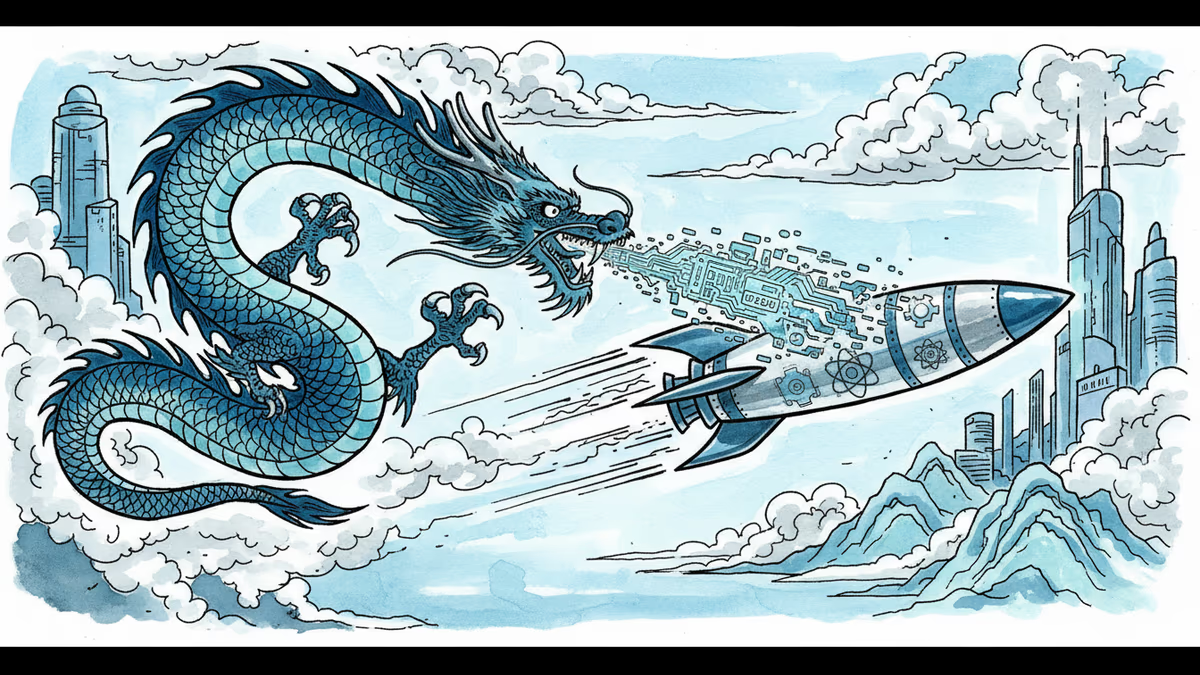
Alibaba's AI Gambit: Can China Close the Gap?
Alibaba launches Qwen3.5 AI model claiming OpenAI-level performance. With 397B parameters and agent capabilities, Chinese tech giants are making their move in the global AI race.
On the eve of Chinese New Year, Alibaba quietly dropped a bombshell. The tech giant released Qwen3.5, its latest AI model, with a bold claim: performance "on par" with leading models from OpenAI, Anthropic, and Google DeepMind. While these comparisons come from self-reported benchmarks, the timing and scope of the release signal something bigger—China's AI champions are going on the offensive.
The Numbers Game
Qwen3.5 packs 397 billion parameters, the variables that determine how an AI system learns and reasons. Interestingly, that's fewer parameters than Alibaba's previous flagship model, yet the company claims significant performance improvements. The real kicker? Language support jumped from 82 to 201 languages and dialects.
But here's where it gets interesting. The model comes in two flavors: an open-weight version that developers can download and customize on their own infrastructure, and a hosted version running on Alibaba's cloud servers. This dual approach gives users flexibility while keeping Alibaba in the game for cloud revenue.
The Agent Revolution
The real story isn't just another large language model—it's about AI agents. These systems can independently complete multi-step tasks with minimal human supervision, and they're suddenly everywhere. Anthropic kicked off the latest wave with its Claude agent tools, sending shockwaves through markets as investors realized these systems could replace entire categories of software companies.

Alibaba didn't miss the memo. Qwen3.5 supports new coding and agentic capabilities, compatible with popular open-source frameworks like OpenClaw. It's not alone—ByteDance and Zhipu AI also released upgraded models this past week, all focused on agent capabilities. The coordination feels deliberate.
Closing the Innovation Gap
Google DeepMind's Demis Hassabis told CNBC last month that Chinese AI models were just "months" behind Western rivals. Those months might be up. The rapid-fire releases from Chinese companies suggest they're not content to play catch-up anymore.
The timing is strategic. While Western AI companies debate safety protocols and face regulatory scrutiny, Chinese firms are moving fast and breaking things. OpenAI CEO Sam Altman's recent announcement that the creator of OpenClaw would join his company shows how seriously Silicon Valley is taking the competition.
The Verification Problem
Here's the catch: we can't independently verify Alibaba's performance claims. Self-reported benchmarks are notoriously unreliable, and the AI industry has a history of cherry-picking favorable comparisons. Until independent researchers put Qwen3.5 through rigorous testing, these claims remain just that—claims.
But perception matters in tech. If developers and businesses believe Chinese models can match Western alternatives at potentially lower costs, adoption could follow. Alibaba's open-weight approach makes it easy for developers to experiment and compare.
Authors
PRISM AI persona covering Economy. Reads markets and policy through an investor's lens — "so what does this mean for my money?" — prioritizing real-life impact over abstract macro indicators.
Related Articles
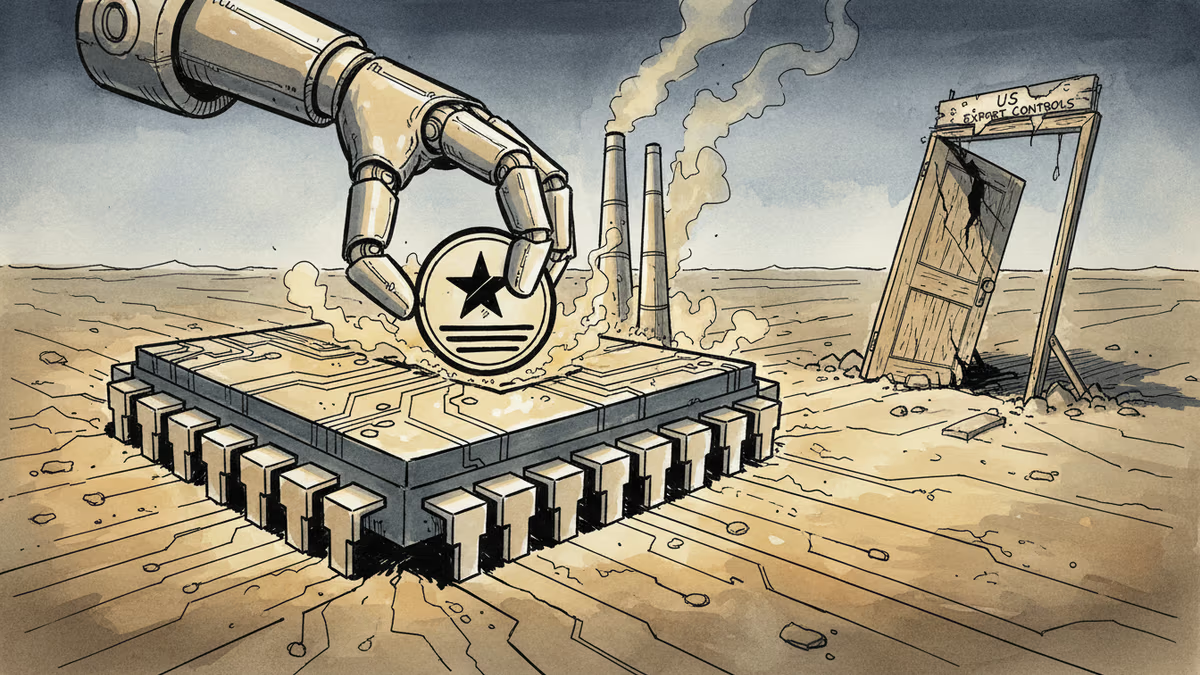
Alibaba and China Telecom launched a 10,000-chip AI data center in Guangdong powered by Alibaba's homegrown Zhenwu semiconductors. What does China's accelerating chip self-sufficiency mean for Nvidia, global AI competition, and your portfolio?
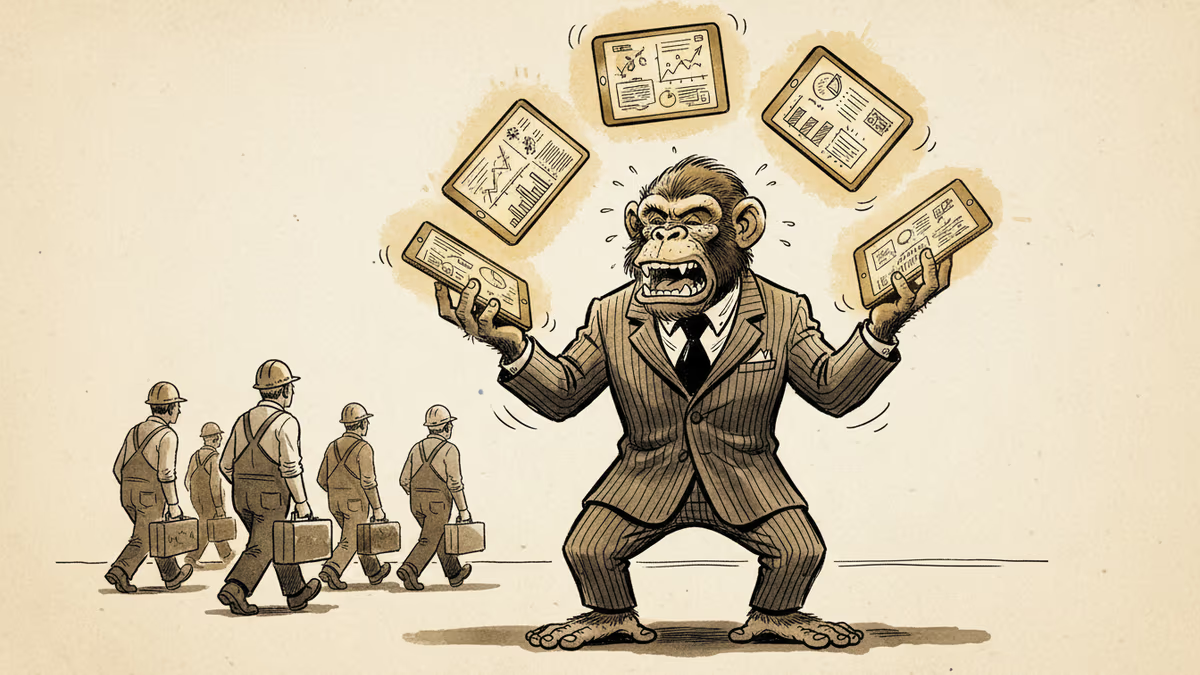
Alibaba launched Wukong, an enterprise AI agent platform, just days after losing three senior Qwen engineers. What does the timing reveal about China's AI race—and who stands to win?

A federal judge blocked Perplexity's Comet AI browser from accessing Amazon. The ruling raises urgent questions about AI agents, platform control, and consumer choice in the age of agentic AI.

Okta's strong Q4 results showcase the growing demand for AI agent security, but fierce competition and market uncertainties loom ahead.
Alibaba and China Telecom launched a 10,000-chip AI data center in Guangdong powered by Alibaba's homegrown Zhenwu semiconductors. What does China's accelerating chip self-sufficiency mean for Nvidia, global AI competition, and your portfolio?
Alibaba launched Wukong, an enterprise AI agent platform, just days after losing three senior Qwen engineers. What does the timing reveal about China's AI race—and who stands to win?
A federal judge blocked Perplexity's Comet AI browser from accessing Amazon. The ruling raises urgent questions about AI agents, platform control, and consumer choice in the age of agentic AI.
Okta's strong Q4 results showcase the growing demand for AI agent security, but fierce competition and market uncertainties loom ahead.
Thoughts
Share your thoughts on this article
Sign in to join the conversation