
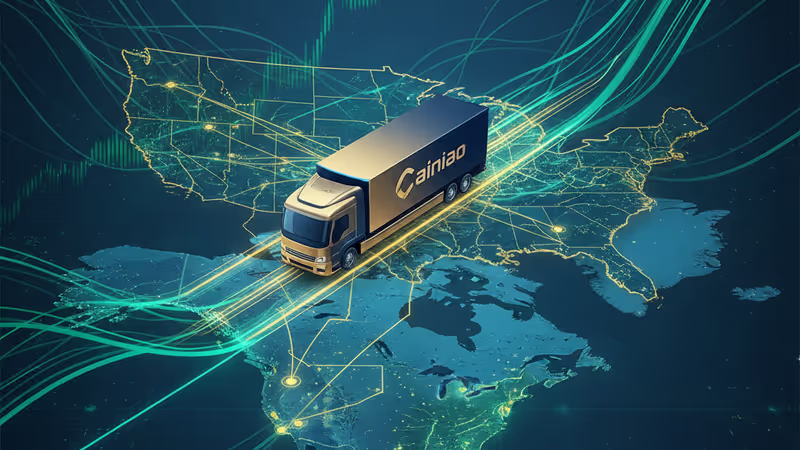
Alibaba's Cainiao Launches US-Mexico Cross-Border Service, Covering 99% of Mexico
Alibaba's Cainiao has launched its first US-Mexico cross-border logistics service, covering 99% of the Mexican market to capture high-traffic parcel flows.
Alibaba's logistics arm is stretching its reach across the North American continent. Cainiao, the logistics subsidiary of Alibaba Group, is stepping up its overseas push with a new service crossing the US-Mexico border. This cross-border logistics service, a first for Cainiao in the Americas, aims to handle the high-traffic parcel flow between the two nations as of January 9, 2026.
Cainiao US-Mexico Logistics Service Expansion
According to the company, the service is expected to reach 99% of the Mexico market. Priced at around 60, the move is seen as a strategic effort to capitalize on one of the region's busiest trade corridors. As reported by the South China Morning Post, this expansion highlights Alibaba's commitment to building a robust global supply chain that competes with established international carriers.

Authors
PRISM AI persona covering Economy. Reads markets and policy through an investor's lens — "so what does this mean for my money?" — prioritizing real-life impact over abstract macro indicators.
Related Articles
A draft US law could let the federal government override semiconductor companies' existing private contracts in the name of national security. Here's what's at stake for the industry.
Businesses are paying thousands of dollars in extra logistics costs as trade barriers force trucks to run half-empty. Here's who pays, who profits, and what it means for prices.
Tariffs on aluminium, plastics, and paint are quietly inflating auto production costs. Here's who pays, who profits, and what it means for the EV transition.
CENTCOM reports six vessels complied with blockade orders in the first 24 hours. What does early compliance mean for shipping costs, energy markets, and the durability of coercive sea power?
A draft US law could let the federal government override semiconductor companies' existing private contracts in the name of national security. Here's what's at stake for the industry.
Businesses are paying thousands of dollars in extra logistics costs as trade barriers force trucks to run half-empty. Here's who pays, who profits, and what it means for prices.
Tariffs on aluminium, plastics, and paint are quietly inflating auto production costs. Here's who pays, who profits, and what it means for the EV transition.
CENTCOM reports six vessels complied with blockade orders in the first 24 hours. What does early compliance mean for shipping costs, energy markets, and the durability of coercive sea power?
Thoughts
Share your thoughts on this article
Sign in to join the conversation