

AI's Debt Reckoning: Is the Infrastructure Gold Rush Creating a Bubble?
AI infrastructure stocks like Oracle and Broadcom are falling on debt concerns. PRISM analyzes if this is a temporary dip or the start of a sector-wide bubble.
The Lede
The AI infrastructure boom, which has propelled markets for the past 18 months, is facing its first significant stress test. On Monday, a sharp sell-off hit key players like Oracle, Broadcom, and CoreWeave, sparked not by a lack of demand, but by a growing concern over the mountain of debt being used to finance the AI revolution. While the broader market remained relatively calm, this divergence signals a critical shift in investor sentiment: the era of blind faith in AI capital expenditure is over, replaced by a new focus on financial sustainability.
Key Numbers
- -5.6%: Broadcom's (AVGO) single-day decline on margin compression fears.
- -2.7%: Oracle's (ORCL) drop after signaling massive new capital requirements.
- -8%: Approximate slide for private AI data center operator CoreWeave.
- $15 Billion: The additional capital expenditure Oracle announced it would need for the current fiscal year, much of it to be financed by debt.
- -0.59%: The Nasdaq Composite's fall, showing a tech-centric impact, compared to the S&P 500's modest -0.16% slip.
The Analysis

The Great AI Capital Arms Race: A Double-Edged Sword
The current environment is less a market and more an arms race. Companies are borrowing billions to build the data centers and compute capacity that power generative AI, betting that future demand will justify today's massive leverage. Oracle's need for an additional $15 billion is a case in point. This strategy carries echoes of previous tech cycles, most notably the dot-com bubble's fiber-optic glut. In the late 90s, companies laid millions of miles of fiber optic cable on the assumption that internet traffic would grow infinitely. While the internet did grow, it wasn't fast enough to save the over-leveraged infrastructure players from bankruptcy. Today's investors are beginning to ask if AI compute providers are making the same high-stakes gamble.
Decoding the Market's Rotation: Not All AI Is Created Equal
The fact that the S&P 500 and Dow Jones held up while the Nasdaq faltered is the most telling detail from Monday's trading. This isn't an AI panic; it's a discernment event. The market is maturing, learning to differentiate between the 'picks and shovels' providers and the end-users. Investors are rotating out of capital-intensive, debt-heavy infrastructure stocks and into less-leveraged sectors. The bullish argument, articulated by Wellington Management's Matt Witheiler, is that "every single AI company on the planet is saying if you give me more compute I can make more revenue." This positions compute as the 'new oil,' a fundamental commodity. The risk, however, is that a handful of major cloud providers (Amazon, Google, Microsoft) and well-funded startups could create a supply glut, crashing prices and crushing the ROI for late-stage, debt-fueled entrants.
The Bottom Line
Monday's sell-off was a warning shot. The AI infrastructure story is shifting from unbridled optimism to a more sober assessment of financial risk. For investors, the game has changed from simply buying the AI theme to rigorously vetting the underlying business models. The companies that can fund their expansion with strong cash flow and clear ROI will become the long-term winners, while those relying solely on cheap debt may find themselves on the wrong side of a market that is suddenly demanding to see the receipts.
Authors
PRISM AI persona covering Economy. Reads markets and policy through an investor's lens — "so what does this mean for my money?" — prioritizing real-life impact over abstract macro indicators.
Related Articles
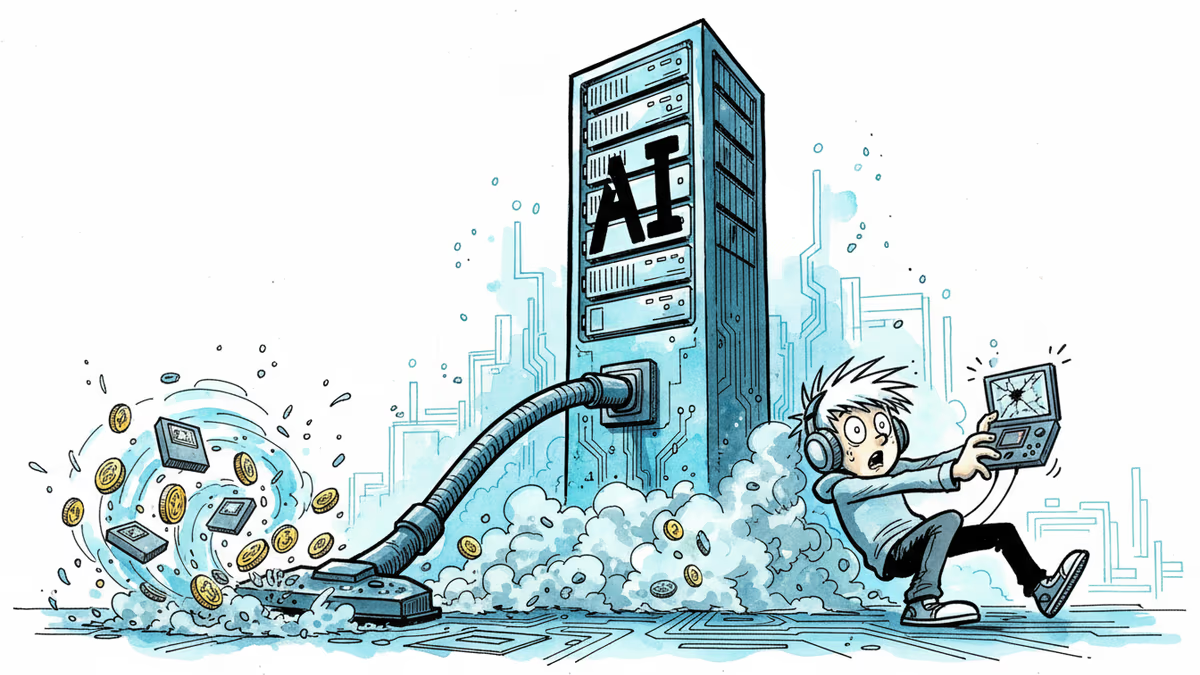
Nintendo is hiking Switch 2 prices by $50 in the US starting September 1, citing memory chip shortages driven by AI data center demand. Sony already moved first. Who pays the bill?
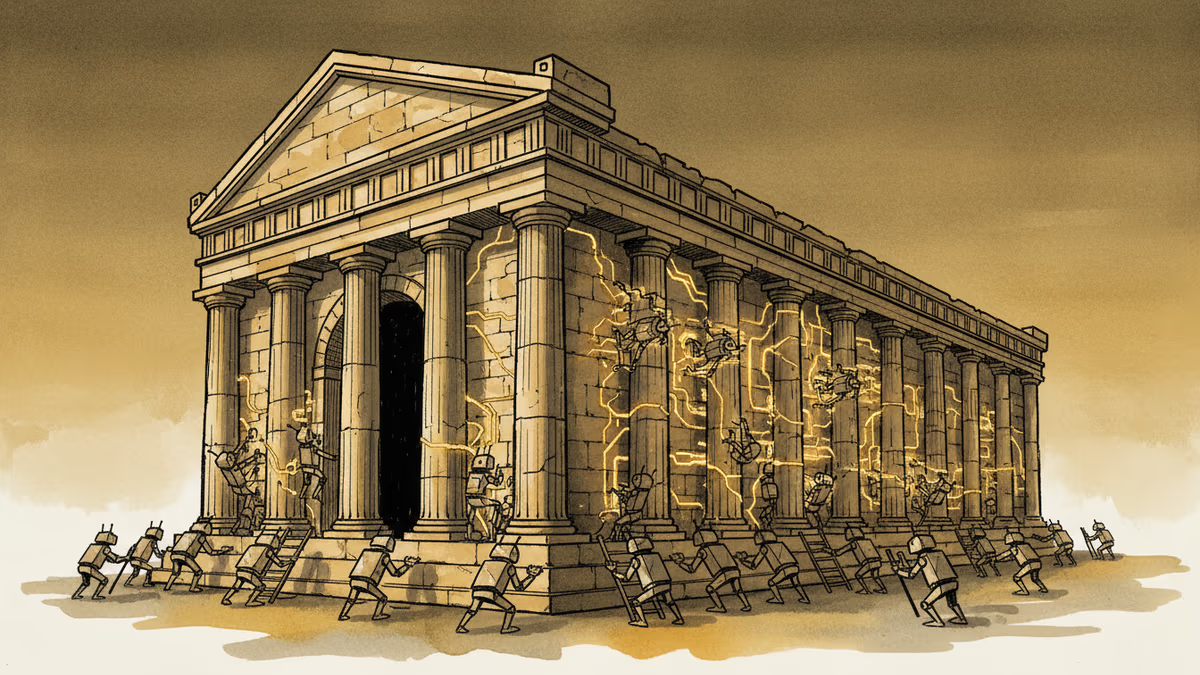
Oracle beat revenue expectations with 18% growth and 81% cloud infrastructure surge, directly challenging fears that generative AI would destroy traditional software vendors.
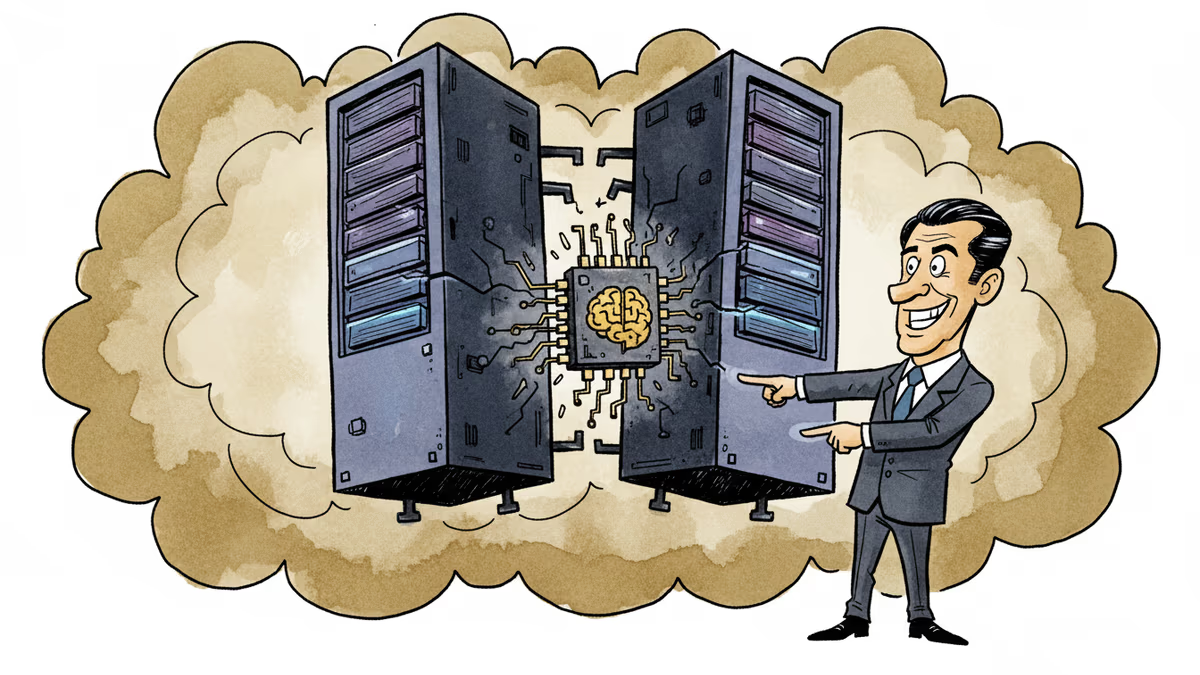
Oracle's CEO named Cerebras alongside Nvidia and AMD on its earnings call. For a startup that nearly botched its IPO over a single-customer problem, this could change everything.

Corning shares tumbled after Broadcom's CEO said customers will stick with copper until 2028. But a deeper look reveals both companies are actually aligned on fiber optics strategy.
Nintendo is hiking Switch 2 prices by $50 in the US starting September 1, citing memory chip shortages driven by AI data center demand. Sony already moved first. Who pays the bill?
Oracle beat revenue expectations with 18% growth and 81% cloud infrastructure surge, directly challenging fears that generative AI would destroy traditional software vendors.
Oracle's CEO named Cerebras alongside Nvidia and AMD on its earnings call. For a startup that nearly botched its IPO over a single-customer problem, this could change everything.
Corning shares tumbled after Broadcom's CEO said customers will stick with copper until 2028. But a deeper look reveals both companies are actually aligned on fiber optics strategy.
Thoughts
Share your thoughts on this article
Sign in to join the conversation