
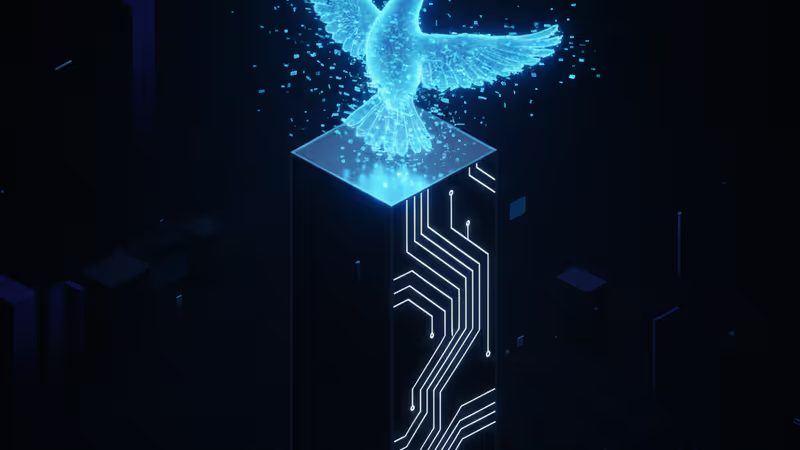
X Sues to Keep 'Twitter' Dead: A Lawsuit That Proves the Rebrand Failed
X Corp is suing to block a new 'Twitter', but the lawsuit reveals a deeper truth: the strategic failure of the X rebrand and the enduring power of a brand Musk tried to kill.
The Lede: The Paradox of Musk's Legal Battle
Elon Musk, the man who publicly executed Twitter, is now suing to protect its corpse. X Corp.’s lawsuit against startup Operation Bluebird, which aims to resurrect the Twitter brand, is far more than a standard trademark dispute. It's a public admission of one of the most significant strategic blunders in modern tech history: the fact that the ghost of Twitter still holds more cultural and commercial power than the reality of X.
Why It Matters: A Referendum on Brand Equity
For business leaders and strategists, this courtroom drama is a critical case study. It reveals the dangerous gap between a CEO's vision and market reality. While Musk is building his 'everything app' under the X banner, this lawsuit proves the 'Twitter' brand is still so valuable that others are willing to fight for its vacant throne. The second-order effect is a public litmus test: if X has to legally assert its ownership over a brand it deliberately abandoned, it signals a profound failure in creating superior value with the new identity.
The Analysis: Deconstructing the Conflict
The Legal Minefield of 'Brand Abandonment'
At the heart of this is a nuanced legal concept. Operation Bluebird's claim isn't just that X Corp. stopped using the Twitter logo; it's that the company showed a clear intent not to resume use. Every public statement by Musk denigrating 'the old regime' and championing X as a fundamentally different entity could be used as evidence against him. X Corp's defense will likely argue that the underlying service is the same, but they are trapped. To win the case, they must argue for the ongoing value and identity of the very brand they tried so hard to convince the world was dead and buried.
The High Cost of Killing a Global Verb
Brands dream of becoming verbs. You don't 'search online'; you 'Google'. You don't 'send a short message'; you 'Tweet'. This linguistic integration is the pinnacle of brand equity, worth billions in organic marketing and cultural relevance. Musk voluntarily relinquished this, a move with no clear historical precedent for a healthy, dominant brand. This lawsuit is the direct consequence. A vacuum was created, and as market dynamics dictate, someone will always try to fill it. Operation Bluebird is simply the first to attempt it so formally.
The Vulture Economy of a Fractured Social Square
This conflict doesn't exist in isolation. It's symptomatic of the power vacuum left in the wake of Twitter's transformation. Competitors like Threads, Bluesky, and Mastodon have been chipping away at the user base, but Operation Bluebird's strategy is different and more audacious. Instead of building a new town square, they are trying to claim the deed to the old, beloved one. They are betting that user muscle memory and brand nostalgia are stronger than Musk's futuristic vision for X. This lawsuit will determine if a brand's soul can be legally reclaimed after its corporate body has been repurposed.
PRISM Insight: The Rebranding Playbook's Cautionary Tale
The key insight for any executive or brand strategist is that a rebrand's success is not measured by press releases or new logos, but by market adoption and the successful transfer of brand equity. The X rebrand was an amputation, not a transition. There was no managed handover of goodwill from Twitter to X; there was a declaration of death and a forced adoption of a new symbol.
- Lesson 1: Don't Create a Vacuum. In a competitive market, abandoned brand equity will be targeted. A successful rebrand bridges the old and the new, transferring value rather than destroying it.
- Lesson 2: A Brand Lives in the Public Mind. Legal ownership is only one part of the equation. Twitter's true power resided in the collective consciousness of its users. Musk changed the name on the building, but he couldn't erase the memory of what happened inside.
This lawsuit serves as a costly, public-facing focus group, confirming what many suspected: the market has not fully accepted X, and the ghost of Twitter remains a potent force.
PRISM's Take
This lawsuit is a battle Elon Musk has already lost, regardless of the legal outcome. By fighting to keep the Twitter trademark dormant, X Corp. is implicitly screaming that the old brand still poses a threat to the new one. A confident, successful brand doesn't fear its predecessor. A victory in court would only be a Pyrrhic one; X would legally own a brand it has no intention of using, while publicly validating its enduring power. The real story isn't about trademark law; it's about the chaotic and destructive mismanagement of a once-in-a-generation asset. The blue bird may be gone, but its ghost continues to haunt the 'everything app'.
相关文章
伊隆·馬斯克的X Corp. 為何起訴一個試圖復活「Twitter」品牌的新創?這不僅是商標之爭,更是對品牌價值與未來願景的豪賭。
Elon Musk 的 X 為何被迫在法律文件中重新擁抱「Twitter」?這場商標爭奪戰揭示了其品牌重塑策略的重大缺陷,以及一堂所有企業都該學的昂貴教訓。

最新研究揭露Instacart利用AI動態定價,導致部分用戶多付23%。PRISM深度解析這背後的演算法歧視、信任危機與零工經濟的未來。

Uber One訂閱服務面臨FTC與24州聯合訴訟,指控其採用『暗黑模式』誤導消費者。PRISM深度分析此案如何預示訂閱經濟的信任危機,以及對企業與消費者的深遠影響。