
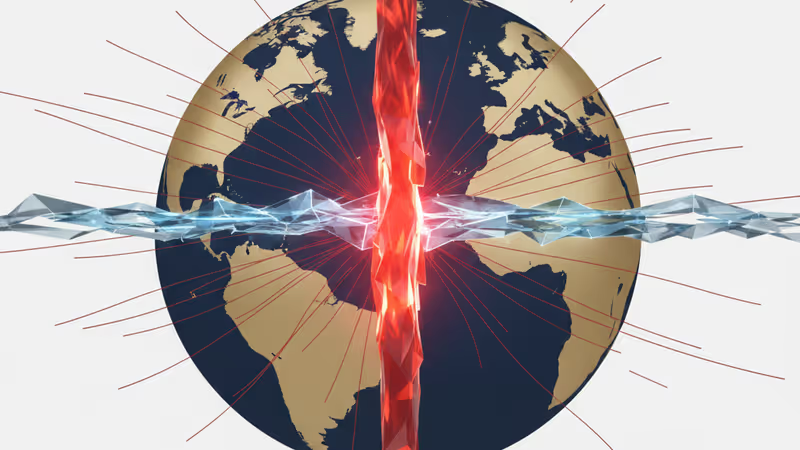
US Bars 5 Europeans, Citing Pressure on Tech Firms to Censor Americans
The U.S. State Department is barring five Europeans accused of pressuring American tech companies into censorship, escalating the transatlantic conflict over tech regulation and digital sovereignty.
The transatlantic tech dispute just got personal. The U.S. State Department announced on Tuesday that it's barring five Europeans from the country, accusing them of a targeted campaign to pressure U.S. tech firms into censoring or suppressing American viewpoints. The move signals a significant escalation in the ongoing debate over free speech and digital regulation.
An Unusual Diplomatic Move
According to the State Department's announcement, the unnamed individuals led efforts to coerce American companies, though specific details about their identities, nationalities, or the companies involved were not disclosed. The department framed the action as a defense of American free speech principles against foreign pressure.
A Widening Ideological Gap
This decision doesn't exist in a vacuum. It reflects a growing divergence between the U.S. and the European Union on how to govern the digital world. The EU has been pushing for stricter regulations through landmark legislation like the Digital Services Act (DSA) and Digital Markets Act (DMA), aiming to increase platform accountability. From Washington's perspective, however, these regulatory efforts can be seen as attempts to impose foreign speech codes on American companies, leading to actions like Tuesday's entry ban.
本内容由AI根据原文进行摘要和分析。我们力求准确,但可能存在错误,建议核实原文。
相关文章
孟加拉最大反對黨領袖塔里克・拉赫曼在流亡17年後將返國,預計500萬支持者將集結首都。此舉為明年2月的國會大選投下變數,考驗該國脆弱的民主轉型。

尼泊爾前總理奧利在爭議聲中三度連任CPN-UML黨魁。他因鎮壓Z世代抗議致77死而受查,此番當選不僅違背民意,更可能引發尼泊爾政局的劇烈動盪。
馬來西亞政府在泰國對澳洲記者韓特提起跨國誹謗訴訟。本文深入分析「惡意訴訟」(SLAPP)如何成為跨國鎮壓工具,及其對東南亞言論自由構成的嚴重威脅。
南韓李在明政府內部,「自主派」與「同盟派」對北韓政策的路線之爭再次浮上檯面。這場長達20年的分歧,在美中競爭加劇的背景下,正讓南韓外交陷入兩難。
孟加拉最大反對黨領袖塔里克・拉赫曼在流亡17年後將返國,預計500萬支持者將集結首都。此舉為明年2月的國會大選投下變數,考驗該國脆弱的民主轉型。
尼泊爾前總理奧利在爭議聲中三度連任CPN-UML黨魁。他因鎮壓Z世代抗議致77死而受查,此番當選不僅違背民意,更可能引發尼泊爾政局的劇烈動盪。
馬來西亞政府在泰國對澳洲記者韓特提起跨國誹謗訴訟。本文深入分析「惡意訴訟」(SLAPP)如何成為跨國鎮壓工具,及其對東南亞言論自由構成的嚴重威脅。
南韓李在明政府內部,「自主派」與「同盟派」對北韓政策的路線之爭再次浮上檯面。這場長達20年的分歧,在美中競爭加劇的背景下,正讓南韓外交陷入兩難。