
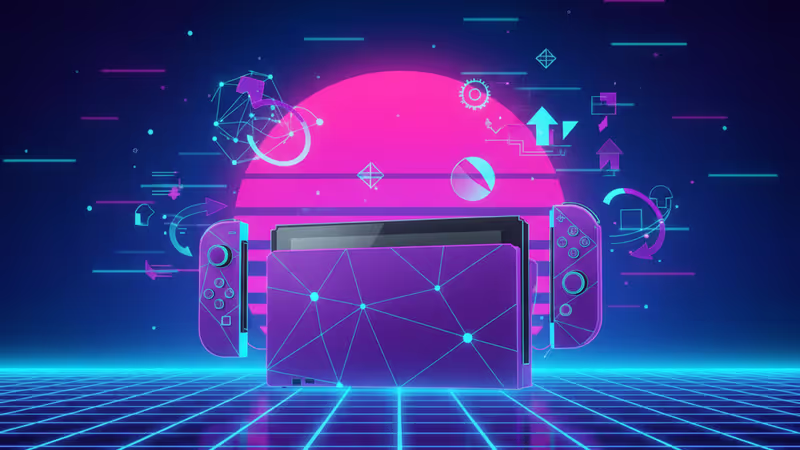
Nintendo Switch 2 Review: A Powerful, Pricey Successor That Plays It Safe
An in-depth review of the newly released Nintendo Switch 2. We analyze its powerful specs like 4K output and a 120Hz screen, alongside its drawbacks: a $449.99 price tag and limited 256GB storage.
PRISM Insight: Nintendo's 'Apple-ification'
The Switch 2's near-$450 price point and paid game upgrades signal a pivotal strategy shift for Nintendo. The company is moving away from the traditional console model of selling hardware at a low margin or loss to drive software sales. Instead, it's embracing a premium, 'Apple-like' strategy that prioritizes hardware profitability and maximizes recurring revenue from a loyal user base through subscriptions and add-ons. It's an ambitious pivot to build a more resilient, high-margin business in a competitive market, but it's also a gamble that risks alienating price-sensitive consumers.
After years of swirling rumors, the Nintendo Switch 2 is finally here. For gamers who watched blockbuster titles like *Elden Ring* skip the original console, the promise of a more powerful successor has been a long-held hope. Based on early hands-on accounts, the new console is exactly that: a better, stronger version of the original Switch. It delivers a welcome performance boost but comes with a steep price tag and some notable compromises.
A Sharper Screen and 4K Output
The Switch 2's core strength is its upgraded hardware. According to one reviewer's experience, the 7.9-inch 1080p LCD screen, which boasts a 120Hz refresh rate, looks sharp and feels responsive. While an OLED display would have been a preferred choice for many, the current screen is a clear improvement for handheld play. When docked, the console's ability to output games at up to 4K resolution—or up to 120Hz at lower resolutions—is a significant leap forward, making it a more viable living room console.
The Gaming Experience: New, Upgraded, and Classic
The console features backward compatibility with most original Nintendo Switch games. Better yet, some of those titles are receiving patches to run at higher frame rates and resolutions. One user reported that *The Legend of Zelda: Tears of the Kingdom* runs at a smooth 4K 60fps after purchasing a $10 upgrade for the Switch 2 edition (the download is free for active Nintendo Switch Online subscribers).
That subscription also unlocks a growing library of GameCube titles available as Nintendo Classics. For new native games, the launch bundle includes *Mario Kart World*, and third-party developers are offering free demos for major titles like *Final Fantasy VII Remake Intergrade*, allowing players to sample games before buying.
The Biggest Complaints: Storage and Price
A significant pain point for the Switch 2 is its 256GB of internal storage. For players with a large digital library, this is simply not enough. Expanding the storage requires a microSD Express card, which can cost twice as much as the standard microSD cards used by the original Switch, adding a hidden cost for serious gamers.
The console’s $449.99 starting price also came as a shock. Nintendo reportedly attributes the high cost to its tech specs and an escalating tariff situation that delayed preorders in North America. While perhaps justifiable from a business perspective, the price is a high barrier to entry and has led to calls for a future hardware revision with an OLED screen and at least 512GB of storage.
Nintendo's Next Chapter
Nintendo recently announced it “will shift our primary development focus to Nintendo Switch 2,” cementing the new console as the future of its business. The company is betting that exclusive titles and long-awaited ports of third-party games will be enough to convince its massive user base to invest in a pricier, more powerful platform. Whether that bet pays off will define Nintendo's next era.
相关文章
遊戲發行商意外洩漏 Switch 2 新卡帶規格,暗示任天堂正透過創新實體媒體,解決成本與容量問題,鞏固其在數位時代的獨特市場地位。
遊戲發行商的意外洩漏,揭示了任天堂 Switch 2 可能採用多尺寸卡帶策略,以平衡成本與日益增長的遊戲容量,鞏固其在數位時代的實體市場地位。
舊金山週六晚間因變電站火災引發大規模停電,導致Waymo無人計程車服務暫停。多部車輛癱瘓路口,引發交通混亂,暴露了智慧城市對傳統基礎設施的依賴與脆弱性。
舊金山大規模停電導致 Waymo 無人計程車集體癱瘓,服務被迫暫停。事件暴露了自動駕駛技術對城市基礎設施的依賴性,並深入分析其與特斯拉「監督版」FSD 的根本區別。