
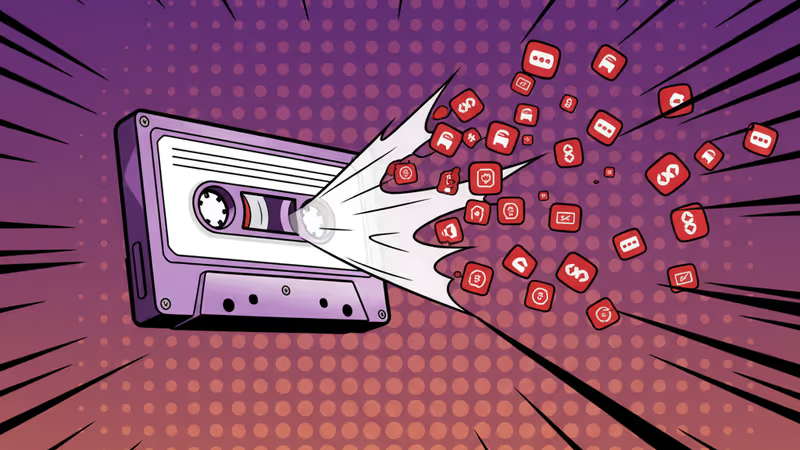
The 'Anti-Netflix' Is Going Viral, and It's a Rebuke to the Modern Internet
A free, ad-free movie site called WikiFlix went viral, signaling deep user frustration with the streaming wars. Here's why its success is a major rebuke to the modern internet.
TL;DR: The Internet's New Darling
A free, no-account-needed, ad-free movie archive called WikiFlix just exploded into the cultural spotlight thanks to a viral TikTok. Its sudden fame isn't just about free old movies; it's a powerful protest vote against the expensive, algorithm-driven, and exhausting world of modern streaming. This is the story of why a clunky, simple website is capturing the hearts of a generation sick of the 'Streaming Wars'.
The Story: A Digital Time Capsule Goes Mainstream
Imagine a version of Netflix with no subscription fees, no ads, and no algorithm aggressively pushing the latest reality show. That's WikiFlix. It's a volunteer-run project from the Wikipedia community that hosts over 4,000 films that have fallen into the public domain. This means their copyrights have expired, making them free for all to watch, share, and enjoy.
While WikiFlix has existed for a while, it was thrust into the limelight by Annie Rauwerda, creator of the beloved 'Depths of Wikipedia' account. Her TikTok showcasing the site as a treasure trove of cinematic history—from Charlie Chaplin to Nosferatu—struck a chord, sending millions to a corner of the internet that feels like a relic from a simpler time.
The appeal is its beautiful simplicity. The interface is basic. The selection is old. And that’s precisely the point. In an era where every click is tracked and monetized, WikiFlix asks for nothing in return. It's a library, not a storefront.
The Best Reactions: A Collective Sigh of Relief
The internet's reaction was a mix of joyous discovery, cynical humor, and deep nostalgia for a web that used to be. We've curated the takes that capture the mood perfectly.
- The Subscription Fatigue Is Real: One of the most common sentiments was relief from the endless cycle of price hikes and new streaming services. As one X (formerly Twitter) user put it: "Just found WikiFlix. It has the first-ever Oscar winner and costs $0. Meanwhile, my other four streaming apps just emailed me about a price increase. The math is mathing."
- Embracing the 'Jank': Users celebrated the site's lack of corporate polish, viewing it as a badge of authenticity. A viral comment on TikTok read: "The UI looks like my high school's library website from 2004 and I have never felt more at home. No autoplay trailers, no 'Top 10 in Your Country,' just pure cinema."
- For the Film Nerds: The cinephile community saw it as an invaluable educational resource. A user on the r/movies subreddit noted: "This isn't for finding the latest blockbuster. This is for watching foundational films like 'The Gold Rush' or Soviet-era sci-fi without a paywall. It's a historical archive for the people."
- The Meme Potential: And of course, the jokes came rolling in. A popular meme format showed a couple on a couch with the caption: "She said she wanted to WikiFlix and chill, so we're 45 minutes into a 1922 Swedish silent film about a cursed carriage driver. It's... atmospheric."
Cultural Context: Why This, Why Now?
The viral moment of WikiFlix isn't a fluke; it's a symptom of a much larger cultural shift. We are reaching peak 'subscription fatigue.' The promise of the streaming era—every piece of content at your fingertips for one low price—has fractured into a dozen expensive, ad-supported services, each with its own walled garden.
WikiFlix is the antithesis of this. It represents a yearning for the 'old internet'—a decentralized, community-driven space built on sharing and discovery, not just consumption and profit. It aligns with the growing 'cozy web' movement, a desire for smaller, more human-scale digital spaces that don't constantly demand your attention or your data.
In a world of hyper-personalized feeds designed to keep you scrolling, the raw, un-algorithmic nature of WikiFlix feels like a breath of fresh air. It puts the user back in control, encouraging active exploration rather than passive acceptance of what an algorithm serves up.
PRISM Insight: A Vote Against the 'Enshittification' of the Web
1. The Anti-Algorithm Revolution
The most profound insight from the WikiFlix phenomenon is the validation that people are tired of being managed by algorithms. Modern platforms are designed to minimize choice and maximize engagement time. WikiFlix does the opposite. Its slightly chaotic, library-like structure forces you to search, to be curious, to stumble upon something unexpected. This is a powerful signal to developers and media companies: audiences are craving digital experiences that empower discovery instead of dictating it. The joy isn't just in the content, but in the agency of finding it yourself.
2. A Barometer for Digital Frustration
Think of WikiFlix's popularity as a massive, public sentiment survey. Its success is a direct indictment of what technologist Cory Doctorow calls 'platform enshittification'—the process where platforms start by being good to their users, then abuse them to make money for their shareholders. Netflix, YouTube, and others started as user-centric services but are now mired in ads, rising costs, and password-sharing crackdowns. WikiFlix's viral moment is a cultural release valve, showing the immense goodwill that exists for platforms that simply respect the user and their desire for a straightforward, honest experience. It's a reminder that 'value' isn't always measured in billions of dollars, but in public trust and utility.
相关文章
MODHAUS新男團idntt釋出OT15預告片,其獨特的子團系統引發全球K-Pop粉絲熱議。這會是超越NCT的下一個粉絲驅動偶像模式嗎?PRISM深度解析。

Stray Kids與NCT DREAM稱霸11月Circle Chart,但這不僅是排名。PRISM深入解析K-pop實體專輯經濟學,揭示第四代偶像如何改寫全球音樂產業規則。
厭倦了付費訂閱?免費、免註冊的公版電影庫 WikiFlix 因一支 TikTok 影片爆紅。我們分析這股懷舊風潮背後的文化意義與網友熱議。
朴信惠產後復出首作《紅小姐是臥底》化身90年代特務。PRISM分析為何這部喜劇未播先轟動,以及懷舊元素如何成為全球影視的流量密碼。