
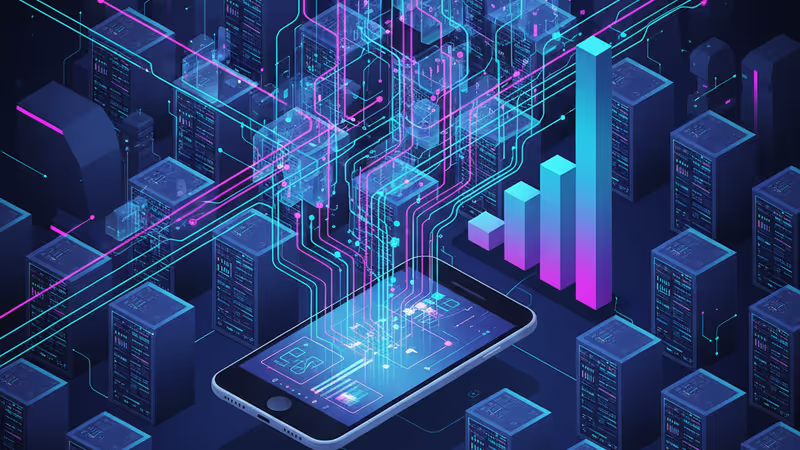
The AI Tax: Why the Data Center Boom Is About to Make Your Next Smartphone More Expensive
The AI boom is causing a memory chip shortage, set to drive up smartphone prices by 6.9% in 2026. Our expert analysis explains why your next phone will cost more.
The Lede: A Collision of Megatrends
The generative AI revolution that powers everything from ChatGPT to advanced data analytics is about to present you with a hidden bill—right on the price tag of your next smartphone. A new report from Counterpoint Research forecasts a 6.9% jump in average smartphone selling prices by 2026, coupled with a 2.1% drop in shipments. This isn't a typical market fluctuation; it's the first major consumer-level consequence of a global battle for a critical resource: high-performance memory chips. The AI data center boom and the global smartphone market are on a collision course for the same limited supply of silicon, and consumers are set to feel the impact.
Why It Matters: The Great Silicon Squeeze
For over a decade, consumers have been conditioned to expect smartphones to get incrementally better and more affordable. That era is facing a severe stress test. The current situation is more than a simple price hike; it represents a fundamental reordering of priorities in the global semiconductor supply chain.
- The Second-Order Effect: The insatiable demand for memory chips (specifically DRAM) from AI infrastructure giants like Nvidia is creating a powerful vacuum, pulling components away from other sectors. The profit margins on high-performance memory for AI servers are far more attractive to manufacturers like SK Hynix and Samsung than those for consumer-grade smartphone memory.
- Market Bifurcation: This squeeze will accelerate the divide between the market's premium leaders and the rest of the pack. The premium segment will become more premium, while the budget segment faces an identity crisis: raise prices and lose customers, or cut corners and damage the brand.
- The Rise of "Skimpflation": To manage soaring Bill of Materials (BoM) costs—already up 20-30% for low-end phones—expect some brands to quietly downgrade other components. Your next budget phone might have a less vibrant display, a weaker camera module, or recycled older parts, even if it's marketed as 'new'.
The Analysis: This Isn't Just Another Chip Shortage
We've seen semiconductor supply cycles before, most notably during the pandemic. However, this one is fundamentally different. Previous shortages were driven by temporary logistics snarls or cyclical demand from PCs and crypto mining. The current pressure is from a sustained, structural shift: the buildout of global AI infrastructure, a multi-trillion-dollar trend that is still in its early innings.
AI's Unquenchable Thirst for Memory
Every Nvidia H100 GPU cluster built in a data center requires vast quantities of high-bandwidth memory (HBM), a specialized form of DRAM. While not the exact same component used in smartphones, its production consumes the same fabrication plant capacity and raw materials as the LPDDR DRAM your phone uses. With memory prices projected to rise another 40% through mid-2026, chipmakers will naturally prioritize their most lucrative and demanding customers—and right now, that's the AI industry, not smartphone OEMs.
A Darwinian Test for Phone Makers
The report correctly identifies Apple and Samsung as "best positioned to weather the storm." This isn't just about their size; it's about their power. As the world's largest buyers, they can negotiate long-term contracts, command priority supply, and leverage their vast cash reserves to absorb some of the cost. Apple, which designs its own silicon, has an even tighter grip on its supply chain.
The real pain will be felt by the challenger brands, particularly Chinese manufacturers competing in the crowded mid-to-low end of the market. They lack the negotiating leverage and brand loyalty to pass on significant price increases without ceding market share. For them, this is an existential threat that could trigger a wave of consolidation.
PRISM Insight: Market & Strategy Implications
Investment Radar
For investors, this trend creates clear winners and losers. Memory producers like SK Hynix and Samsung Electronics (and by extension, Micron Technology) are entering a highly favorable pricing environment driven by sustained AI demand. Conversely, smartphone original equipment manufacturers (OEMs) without premium positioning and supply chain control face severe margin pressure. This dynamic further solidifies Apple's position as a 'safe haven' tech giant, as its premium customer base is less price-sensitive and its supply chain mastery is a key competitive moat.
Actionable Guidance for Consumers
If you are in the market for a new smartphone, particularly in the sub-$400 category, the value proposition may degrade over the next 18-24 months. Consider purchasing sooner rather than later to lock in current component quality and pricing. For those on a budget, the refurbished premium market (e.g., a two-year-old iPhone or Samsung Galaxy S-series) may offer significantly better hardware value than a brand-new, potentially compromised, budget device in 2025-2026.
PRISM's Take
This is the dawn of the "silicon hierarchy." The smartphone, for so long the undisputed king of consumer electronics driving the semiconductor industry, is now being forced to compete for resources with the new titan: the AI data center. What we're witnessing is not a temporary supply bottleneck but the first major, tangible resource conflict of the AI era. It will permanently reshape the consumer electronics landscape, widening the chasm between the vertically integrated, premium giants and the assemblers fighting for leftover components. The AI revolution isn't just changing software; it's fundamentally altering the economics and hardware of the device in your pocket.
相关文章
美光財報揭示AI硬體新浪潮。深度分析為何高頻寬記憶體(HBM)是繼Nvidia後的新戰場,以及投資者應關注的「GPU+」生態系機會。

深度分析最新iOS更新引發的用戶反彈。這不僅是UI改動,更是蘋果為AI與空間運算佈局的戰略陣痛,一場控制權的拔河正在上演。

Oracle百億美元AI資料中心計畫遇阻,揭示了AI基礎設施競賽背後的高昂資本與債務風險。這對Nvidia等科技股意味著什麼?
《魔法壞女巫》導演朱浩偉揭示成功秘訣。分析他如何結合病毒式行銷與人性化創意,在AI時代重新定義大片,為影視產業提供新藍圖。