
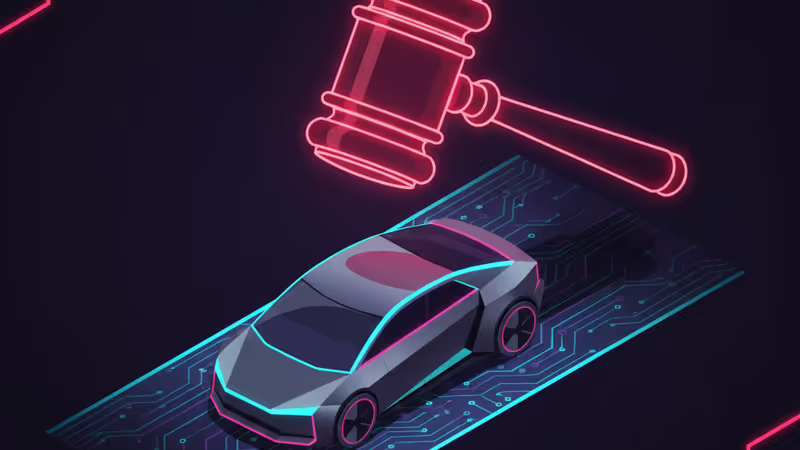
Tesla's Reality Check: California Ruling Threatens the Core of the 'Full Self-Driving' Myth
A California judge ruled Tesla's Autopilot marketing is deceptive. PRISM analyzes why this is a pivotal moment for the auto industry, investors, and the future of AI on wheels.
The Bottom Line Up Front
A California judge's ruling that Tesla’s “Autopilot” and “Full Self-Driving” branding is deceptive is far more than a regulatory slap on the wrist. While the immediate penalties—a potential 30-day sales suspension—are currently on hold, this decision strikes at the very heart of Tesla’s brand identity and its multi-billion dollar valuation, which has been built on the promise of an autonomous future. For executives, investors, and the industry at large, this isn't about a naming dispute; it's a forced reckoning between Silicon Valley's marketing hype and the physical world's safety regulations.
Why It Matters: The End of an Era for Tech Exceptionalism in Auto
For years, Tesla has operated under a halo of tech exceptionalism, successfully framing its vehicles as software platforms on wheels. This allowed them to use aspirational, beta-centric language like “Full Self-Driving” for a Level 2 driver-assist system—a classification that legally requires full driver attention. This ruling signals that regulators are no longer buying the argument. The key second-order effects are:
- Precedent for the Industry: Every automaker, from Ford to Lucid to Hyundai, will now face heightened scrutiny over the marketing of their Advanced Driver-Assistance Systems (ADAS). The unwritten rule of using conservative, functional names like “Lane Keep Assist” is now being enforced, potentially chilling more ambitious branding across the board.
- Erosion of a Key Revenue Stream: Tesla doesn't just sell cars; it sells the *promise* of FSD, currently a $12,000 upfront option or a subscription. If forced to rebrand it to something more mundane like “Advanced Driver Assist Plus,” it could fundamentally devalue the product in consumers' eyes, threatening a high-margin revenue source.
- Investor Re-evaluation: A significant portion of Tesla's ($TSLA) valuation is tied to its perceived lead in AI and autonomy. This ruling provides official validation for skeptics, introducing a new layer of regulatory risk that analysts can no longer ignore.
The Analysis: A Clash of Narratives
From "Autopilot" to "Deceptive": A Predictable Collision
The automotive industry has historically been conservative with system naming for a reason: liability. Terms like Ford's "BlueCruise" or GM's "Super Cruise" are carefully chosen to manage driver expectations. Tesla, led by Elon Musk, shattered this convention. By naming its system "Autopilot," it immediately invoked the well-understood concept of aviation automation, implying a level of capability the system has never possessed. The term "Full Self-Driving" went even further, selling a future capability as a present-day product name.
This isn't a new concern. Safety advocates and industry experts have warned for years that this nomenclature would lead to "mode confusion," where drivers dangerously over-estimate the car's abilities. The California DMV's case, winding through the courts for years, is the legal culmination of these warnings. Tesla's defense that its marketing is "protected speech" has now been officially rejected in a court of law, which will have ripple effects in other pending legal cases.
The 60-Day Ultimatum: More Than Meets the Eye
The DMV's decision to stay the sales suspension and offer a 60-day compliance window is a shrewd move. It allows the regulator to claim a victory and protect public safety while avoiding the political fallout of immediately shutting down a major California employer and exporter. It places the onus entirely on Tesla: either tacitly admit its marketing was misleading by changing it, or defy the order and face a costly and public legal battle in its largest US market.
Tesla's defiant post on X that "Sales in California will continue uninterrupted" is classic crisis PR, but it belies the seriousness of the situation. This isn't a battle they can win with a tweet. The company is now caught between its brand narrative and regulatory reality.
PRISM Insight: The Robotaxi Paradox
The timing of this ruling is particularly significant. It comes just as Tesla is aggressively pushing its Robotaxi vision, even removing human safety monitors from its test fleet in Austin, Texas. This creates a jarring paradox for the company and its investors. How can Tesla credibly pitch a fully autonomous, driverless future to cities and investors when a court in its home state has just ruled that the very name of its current consumer-facing technology is a dangerous falsehood?
This is a two-front war for Tesla's autonomy narrative. In Texas, it's showcasing a future that seems just around the corner. In California, it's being legally censured for overstating the capabilities of the technology available today. This regulatory headwind in a key state could give competitors and more cautious autonomous developers (like Waymo and Cruise) an opening to frame their own methodical, safety-first approaches as more viable and trustworthy.
PRISM's Take
This California ruling is the first major crack in the armor of Tesla's self-driving mythology. For nearly a decade, the company has masterfully sold a vision of the future to define the value of its present-day products. That strategy has now hit a legal wall. The debate is no longer about whether "Autopilot" is the best name, but whether it is a legally deceptive one—and a judge has sided with the latter.
While a 30-day suspension is unlikely to be implemented if Tesla makes token changes, the damage is done. The ruling grants legitimacy to years of safety warnings and shifts the power dynamic. Regulators, not Elon Musk, are now setting the terms of the debate. Tesla must now choose between diluting its most powerful marketing tool or engaging in a protracted legal fight that will keep the words "Tesla" and "deceptive marketing" in the headlines. Either way, the era of unchecked autonomous hype is officially over.
相关文章
Zoox 共同創辦人 Tim Kentley-Klay 推出 HyprLabs,其「即時學習」技術號稱僅需極少數據即可訓練自駕系統,可能顛覆產業的資本門檻。
Jaguar在市場逆風中推出全新千匹馬力電動GT。PRISM深度分析這場豪賭是品牌重生策略,還是將這家百年車廠推向懸崖的最後一步。
Uber因其Uber One訂閱服務面臨FTC及近24州的聯合訴訟,指控其設下取消障礙。PRISM深度分析此案如何引爆對「暗黑模式」的監管風暴。
美國參議員針對AI公司的數據中心展開調查,揭示其如何推高當地電價達267%。這不僅是監管警訊,更是AI產業永續發展的關鍵挑戰。