
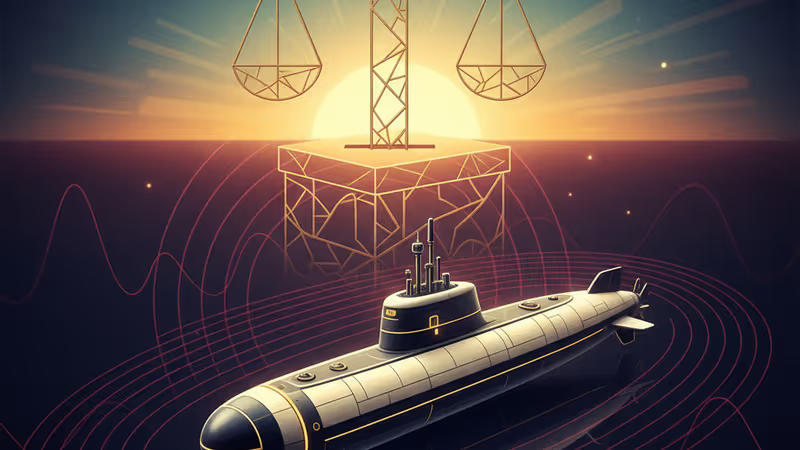
South Korea and US Agree to Pursue Stand-Alone Nuclear-Powered Submarine Pact
South Korea and the U.S. have agreed to pursue a stand-alone pact for nuclear-powered submarine cooperation, with working-level talks slated for early 2026. The plan involves using low-enriched uranium to address non-proliferation concerns.
A new chapter for the US-Korea alliance, or a Pandora's box for nuclear proliferation? South Korea and the United States have agreed to pursue a stand-alone agreement on cooperation for nuclear-powered submarines, a landmark move with working-level talks expected to begin early next year. The announcement signals a significant deepening of the bilateral security partnership.
A Deal Takes Shape
National Security Adviser Wi Sung-lac confirmed the development on December 24, 2025, following a trip to the U.S., Canada, and Japan. According to a Yonhap report, Wi stated he held "practical and in-depth consultations" in Washington with U.S. Secretary of State Marco Rubio and Energy Secretary Chris Wright. "We shared the view that a stand-alone agreement on cooperation over nuclear-powered submarines is necessary, and agreed to move forward with discussions," Wi told reporters.
This agreement builds on security commitments made during the summit between President Lee Jae Myung and U.S. President Donald Trump on the sidelines of the APEC summit in Gyeongju in late October.
Navigating Non-Proliferation Waters
Addressing the sensitive issue of nuclear fuel, Wi reaffirmed Seoul's commitment to nuclear non-proliferation. He stressed that South Korea plans to use low-enriched uranium (LEU) at levels below 20 percent to power the submarines and that highly enriched uranium is not under consideration. Under the current bilateral nuclear accord with the U.S., South Korea is prohibited from enriching its own uranium and must import its supply.
What's Next on the Agenda
The path forward will be paved quickly. A working-level U.S. delegation is expected to visit South Koreaearly in 2026 to begin formal consultations. Key discussion points will likely include the scope of technology transfer, fuel supply arrangements, and the specific terms of the new agreement.
本内容由AI根据原文进行摘要和分析。我们力求准确,但可能存在错误,建议核实原文。
相关文章
孟加拉最大反對黨領袖塔里克・拉赫曼在流亡17年後將返國,預計500萬支持者將集結首都。此舉為明年2月的國會大選投下變數,考驗該國脆弱的民主轉型。

尼泊爾前總理奧利在爭議聲中三度連任CPN-UML黨魁。他因鎮壓Z世代抗議致77死而受查,此番當選不僅違背民意,更可能引發尼泊爾政局的劇烈動盪。
馬來西亞政府在泰國對澳洲記者韓特提起跨國誹謗訴訟。本文深入分析「惡意訴訟」(SLAPP)如何成為跨國鎮壓工具,及其對東南亞言論自由構成的嚴重威脅。
南韓李在明政府內部,「自主派」與「同盟派」對北韓政策的路線之爭再次浮上檯面。這場長達20年的分歧,在美中競爭加劇的背景下,正讓南韓外交陷入兩難。
孟加拉最大反對黨領袖塔里克・拉赫曼在流亡17年後將返國,預計500萬支持者將集結首都。此舉為明年2月的國會大選投下變數,考驗該國脆弱的民主轉型。
尼泊爾前總理奧利在爭議聲中三度連任CPN-UML黨魁。他因鎮壓Z世代抗議致77死而受查,此番當選不僅違背民意,更可能引發尼泊爾政局的劇烈動盪。
馬來西亞政府在泰國對澳洲記者韓特提起跨國誹謗訴訟。本文深入分析「惡意訴訟」(SLAPP)如何成為跨國鎮壓工具,及其對東南亞言論自由構成的嚴重威脅。
南韓李在明政府內部,「自主派」與「同盟派」對北韓政策的路線之爭再次浮上檯面。這場長達20年的分歧,在美中競爭加劇的背景下,正讓南韓外交陷入兩難。