

iRobot's Collapse: A Regulatory Cautionary Tale for Tech M&A
iRobot's Chapter 11 filing after Amazon's failed acquisition highlights critical regulatory challenges in tech M&A. PRISM analyzes the chilling effect on innovation and future deal-making.
The Chilling Message from Roomba's Demise
The Chapter 11 filing of iRobot isn't just the sad end for a beloved robotics pioneer; it's a stark warning for every tech executive contemplating M&A, every investor backing a startup, and every entrepreneur dreaming of an exit. The maker of the ubiquitous Roomba, a company that navigated 35 years of technological hurdles, was ultimately undone by what its founder, Colin Angle, calls "avoidable" regulatory opposition to Amazon's $1.7 billion acquisition.
This isn't a story of market failure in the traditional sense, but one where protracted regulatory intervention is directly implicated in the downfall of a once-innovative company. It raises critical questions about the future of deal-making in an increasingly scrutinized tech landscape, forcing a re-evaluation of the M&A playbook for companies big and small.
Why This Matters: Innovation Under Regulatory Shadow
The iRobot saga sends a palpable chill through the global M&A landscape. Beyond the immediate loss of a pioneering brand, this incident underscores a deepening divide between regulatory intent and real-world market dynamics. Entrepreneurs will now weigh the protracted, costly, and ultimately fatal risk of regulatory intervention when considering strategic acquisitions. This isn't just about Amazon and iRobot; it’s about a broader trend where antitrust concerns, sometimes misapplied, could inadvertently stifle competition by preventing viable pathways for struggling innovators to find shelter and scale.
The unintended consequence could be fewer exits, less venture capital flowing into capital-intensive hardware sectors, and ultimately, reduced consumer choice and slowed innovation. When regulators take 18 months to review a deal, the company in question is effectively put into an unsustainable holding pattern, regardless of the final decision. This administrative limbo itself becomes a powerful deterrent, forcing many to question whether the regulatory cure is worse than the perceived disease.
The Analysis: When 'Protecting Competition' Kills It
iRobot's journey from a DARPA-funded spin-off to a household name in robotic vacuum cleaners is a testament to persistent innovation. However, by 2024, as founder Colin Angle details, iRobot's market position was far from dominant. Despite a higher U.S. market share, it was declining, facing aggressive competition from numerous new entrants. In Europe, its 12% share was clearly losing ground to younger, agile competitors – a textbook definition of a dynamic marketplace.
The Amazon acquisition was framed by iRobot as a lifeline and an accelerant for innovation, allowing the Roomba maker to leverage Amazon's scale, logistics, and smart home ecosystem (Alexa) to enhance its offerings and compete more effectively. Regulators, however, likely viewed the acquisition through the lens of Amazon's growing dominance in the smart home space, fearing that integrating iRobot's data and hardware would further entrench Amazon's market power and potentially disadvantage competitors. The core tension here is between preserving abstract market structures and fostering concrete innovation.
Was blocking the deal truly protecting competition, or was it preventing a struggling player from a synergistic merger that could have revitalized its offerings and intensified competition against other rising players? The regulatory process effectively sidelined a strategic lifeline, forcing a venerable company into bankruptcy, ironically clearing a path for its younger, often Chinese-backed, competitors.
PRISM Insight: The New M&A Risk Premium
For investors, the iRobot saga demands a recalibration of M&A exit strategies, especially for hardware and consumer tech plays. The 'Amazon exit' or 'Google exit' now comes with an exponentially higher regulatory risk premium, which could depress valuations for companies perceived as potential targets for tech giants. Venture capital funds may become more cautious about backing capital-intensive hardware startups, particularly those operating in markets susceptible to regulatory scrutiny, unless they demonstrate a clearer path to profitability and independent scaling much earlier in their lifecycle.
This incident fuels the ongoing debate about 'killer acquisitions' versus 'lifeline acquisitions.' Policymakers and regulators must find a more nuanced approach that distinguishes between anti-competitive consolidation and strategic mergers that preserve innovation and jobs. Without this clarity, we risk creating an M&A winter for promising, albeit struggling, tech companies, pushing them towards bankruptcy rather than growth. Expect to see more focus on inorganic growth through smaller, less scrutinized acquisitions or joint ventures, as well as a heightened emphasis on demonstrating independent market viability from inception.
PRISM's Take: A Call for Smarter Regulation
iRobot's bankruptcy isn't just a corporate failure; it's a stark illustration of regulatory overreach potentially contributing to market destruction. While the intent of antitrust is noble – protecting competition and consumers – the outcome here appears profoundly counterproductive. By blocking Amazon's acquisition, regulators arguably removed a lifeline for a declining innovator, rather than fostering a vibrant competitive landscape. The market was already dynamic with new players emerging; Amazon acquiring iRobot could have either invigorated iRobot or simply been irrelevant to the larger competitive trends. What is undeniable is that the protracted review process and ultimate blockage proved fatal.
This case should serve as a wake-up call for global regulators: the timing and context of M&A interventions are as crucial as the antitrust theory itself. A rigid adherence to abstract principles without a keen understanding of real-time market dynamics and a company's financial health can inadvertently kill the very innovation they aim to protect. The tragedy of iRobot is a chilling message: sometimes, the cure can indeed be worse than the disease.
相关文章
iRobot的破產不僅是Roomba的終結,更是亞馬遜收購案遭阻後的警鐘。本文深入分析監管對科技創新和併購環境的深遠影響,並提供應對策略。
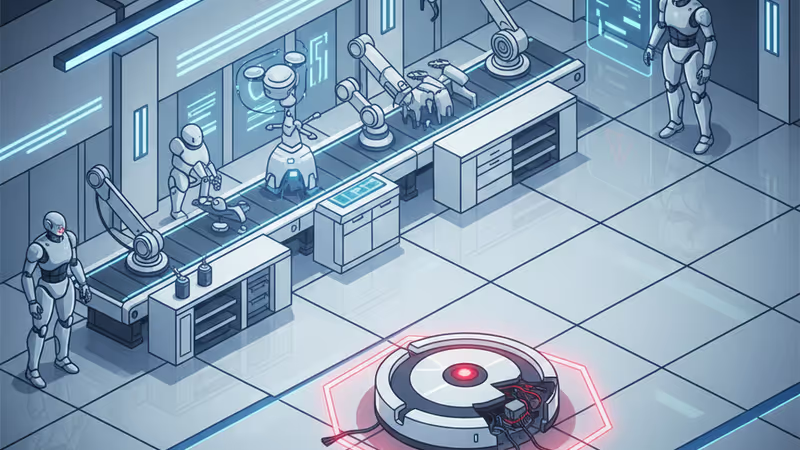
掃地機器人鼻祖iRobot聲請破產,但這不是終點。PRISM深度解析其衰落原因、競爭格局,以及在新東家領導下的重生挑戰與未來趨勢。
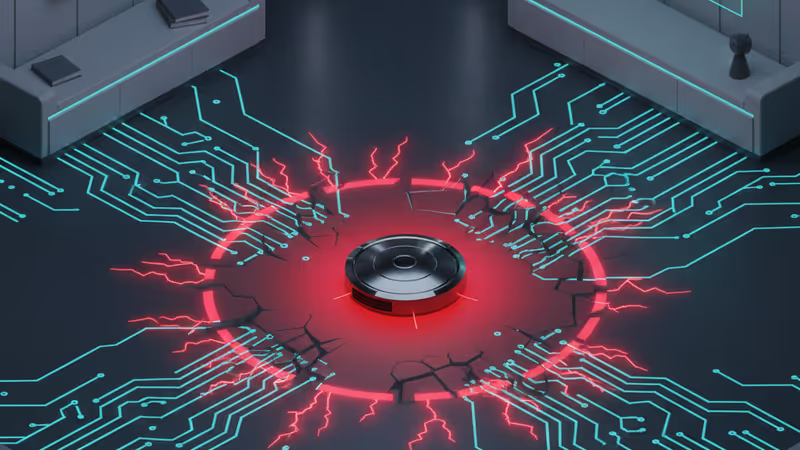
掃地機器人先驅Roomba為何從市場領導者走向生存危機?本文深入分析其創新困境、激烈的市場競爭,以及在Amazon收購案失敗後的未來挑戰。

Internxt 20TB終生雲端儲存現僅$399.97。深度剖析此破盤價對個人、中小企的成本效益與資料隱私價值,並連結雲端儲存市場趨勢。