
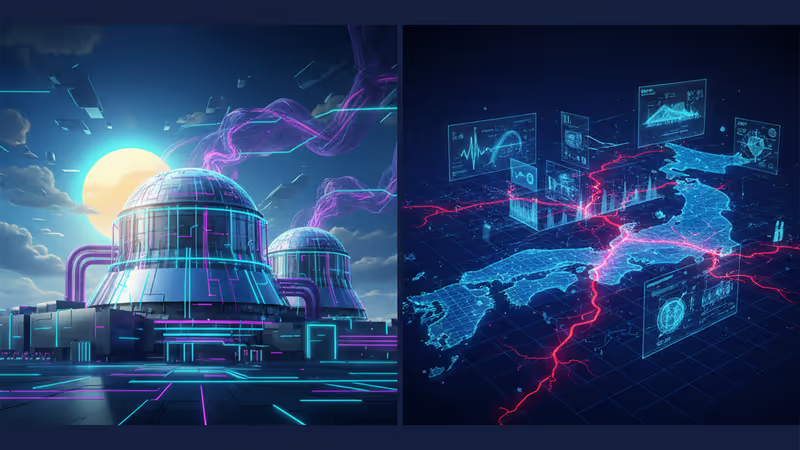
Japan's High-Stakes Bet: Nuclear Restart Signals a Nation Grappling with Its Tech Future
As 2025 closes, TEPCO's decision to restart the world's largest nuclear plant is more than an energy play. It's a sign of Japan wrestling with aging infrastructure, seismic threats, and its place in the AI era.
As 2025 draws to a close, Japan is making a pivotal bet on its technological future. TEPCO has reportedly finalized plans to restart Unit 6 of its Kashiwazaki-Kariwa nuclear power plant—the world's largest—on January 20th of next year. This isn't just an energy decision; it's a powerful symbol of a nation forced to confront its aging infrastructure, ever-present natural disaster threats, and its role in the dawning age of AI.
The move to bring the massive plant back online is a direct response to the urgent need for energy independence, a critical foundation for the country's high-tech ambitions. From advanced semiconductor fabrication to its burgeoning space program, Japan's future as an R&D powerhouse depends on a stable, high-capacity power grid. The restart is a calculated risk, balancing deep-seated public safety concerns with the strategic necessity of powering innovation.
But the headwinds are stiff. The economic environment has grown harsher, with 10-year government bond yields recently surging to 2.1%, a 26-year high. This spike in borrowing costs complicates funding for everything from massive energy projects to desperately needed infrastructure maintenance. Recent incidents, such as a series of retaining wall collapses, serve as a stark reminder that the country's physical foundations are aging. Coupled with newly released detailed simulations for the much-feared Great Tokyo Earthquake, it's clear Japan is in a race against time to fortify its core.
While wrestling with these foundational 'legacy' problems, the 'new' tech wave waits for no one. As director James Cameron recently highlighted in discussions about his creative process, AI is an undeniable force reshaping global industries. Japan now faces a dual challenge: it must execute a massive, capital-intensive overhaul of its physical world while simultaneously competing for leadership in the virtual, AI-driven future. It's a high-wire act of managing the present while building the future.
本内容由AI根据原文进行摘要和分析。我们力求准确,但可能存在错误,建议核实原文。
相关文章
AI MagicX 整合寫作、設計、編碼和聊天機器人功能,推出終身方案,售價從 $972 降至 $59.97。一個平台取代多種付費工具,為個人用戶和小型企業節省成本。

OpenAI的ChatGPT推出「年度回顧」功能,用戶可查看2025年發送訊息總數等統計數據,並獲得由AI生成、總結年度對話主題的專屬像素藝術圖像。

2025年全球科技業裁員人數突破20萬。本文深度剖析AI效率革命如何引發新一輪裁員潮,並探討其背後的產業結構性轉型與未來趨勢。
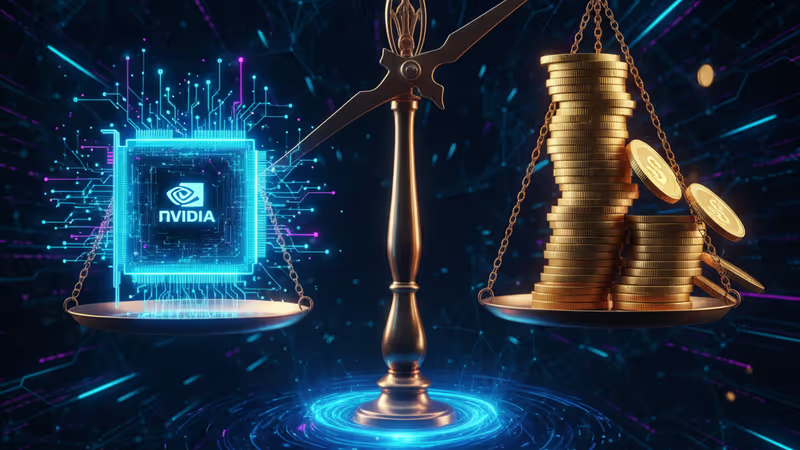
AI資料中心的擴張依賴NVIDIA晶片與債務。當NVIDIA同時扮演供應商與投資者的雙重角色,為其客戶提供資金時,一個潛在的系統性金融風險正在形成。