
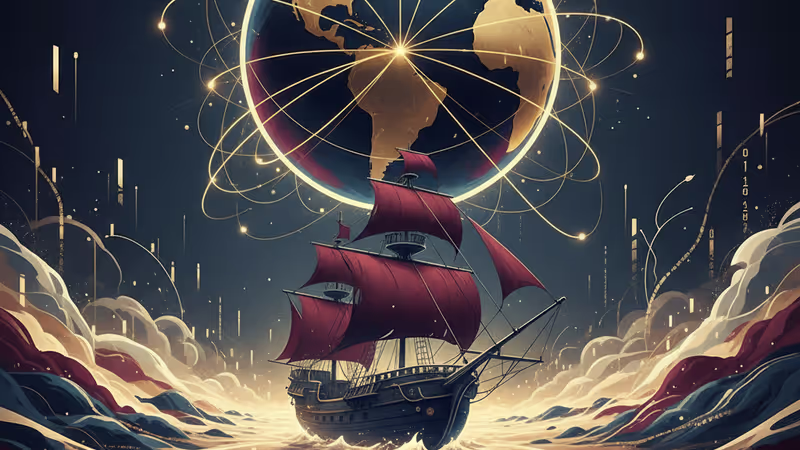
The British Empire's Ghost Fleet: Does Britain Still 'Rule the Waves' in the 21st Century?
The British Empire is gone, but its legacy continues to shape 21st-century geopolitics and culture. An analysis of what 'Rule the Waves' means today.
The British Empire has vanished from the map, but the waves it created continue to shape the 21st century. Was the famous cry to "Rule the Waves" just a song of a bygone era, or is it code for an influence that never truly faded?
An Empire Built on Naval Power
At its core, the British Empire was a maritime empire. Throughout the 19th and early 20th centuries, the Royal Navy dominated the world's oceans, securing trade routes and spearheading colonial expansion. Backed by this immense naval might, the empire at its zenith controlled nearly a quarter of the Earth's land surface and over a fifth of its population. This wasn't just military superiority; it was the foundation of a vast global system that shaped finance, trade, and culture.
A Legacy of Light and Shadow
The empire's legacy is profoundly complex. The global spread of the English language, common law systems, and models of parliamentary democracy are undeniable aspects of its influence. Yet, this is overshadowed by the dark realities of colonial rule. Arbitrary borders drawn by imperial powers continue to fuel regional conflicts today, while the scars of resource extraction and economic exploitation have left lasting challenges for post-colonial nations. This duality makes any simple judgment of its history impossible.
Echoes of Empire in the Modern World
While Britain's direct rule has ended, its influence persists in modern international relations. The imperial nostalgia evident during the Brexit debates and the continued diplomatic reach through the Commonwealth are clear examples. Furthermore, the strategic sea lanes once controlled by the empire remain vital arteries of the global economy, and geopolitical tensions surrounding these routes show that the ghosts of the empire still haunt the waves.
本内容由AI根据原文进行摘要和分析。我们力求准确,但可能存在错误,建议核实原文。
相关文章
孟加拉最大反對黨領袖塔里克・拉赫曼在流亡17年後將返國,預計500萬支持者將集結首都。此舉為明年2月的國會大選投下變數,考驗該國脆弱的民主轉型。

尼泊爾前總理奧利在爭議聲中三度連任CPN-UML黨魁。他因鎮壓Z世代抗議致77死而受查,此番當選不僅違背民意,更可能引發尼泊爾政局的劇烈動盪。
馬來西亞政府在泰國對澳洲記者韓特提起跨國誹謗訴訟。本文深入分析「惡意訴訟」(SLAPP)如何成為跨國鎮壓工具,及其對東南亞言論自由構成的嚴重威脅。
南韓李在明政府內部,「自主派」與「同盟派」對北韓政策的路線之爭再次浮上檯面。這場長達20年的分歧,在美中競爭加劇的背景下,正讓南韓外交陷入兩難。
孟加拉最大反對黨領袖塔里克・拉赫曼在流亡17年後將返國,預計500萬支持者將集結首都。此舉為明年2月的國會大選投下變數,考驗該國脆弱的民主轉型。
尼泊爾前總理奧利在爭議聲中三度連任CPN-UML黨魁。他因鎮壓Z世代抗議致77死而受查,此番當選不僅違背民意,更可能引發尼泊爾政局的劇烈動盪。
馬來西亞政府在泰國對澳洲記者韓特提起跨國誹謗訴訟。本文深入分析「惡意訴訟」(SLAPP)如何成為跨國鎮壓工具,及其對東南亞言論自由構成的嚴重威脅。
南韓李在明政府內部,「自主派」與「同盟派」對北韓政策的路線之爭再次浮上檯面。這場長達20年的分歧,在美中競爭加劇的背景下,正讓南韓外交陷入兩難。