

Ecuador Sentences 11 Soldiers in Teen Disappearance Case, Fueling Backlash Against Crime Crackdown
An Ecuadorian court has sentenced 11 soldiers to 34 years in prison for the disappearance and abuse of four teens, fueling criticism of President Noboa's 'Phoenix Plan' security crackdown.
An Ecuadorian court has sentenced 11 soldiers to 34-and-a-half years in prison for their role in the abuse and forced disappearance of four teenagers, a landmark case that has intensified scrutiny of President Daniel Noboa's militarized 'Phoenix Plan' to combat spiraling gang violence. The ruling on Monday concludes a yearlong investigation that has gripped the nation and highlighted the human rights cost of the government's security strategy.
The victims—Steven Medina, Nehemias Arboleda, and brothers Ismael and Josue Arroyo, aged 11 to 15—were last seen on December 8, 2024, in the city of Guayaquil. Their charred bodies were discovered weeks later, on December 31, in a remote swamp. The court handed down a lesser sentence of two-and-a-half years to five other soldiers who collaborated with the prosecution.
The military had initially maintained the boys were criminals who had been detained and released alive. However, some soldiers later testified that the patrol had beaten the teens, subjected them to mock executions, and forced them to strip before abandoning them naked in the dangerous, remote area of Taura. While acquitting the soldiers of murder, Judge Jovanny Suarez's ruling stated, "The patrol abandoned the minors in that area, knowing it was dangerous, desolate, and abandoned." The defense argued that prosecutors failed to present conclusive evidence and that the soldiers were sent on patrol without adequate training.
The case has triggered national outrage and condemnation of President Noboa's signature security policy, which deployed the military for domestic policing. Critics argue the strategy has failed to curb crime rates while leading to a surge in human rights violations.
A September report from Amnesty International noted that 43 people have been reported missing by armed forces since Noboa took office in 2023. The organization also accused Ecuador's military of obstructing investigations by withholding information. This verdict now puts immense pressure on the Noboa administration to reassess its approach and address accountability within the armed forces.
This case is a stark illustration of the 'mano dura' (iron fist) dilemma plaguing many Latin American nations. The turn to militarized policing, seen from El Salvador to Colombia, often trades long-term democratic health and rule of law for the promise of short-term security. The international community is watching to see if Ecuador can navigate its security crisis without sacrificing the fundamental human rights that underpin a stable, democratic society.
本内容由AI根据原文进行摘要和分析。我们力求准确,但可能存在错误,建议核实原文。
相关文章

從加薩、敘利亞到記者遇害,一系列紀錄片揭示了「永久戰爭」與資訊戰的殘酷現實。當真相被噤聲,全球衝突將如何演變?
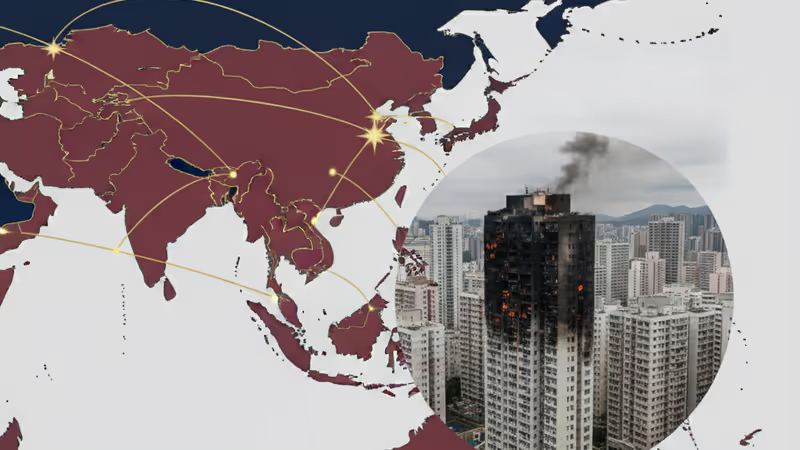
香港大埔區公共屋邨大火造成159人死亡,這場悲劇不僅令倖存者頓失家園,更揭示了香港輪候公屋需時五年等深層次的房屋危機。本文分析其對政治、經濟及社會的廣泛影響,探討香港治理面臨的挑戰。

美國眾議院軍事委員會主席亞當·史密斯直言,川普政府對委內瑞拉的石油封鎖,其首要目標是推翻馬杜洛政權,而非官方宣稱的外交目的。此番言論引發對美國外交制裁真實意圖的廣泛討論。

曾被視為馬來西亞政治邊陲的砂拉越,正迅速崛起為綠色經濟強權。本文深入剖析砂拉越如何利用半島政治的碎片化,鞏固內部領導,並透過能源與高科技戰略,重塑馬來西亞的權力版圖。