
The GPU-Backed Loan: Is the AI Data Center Boom Built on a House of Cards?
The AI data center boom is fueled by Nvidia chips and debt. Now, the GPUs themselves are being used as loan collateral, creating a precarious financial feedback loop and systemic risk.
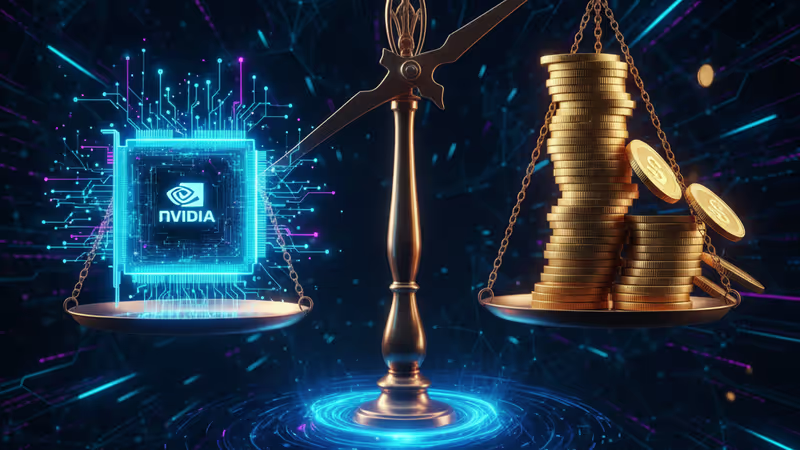
The AI data center build-out, as it stands, runs on two things: Nvidia chips and borrowed money. Now, in a startling financial feedback loop, the chips themselves are being used as collateral to borrow that money. This development casts a worrying light on the financial stability of the entire AI boom.
Nvidia isn't just a supplier in this ecosystem; it's a primary financial engine. According to PitchBook data, the company has made over 70 investments in AI companies in 2025 alone. A significant portion of these billions has been channeled into a critical category of its own customers: 'neoclouds,' a new breed of public cloud providers exemplified by firms like CoreWeave.
This creates a circular flow of capital that raises serious questions. Nvidia sells chips to a company, invests in that same company to fuel its growth, and that company then uses the highly-valued chips as collateral to secure more loans—often to buy more chips. While this accelerates growth in a bull market, it also concentrates risk. A downturn in the perceived value of GPUs could trigger a domino effect across this heavily leveraged system.
PRISM Insight: The current AI boom isn't just a technological phenomenon; it's a massive financial structure built on the leverage of a single asset class: Nvidia's GPUs. This goes beyond a simple supply chain. It's a self-reinforcing financial ecosystem where the primary supplier is also a key investor and financier for its own customers. The systemic risk is clear: if GPU values falter, it could simultaneously erode collateral value, trigger loan defaults, and create investment losses, threatening the stability of the entire AI infrastructure market.
本内容由AI根据原文进行摘要和分析。我们力求准确,但可能存在错误,建议核实原文。
相关文章
中國光子晶片LightGen問世,號稱性能超越Nvidia百倍。這不僅是技術突破,更是美中科技戰中可能改變賽局的關鍵變數。深度分析其產業影響與未來挑戰。

美光財報揭示AI硬體新浪潮。深度分析為何高頻寬記憶體(HBM)是繼Nvidia後的新戰場,以及投資者應關注的「GPU+」生態系機會。

AI程式碼生成新創Lovable獲Nvidia與Google投資,估值飆升至66億美元。PRISM深度解析此輪融資如何揭示AI基礎設施巨頭的戰略佈局與未來軟體開發趨勢。

中國AI晶片商MetaX上海IPO首日暴漲近700%。本文深度分析美國禁令如何催生這場資本狂熱,以及國產GPU替代Nvidia的真實挑戰與投資機遇。