
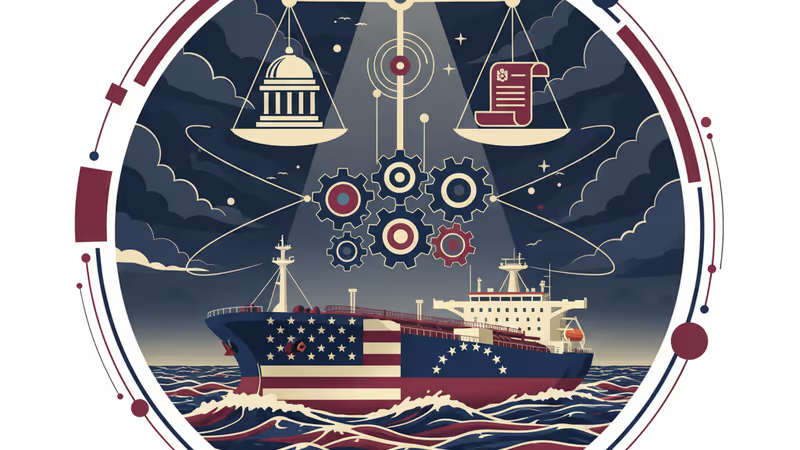
Lawful Seizure or Modern Piracy? The US-Venezuela Oil Tanker Standoff
Are U.S. seizures of Venezuelan oil tankers lawful sanctions enforcement or a form of modern piracy? An analysis of the geopolitical and legal battle shaping the rules of global trade.
When the United States seizes an oil tanker carrying Venezuelan crude on the high seas, is it lawfully enforcing international sanctions or committing an act of state-sponsored piracy? This question lies at the heart of a contentious geopolitical battle, pushing the boundaries of international law and setting a potentially dangerous precedent for global trade.
Washington's Rationale: Sanctions Enforcement
The U.S. Department of Justice (DOJ) argues its actions are a legitimate part of its sanctions regime against the government of Nicolás Maduro. Washington's position is that proceeds from oil sales by the state-owned oil company, PDVSA, are a primary source of funding for a corrupt regime implicated in human rights abuses. Citing its own domestic laws, the U.S. uses civil forfeiture proceedings to claim ownership of the crude, arguing the oil represents the proceeds of illicit activity.
**Context:** Since 2017, the U.S. has imposed sweeping sanctions on Venezuela, targeting the Maduro government and PDVSA for what it calls the undermining of democracy. These sanctions prohibit U.S. persons and entities from engaging in most transactions with them and can be extended to foreign entities through 'secondary sanctions'.
Caracas's Condemnation: 'An Act of Piracy'
Conversely, the Venezuelan government decries the seizures as 'theft' and 'modern piracy.' Officials in Caracas maintain that America's unilateral sanctions lack a basis in international law and that forcefully taking sovereign assets in international waters is a flagrant violation of its national sovereignty. They frame the seizures as a key component of an economic war waged by the U.S. to cripple their nation's economy.
A Venezuelan official has previously stated that Washington's "illegal and coercive measures threaten free trade and maritime navigation."
A Gray Area in International Law
The dispute highlights a deep-seated ambiguity in maritime law. While the United Nations Convention on the Law of the Sea (UNCLOS) enshrines the principle of freedom of navigation on the high seas, it provides exceptions for universal crimes like piracy. The U.S. attempts to justify the seizures by framing sanctions violations under its domestic law as illicit activity. However, many international legal experts question the legality of extraterritorially applying one nation's domestic laws to another nation's flag-bearing vessel in international waters. It's a move, critics argue, that could empower powerful states to arbitrarily disrupt the commerce of their rivals.
本内容由AI根据原文进行摘要和分析。我们力求准确,但可能存在错误,建议核实原文。
相关文章

從加薩、敘利亞到記者遇害,一系列紀錄片揭示了「永久戰爭」與資訊戰的殘酷現實。當真相被噤聲,全球衝突將如何演變?
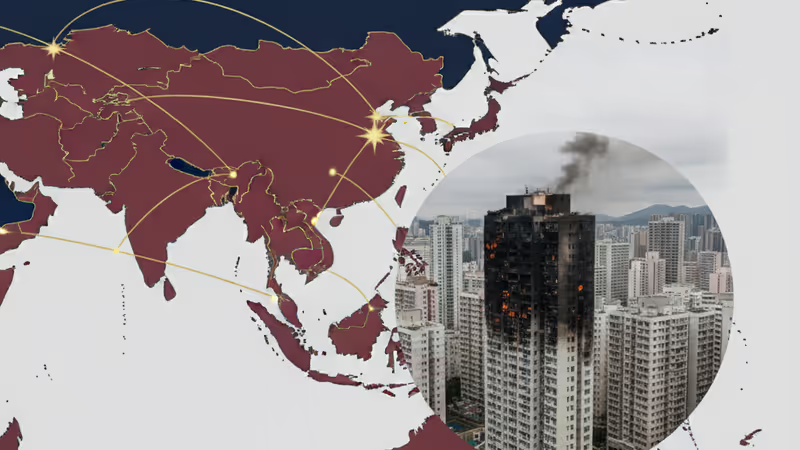
香港大埔區公共屋邨大火造成159人死亡,這場悲劇不僅令倖存者頓失家園,更揭示了香港輪候公屋需時五年等深層次的房屋危機。本文分析其對政治、經濟及社會的廣泛影響,探討香港治理面臨的挑戰。
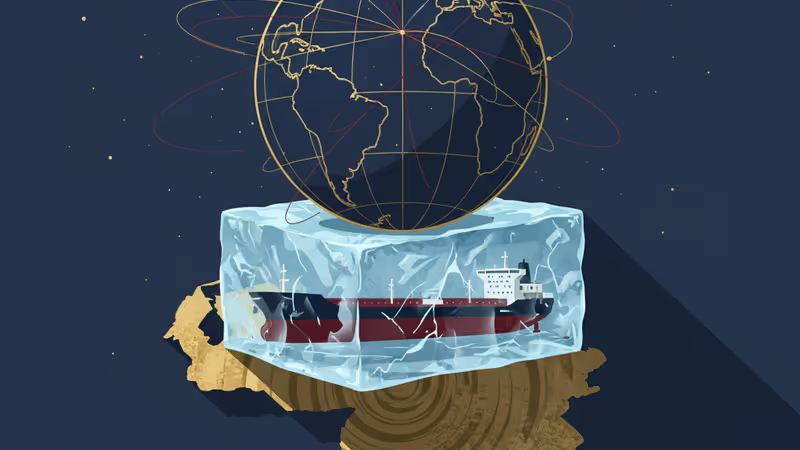
美國眾議院軍事委員會主席亞當·史密斯直言,川普政府對委內瑞拉的石油封鎖,其首要目標是推翻馬杜洛政權,而非官方宣稱的外交目的。此番言論引發對美國外交制裁真實意圖的廣泛討論。
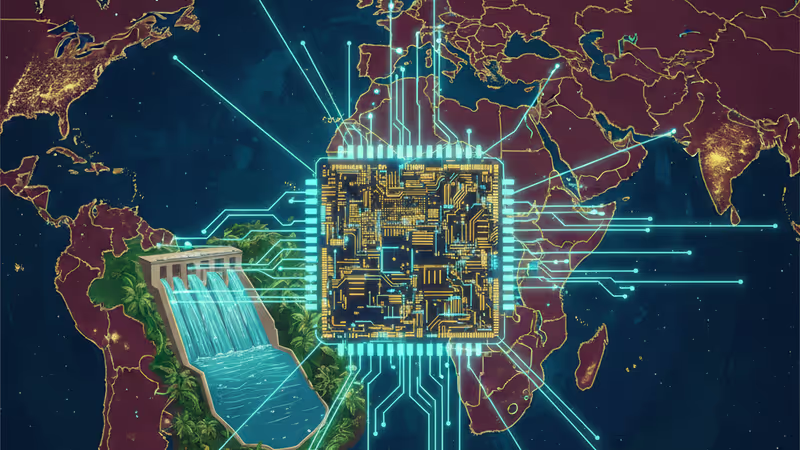
曾被視為馬來西亞政治邊陲的砂拉越,正迅速崛起為綠色經濟強權。本文深入剖析砂拉越如何利用半島政治的碎片化,鞏固內部領導,並透過能源與高科技戰略,重塑馬來西亞的權力版圖。