
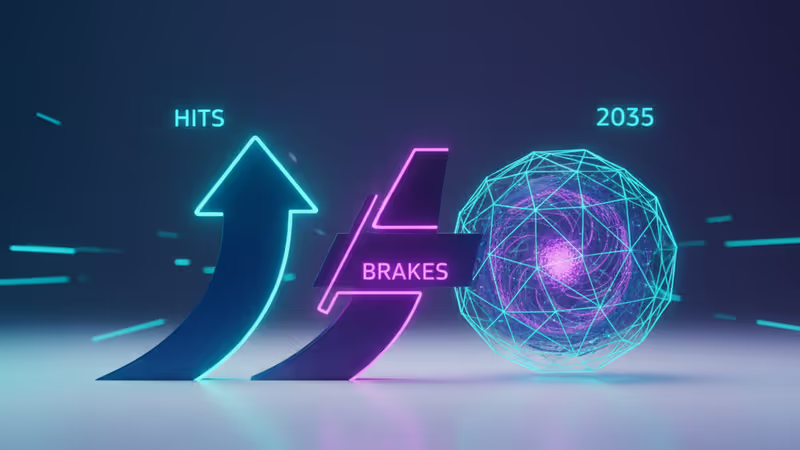
EU Hits the Brakes on 2035 Gas Car Ban, Fueling Fears of Ceding EV Market to China
The European Commission has softened its 2035 ban on new combustion engine cars, sparking a divide between legacy automakers and EV startups who fear the move will cede market leadership to China.
The European Commission is softening its ambitious plan to ban the sale of new gas-powered cars by 2035, a move designed to offer flexibility to legacy automakers but one that has ignited a firestorm of criticism from the continent's EV startups and climate investors.
Instead of a 100% zero-emission mandate, the revised plan would permit 10% of new vehicles to be hybrids or other non-zero-emission models, provided that manufacturers purchase carbon offsets. According to the Commission, this change is part of a broader 'Automotive Package' intended to help Europe’s car industry become both clean and competitive as it struggles against Tesla and a wave of affordable Chinese electric vehicles (EVs).
While the policy shift, if approved by the European Parliament, may come as a relief to traditional carmakers, it has created a sharp divide. “China already dominates EV manufacturing,” warned Craig Douglas, a partner at the European climate-focused venture capital firm World Fund. “If Europe doesn’t compete with clear, ambitious policy signals, it will lose leadership of another globally important industry.”
Douglas was a signatory to “Take Charge Europe,” an open letter published in September urging Commission President Ursula von der Leyen to “stand firm” on the original 2035 target. Executives from companies like Cabify, EDF, and numerous EV-related startups also signed, but their appeal appears to have been outweighed by pressure from the traditional auto industry, which accounts for 6.1% of total EU employment.
The debate is not just between old and new players. In a statement to Swedish media, a Volvo press officer said that “backing down on long-term commitments in favor of short-term gains risks undermining Europe’s competitiveness.” Unlike many of its peers, Volvo was confident it could meet the 2035 deadline and would have preferred to see more investment in charging infrastructure—a development critics fear the new policy could discourage.
This concern was echoed by Issam Tidjani, CEO of the Berlin-based EV charging marketplace Cariqa. “History shows that this kind of flexibility has never worked out well,” said Tidjani, who also signed the letter. “It delays scale, weakens learning curves, and ultimately costs industrial leadership rather than preserving it.”
To be fair, the Commission’s package does address supply chain issues with its “Battery Booster” strategy, a €1.8 billion (about $2.11 billion) investment to develop a fully European battery supply chain. The plan was praised by Verkor, a French startup that opened its first large-scale battery factory in Northern France this week. The company called the initiative “a necessary step to scale up Europe’s battery industry.”
Still, many worry the booster isn't enough to counteract the mixed signals on decarbonization. Legacy carmakers are already complaining that the carbon offset requirement could raise consumer prices, undermining the policy's goal. Another uncertainty is whether the United Kingdom, which has so far not imposed tariffs on Chinese EVs, will follow the EU's lead and modify its own 2035 ban. The decision highlights the tightrope Europe is walking between protecting today's economic realities and securing its place in tomorrow's clean-tech world.
PRISM Insight: Europe's policy pivot isn't just a concession; it's a high-stakes bet that a slower, more protected transition can outperform a rapid, disruptive one. But by creating policy uncertainty, the EU risks deterring the very private capital and startup innovation it needs to compete with China's state-backed EV machine, potentially trading short-term industrial peace for long-term technological irrelevance.
相关文章
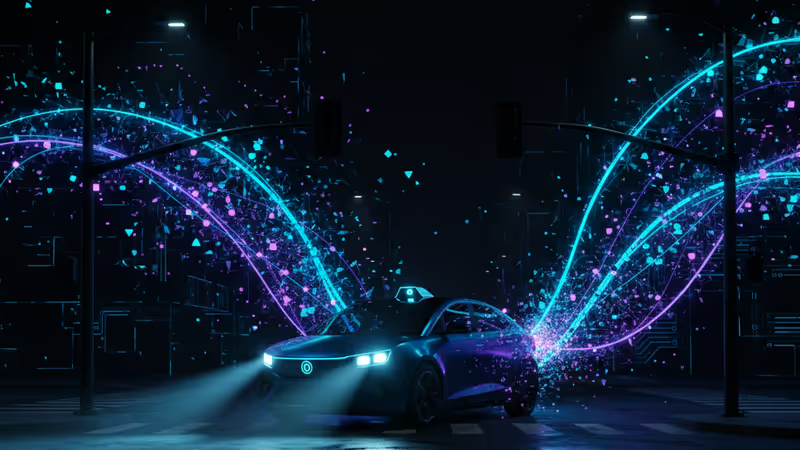
舊金山週六晚間因變電站火災引發大規模停電,導致Waymo無人計程車服務暫停。多部車輛癱瘓路口,引發交通混亂,暴露了智慧城市對傳統基礎設施的依賴與脆弱性。
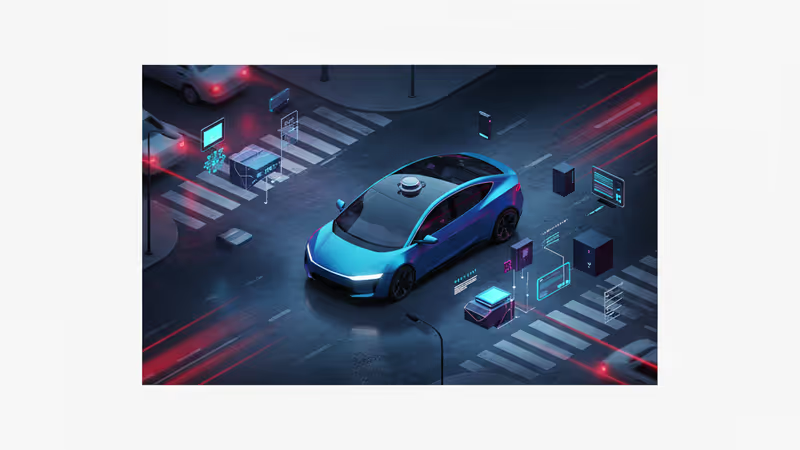
舊金山大規模停電導致 Waymo 無人計程車集體癱瘓,服務被迫暫停。事件暴露了自動駕駛技術對城市基礎設施的依賴性,並深入分析其與特斯拉「監督版」FSD 的根本區別。
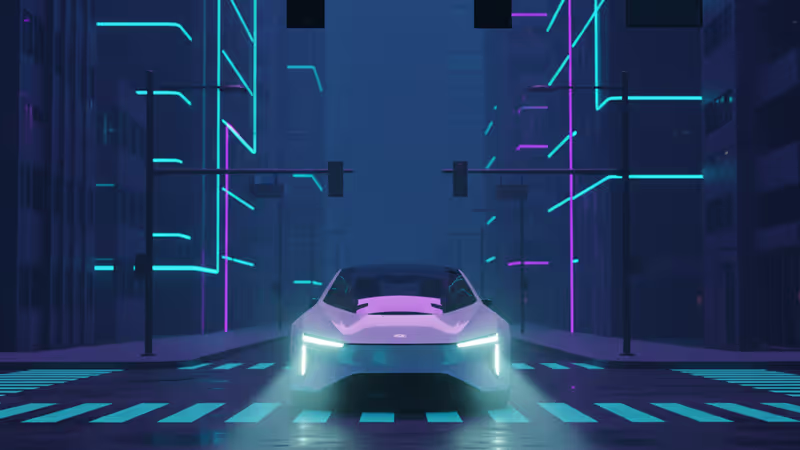
舊金山一場大規模停電,導致Google旗下Waymo自駕車隊在街頭動彈不得,引發交通混亂。事件凸顯了自駕技術對城市基礎設施的致命依賴,而馬斯克則稱特斯拉不受影響。本文深入分析兩種技術路線的差異與未來挑戰。

運行近80年的核心最佳化演算法「單純形法」,其運行效率的理論與實踐長期存在矛盾。最新研究終於從數學上證明其高效性的原因,解開了電腦科學領域的一大謎團。