

North Korea's Lifeline Cut? Kim Jong Un Moves to Nationalize Private 'Jangmadang' Markets by Year's End
North Korea is moving to absorb its famous 'jangmadang' private markets into the state economy by year-end. This article analyzes Kim Jong Un's strategy, the market's history, and whether this crackdown will truly end the country's resilient black market economy.
Is the engine of North Korea's grassroots economy about to be seized by the state? For decades, the informal economy has been a lifeline for ordinary citizens. Now, a recent report from sources inside the country suggests the Kim Jong Un regime is moving to incorporate private market businesses, known as the 'jangmadang', under state control by the end of this year. The move signals a decisive shift from the tacit acceptance that characterized the first nine years of Kim Jong Un's rule toward a broader reassertion of central authority.
From Famine's Offspring to Economic Pillar
The jangmadang's origins trace back to the devastating 'Arduous March' famine of the mid-1990s. As the state's Public Distribution System collapsed, North Koreans, facing starvation, began bartering and selling goods to survive. What started as small-scale trades—a haircut for some fish, excess vegetables for other necessities—grew into a sprawling network. This was fueled by smugglers bringing in goods from across the Chinese border, creating a de facto free market economy that became essential for survival and even offered a chance for social mobility.
COVID-19: The Perfect Pretext for a Crackdown
When Kim Jong Un took power in 2011, his government largely turned a blind eye to the jangmadang. Dismantling them was complicated; a deep-rooted system of bribery involved state officials, and the markets had created a new class of wealthy entrepreneurs known as the 'donju.' Furthermore, the markets had become too integral to daily life. However, for the regime, the jangmadang posed a threat, allowing contraband like USB drives and cell phones to enter the country and reducing the populace's reliance on the state.
The COVID-19 pandemic offered the perfect opportunity to change course. In January 2020, North Korea sealed its borders, deploying special forces with shoot-to-kill orders. While framed as a public health measure, this move effectively choked off the smuggling that fueled the jangmadang. The regime then began a gradual process of co-opting the markets, first by opening state-sanctioned facilities for trade and now, it appears, by mandating full integration.
본 콘텐츠는 AI가 원문 기사를 기반으로 요약 및 분석한 것입니다. 정확성을 위해 노력하지만 오류가 있을 수 있으며, 원문 확인을 권장합니다.
관련 기사
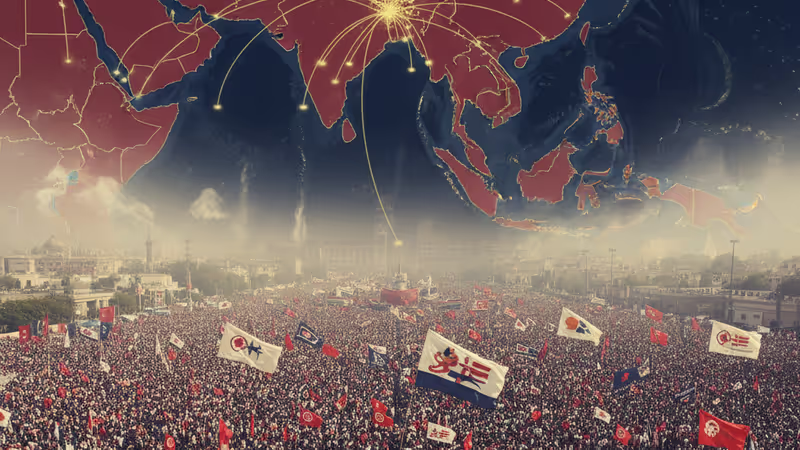
방글라데시 제1야당 BNP가 17년간 망명 생활을 한 타리크 라만 대표 대행의 귀환을 앞두고 최대 500만 명 규모의 환영 행사를 준비 중이다. 그의 귀국은 2월 총선을 앞두고 방글라데시 정국의 중대 변수가 될 전망이다.

네팔의 K.P. 샤르마 올리 전 총리가 Z세대 시위 유혈 진압 논란에도 불구하고 공산당(UML) 대표 3연임에 성공했다. 그의 재선이 네팔 민주주의에 미치는 영향을 분석한다.
말레이시아 정부 기관이 태국 법정에서 호주 언론인 머레이 헌터를 기소했다. 언론 자유를 위협하는 국경 초월 '전략적 봉쇄 소송(SLAPP)'의 위험성을 분석한다.
이재명 대통령이 대북 정책에서 통일부의 역할을 강조하며, 한국 정부 내 '자주파'와 '동맹파' 간의 갈등이 심화되고 있다. 이는 한미 동맹과 미중 관계 속에서 한국의 외교 노선에 중대한 영향을 미칠 전망이다.
방글라데시 제1야당 BNP가 17년간 망명 생활을 한 타리크 라만 대표 대행의 귀환을 앞두고 최대 500만 명 규모의 환영 행사를 준비 중이다. 그의 귀국은 2월 총선을 앞두고 방글라데시 정국의 중대 변수가 될 전망이다.
네팔의 K.P. 샤르마 올리 전 총리가 Z세대 시위 유혈 진압 논란에도 불구하고 공산당(UML) 대표 3연임에 성공했다. 그의 재선이 네팔 민주주의에 미치는 영향을 분석한다.
말레이시아 정부 기관이 태국 법정에서 호주 언론인 머레이 헌터를 기소했다. 언론 자유를 위협하는 국경 초월 '전략적 봉쇄 소송(SLAPP)'의 위험성을 분석한다.
이재명 대통령이 대북 정책에서 통일부의 역할을 강조하며, 한국 정부 내 '자주파'와 '동맹파' 간의 갈등이 심화되고 있다. 이는 한미 동맹과 미중 관계 속에서 한국의 외교 노선에 중대한 영향을 미칠 전망이다.