
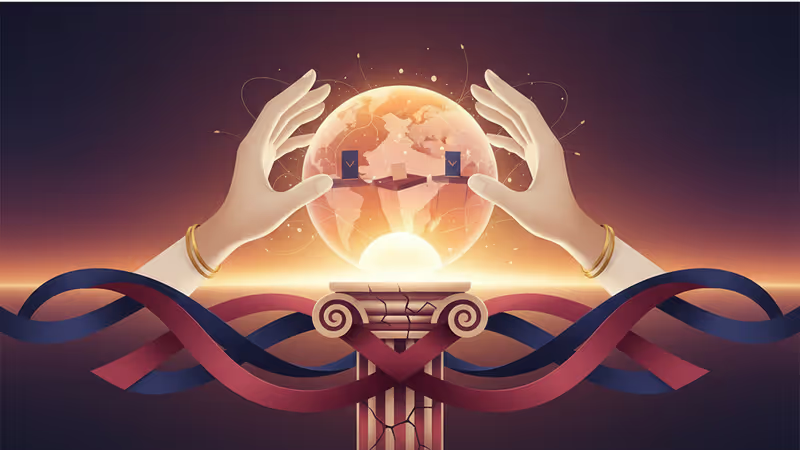
US-India Chill: A 'Fragile Phase' Opens the Door for China in the Indo-Pacific
In late 2025, US-India relations have entered a 'fragile phase' amid growing distrust. Nikkei Asia reports that PM Modi is avoiding President Trump, a development that could allow China to expand its influence in the Indo-Pacific.
A growing chill between Washington and New Delhi is threatening to reshape the strategic landscape of the Indo-Pacific, creating a potential vacuum that Beijing appears poised to fill. According to a December 21, 2025, report from Nikkei Asia, the once-warm relationship has entered a 'fragile phase' as Indian Prime Minister Narendra Modi seems to be deliberately avoiding U.S. President Donald Trump.
The shift from 'warmth to wariness' is reportedly driven by a fundamental 'growing distrust' between the two leaders. The report notes that Modi has largely steered clear of Trump throughout the latter half of 2025, a clear signal of strain in a partnership considered crucial for balancing power in the region.
This weakening of US-India ties could have significant consequences. Analysts suggest that as Washington and New Delhi drift apart, it creates a strategic opening for China to gain ground and expand its influence across the Indo-Pacific, a region central to global trade and security.
India's diplomatic maneuvering is not without historical precedent. During the Cold War, New Delhi championed a policy of nonalignment but often maintained a distinct tilt toward the Soviet Union. This lean was solidified after the 1962 Sino-Indian border war, which prompted Moscow to increase military aid to India, cementing a pragmatic partnership that lasted for decades.
PRISM Insight
The cooling of US-India ties highlights a persistent challenge for Washington's Indo-Pacific strategy: aligning with partners who fiercely guard their strategic autonomy. For nations like India, partnerships are often pragmatic and transactional, not ideological. This dynamic means that any perceived overreach or unreliability from Washington could quickly push New Delhi to rebalance its relationships, a trend regional powers and global businesses must monitor closely.
관련 기사

프랑스 대통령 관저 엘리제궁에서 식기 책임자 등 3명이 국보급 식기를 훔친 혐의로 재판에 넘겨졌다. 이번 사건은 루브르 박물관 도난 이후 또다시 제기된 프랑스 국가 문화유산 보안 문제를 조명한다.

전라남도 나주 오리농장에서 고병원성 조류인플루엔자(AI)가 발생, 올겨울 16번째 확진 사례로 기록됐다. 방역 당국은 긴급 방역과 함께 지역 내 200여 농가에 대한 전수조사에 착수했다.
개혁신당 이준석 대표가 김건희 전 영부인과 연루된 2022년 보궐선거 공천 개입 의혹으로 12월 21일 특검에 출석해 약 10시간 동안 조사를 받았다. 이 대표는 혐의를 부인하고 있다.

스웨덴 당국이 EU 제재 대상인 러시아 화물선 '아들러호'를 조사 중이다. 엔진 고장으로 스웨덴 영해에 정박한 이 선박은 과거 무기 운송 혐의를 받은 바 있다.