
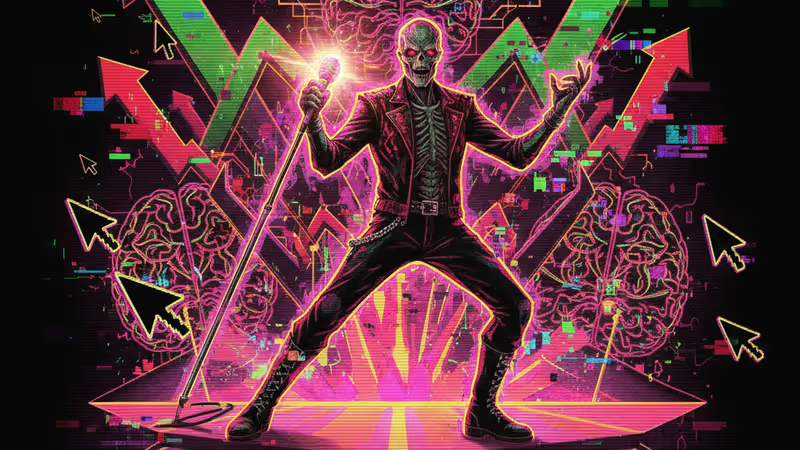
Vecna on Stage: Why the 'Stranger Things' Cameo is a Masterclass in Modern IP Strategy
A celebrity cameo is more than a stunt. We analyze how Netflix is using 'Stranger Things' to master transmedia storytelling and build a next-gen media empire.
The Lede: Beyond the Cameo
When 'Stranger Things' star Jamie Campbell Bower appeared on stage as his character, Vecna, in the franchise's prequel play, it was more than a clever marketing stunt. For executives and strategists, this move signals a critical evolution in how premier intellectual property (IP) is managed. Netflix is executing a playbook that transforms a digital-native franchise into a multi-platform, physical-world ecosystem, blurring the lines between content consumption and live experience to maximize fan engagement and lifetime value.
Why It Matters: The IP-as-a-Service Model
This event isn't just about selling theatre tickets; it's a real-time stress test of a much larger strategy with significant second-order effects:
- The 'Liveness' Premium: In an on-demand world, live events command a premium. By inserting the original actor into the play, Netflix and the show's producers created a unique, irreplicable moment. This generates immense social media buzz and FOMO (Fear Of Missing Out), which acts as powerful, organic marketing for both the play and the upcoming streaming season.
- Canonizing the Universe: The cameo physically links the prequel play to the mainline series, solidifying its importance within the 'Stranger Things' canon. This isn't just an adaptation; it's a critical piece of the narrative puzzle, rewarding the most dedicated fans and encouraging deeper investment in the entire universe.
- Bridging Content Gaps: With long waits between seasons, franchises risk losing momentum. Live events, character cameos, and in-world experiences act as strategic 'content bridges,' keeping the IP top-of-mind and the fanbase engaged during production lulls.
The Analysis: Competing in the Big Leagues
Netflix is moving beyond its identity as a streaming service and asserting itself as a full-fledged entertainment titan, capable of competing with the likes of Disney and Warner Bros. Discovery in the franchise-building arena. The 'Stranger Things' strategy mirrors the 'Disney-fication' of an asset: what started as a hit show is now a sprawling universe of merchandise, immersive experiences, and now, high-end theatre.
Historically, stage adaptations were secondary revenue streams. Today, they are integral components of a transmedia storytelling strategy. Compare this to Harry Potter and the Cursed Child or Disney’s immersive Star Wars: Galaxy's Edge. These aren't just spin-offs; they are world-building extensions designed to extract maximum value from a core IP. By having Bower—the on-screen Vecna—anoint the stage production, Netflix signals that this prequel isn't optional viewing for fans; it's essential lore.
PRISM Insight: Monetizing the Experience Economy
The core trend at play is the shift towards an experience economy, where consumers, particularly younger demographics, prioritize unique experiences over physical goods. This cameo is a perfect microcosm of this trend: a digital IP (Stranger Things) is manifested into a physical, ticketed experience (the play), amplified by a digitally-shared moment (the cameo on social media).
The investment implication is clear: the future of media valuation will rely not just on subscriber numbers, but on a company's ability to successfully monetize its IP across multiple verticals—especially live and immersive events. The Instagram tease by the actor beforehand, followed by the explosion of fan-generated content, demonstrates a flawlessly executed feedback loop. The ROI isn't just the box office; it's the immense earned media value that reinvigorates the entire global fanbase ahead of the show's final season.
PRISM's Take: The Future is Fluid
This cameo was a strategic masterstroke, showcasing a sophisticated understanding of modern brand stewardship. Netflix is demonstrating that the most durable and valuable franchises of the future will not be confined to a single screen. They will be fluid, existing across streaming, stage, social media, and physical spaces simultaneously. This is the blueprint for building a 21st-century media empire: don't just give your audience something to watch, give them a world to live in. The lines have been blurred, and the most successful players will be those who can navigate this new, multi-platform reality.
관련 기사

도쿄에서 발생한 일가족 사망 사건의 이면을 분석합니다. 단순한 비극을 넘어 일본 사회의 고립된 육아, 정신 건강 위기 등 구조적 문제를 심층 진단합니다.
보스턴 블루 미드시즌 피날레의 충격적인 결말을 깊이 분석합니다. 실버 가문의 붕괴가 단순한 플롯 트위스트를 넘어 우리 사회의 정의와 미디어 산업에 던지는 의미를 파헤칩니다.

저스틴 비버와 헤일리 비버의 평범한 데이트 사진 한 장에 숨겨진 고도의 PR 전략과 수백만 달러 가치의 브랜드 제국에 대한 심층 분석.

기후 변화 시대, AI 기상 예측이 연말 여행의 성패를 좌우합니다. 단순 날씨 확인을 넘어, 터뷸런스 예측, 도로 결빙 분석 등 '웨더 테크'를 활용한 생존 전략을 분석합니다.