
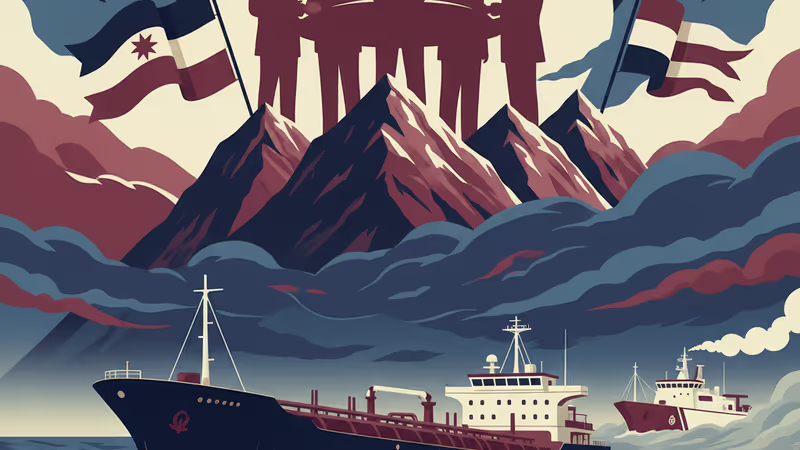
U.S. Pursues Third Tanker Off Venezuela, Escalating 'Shadow Fleet' Standoff
The U.S. Coast Guard is pursuing a third sanctioned oil tanker near Venezuela, escalating a pressure campaign that could impact global oil prices and heighten geopolitical tensions with the 'shadow fleet.'
The Lead: A High-Stakes Maritime Pursuit
The U.S. Coast Guard is pursuing a third oil tanker in international waters near Venezuela, officials told Reuters on Sunday, signaling a sharp escalation in Washington's campaign to choke off illicit oil revenues to sanctioned nations. If successful, it would be the third such interception in less than two weeks, underscoring the enforcement of a 'blockade' President Donald Trump announced last week.
Timeline of an Escalating Campaign
- Last Week: President Trump announces a "blockade" of all sanctioned oil tankers entering and leaving Venezuela.
- Ongoing Pressure: The U.S. has ramped up its military presence in the region, conducting over two dozen military strikes on vessels that have killed at least 100 people.
- This Weekend: After two tankers were seized, the U.S. Coast Guard began its active pursuit of a third vessel, identified as the Bella 1.
Target: The Sanctioned 'Bella 1'
"The United States Coast Guard is in active pursuit of a sanctioned dark fleet vessel that is part of Venezuela's illegal sanctions evasion," a U.S. official said, speaking on condition of anonymity. "It is flying a false flag and under a judicial seizure order." Another official clarified that the tanker has not yet been boarded and that interceptions can take various forms, including sailing or flying close to the vessel.
While U.S. officials didn't name the ship, British maritime risk group Vanguard and a U.S. maritime security source identified it as the Bella 1, a crude oil carrier already on the Treasury Department's sanctions list. According to TankerTrackers.com, the vessel was empty as it approached Venezuela on Sunday. It has a documented history of illicit trade, having transported Venezuelan oil to China in 2021 and previously carried Iranian crude, according to monitoring services and internal documents from Venezuela's state oil company, PDVSA.
"I don't think that people need to be worried here in the U.S. that the prices are going to go up because of these seizures... There's just a couple of them, and they were black market ships."
– Kevin Hassett, Director of the White House's National Economic Council
Market Jitters and Geopolitical Ripples
The White House sought to downplay the economic fallout. Kevin Hassett, director of the National Economic Council, told CBS's "Face the Nation" that the first two tankers seized were "black market ships" and he doesn't expect the operations to raise U.S. gas prices.
Market analysts, however, are less certain. One oil trader told Reuters the seizures could push prices slightly higher when Asian markets open. "We might see prices increasing modestly at the opening, considering market participants could see this as an escalation with more Venezuelan barrels at risk," said UBS analyst Giovanni Staunovo.
The implications may extend far beyond oil prices. The seizures raise geopolitical risks by increasing friction with the 'shadow fleet' of vessels that move oil for sanctioned countries like Venezuela, Russia, and Iran. Matias Togni, an oil shipping analyst at NextBarrel, warned that the U.S. actions could legitimize and encourage Ukraine to continue attacking Russian vessels and potentially embolden Europe to detain Moscow-linked dark fleet ships. The cat-and-mouse game on the high seas appears to be entering a more dangerous phase.
관련 기사
국제 에너지 가격 하락에도 불구하고, 한국전력이 206조 원의 누적 부채 해결을 위해 2026년 1분기 전기요금을 동결했다. 정부는 한전의 재무 안정성을 우선 과제로 삼았다.
불과 18개월 만에 두 번의 대규모 살상 사건을 겪은 호주 본다이. 공동체의 충격과 슬픔이 어떻게 사회적 분열과 정치적 분노로 번지고 있는지 심층 분석합니다.
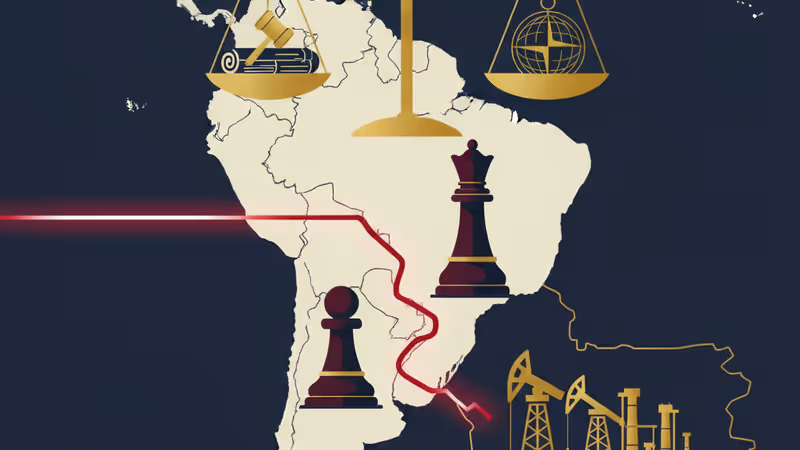
미국과 베네수엘라가 가이아나 에세퀴보 유전을 둘러싸고 군사적 대치를 이어가고 있다. 남미의 지정학적 위기와 자원 전쟁 가능성을 다각적으로 분석한다.

나이지리아 정부가 지난 11월 무장 괴한에 피랍됐던 가톨릭 학교 학생 130명을 추가 석방했다고 발표했다. 이로써 한 달 넘게 이어진 이번 집단 납치 사태가 종결됐다.