

TikTok's 'Flow State' Trend Isn't a Meme, It's a Rebellion Against the Attention Economy
Gen Z's viral 'flow state' trend is more than a meme. It's a crucial signal about the future of focus, wellness, and work in a world of digital distraction.
The Lede: Beyond the Meme
A viral TikTok trend where users claim to reach a “flow state” while matching socks or assembling IKEA furniture may seem trivial. It’s not. For leaders, this is a critical signal from the next generation of consumers and employees. It's a grassroots referendum on the digital noise you’ve built your business on, and a powerful indicator of an emerging market: the reclamation of focus.
Why It Matters: The New Economics of Focus
This trend reveals a deep-seated craving for undivided attention in a world architected for distraction. The co-opting of a psychological term for mundane tasks isn't mockery; it's an attempt to find and celebrate moments of presence, however small. This has second-order effects across industries:
- The Wellness Industry: The market is shifting from high-effort, aspirational practices (hour-long meditation) to accessible “micro-dosing mindfulness.” Apps and services that can gamify and celebrate finding flow in everyday chores have a new, massive addressable market.
- Future of Work: For a workforce raised on infinite scroll, the ability to do “deep work” is a superpower. This trend is a cry for workflows and tools that insulate them from digital noise, not bombard them with it. The demand for focus-enabling enterprise software will surge.
- Media & Platforms: User resentment for attention-fragmenting algorithms is becoming mainstream. Platforms that offer users more control, curating experiences for depth over breadth, will build a powerful competitive moat based on user trust and well-being.
The Analysis: From High-Performance to High-Relatability
Psychologist Mihály Csíkszentmihályi coined “flow” to describe an optimal state of consciousness where high skill meets high challenge—a surgeon in the operating room, a musician lost in a performance. TikTok, in its characteristic way, has democratized the concept. It has decoupled flow from elite performance and attached it to the satisfaction of completing a simple, tangible task.
This isn’t just linguistic drift. It’s a cultural counter-narrative. The Instagram era was defined by showcasing polished outcomes. The TikTok “flow state” trend celebrates the messy, absorbing process. It’s a subtle but powerful rejection of performative perfection in favor of authentic, focused engagement. Gen Z is using the language of psychology and therapy not as a clinical diagnosis, but as a shared vocabulary to navigate the pressures of modern life, making the overwhelming feel manageable and relatable.
PRISM Insight: Invest in 'Attention-Tech,' Not Ad-Tech
The dominant tech business model of the last decade was built on harvesting attention. The next will be built on protecting it. We call this emerging category “Attention-Tech”—a new class of software, hardware, and services designed to help users cultivate and direct their focus.
Look for opportunities in:
- AI-Powered Focus Layers: Tools that intelligently manage notifications, batch communications, and create personalized digital sanctuaries for deep work.
- Single-Task Hardware: A resurgence of devices designed to do one thing well, offering an escape from the multi-tasking tyranny of the smartphone.
- Gamified Productivity: Platforms that apply game mechanics not to mindless engagement, but to helping users build and maintain streaks of focused activity, rewarding presence over clicks.
The ROI is no longer just on capturing eyeballs, but on empowering minds. The most valuable platforms of the future will sell focus back to the users they stole it from.
PRISM's Take
Dismissing the “flow state” trend as another piece of Gen Z ephemera is a strategic error. It is a sophisticated, if ironic, critique of the digital ecosystem. This generation isn’t just posting memes; they are beta-testing solutions to burnout and building a cultural framework that values focus. They are finding pockets of meaning and control in a chaotic world. The leaders and builders who recognize this—and design products and systems that serve this fundamental human need for presence—will not only capture the next market but also define a healthier, more productive paradigm for technology and work.
관련 기사
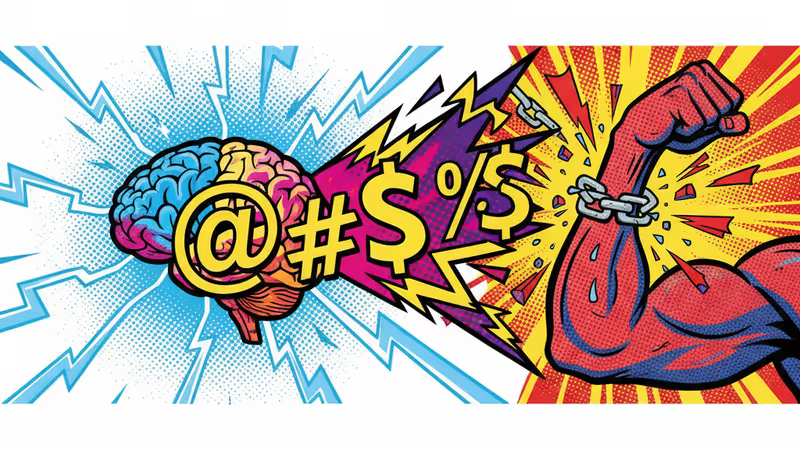
욕설이 통증을 줄이고 근력을 향상시킨다는 사실을 아시나요? 과학적 원리와 헬스, 바이오해킹에 미칠 영향을 심층 분석합니다.
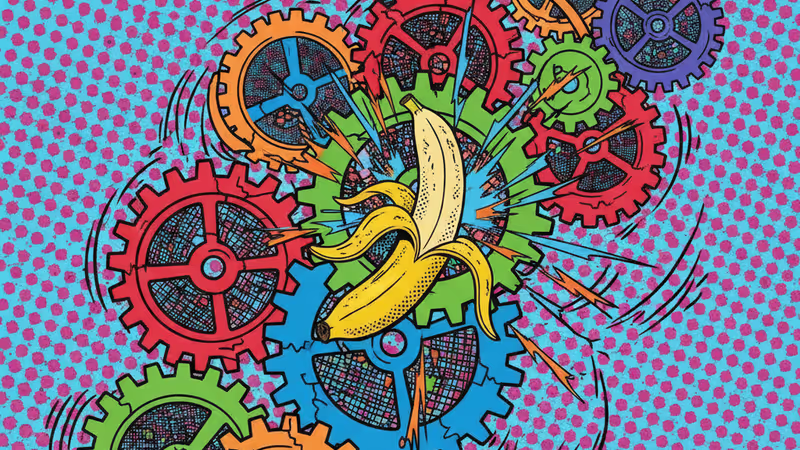
라이프 해킹 열풍의 의미는? 바나나 껍질 까는 법부터 호흡법까지, 일상을 최적화하려는 트렌드가 만드는 새로운 비즈니스 기회와 기술의 미래를 분석합니다.
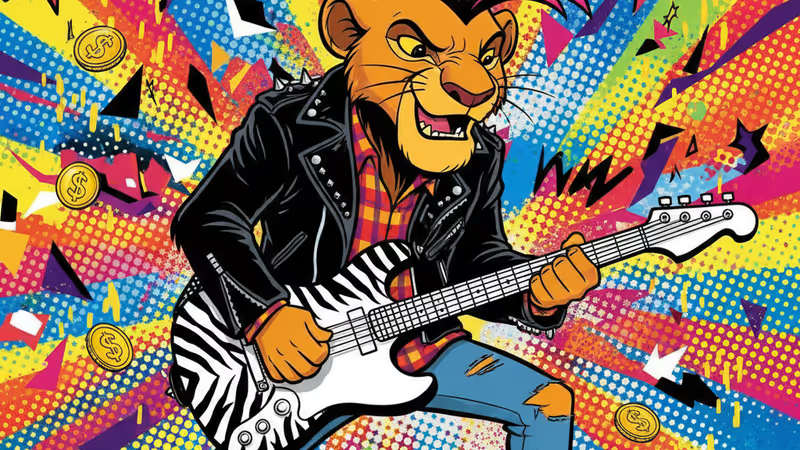
디즈니가 팝펑크, 컨트리 등 다양한 장르의 커버 앨범을 내는 이유. 단순한 리메이크를 넘어 IP의 생명을 연장하는 디즈니의 비즈니스 전략을 분석합니다.
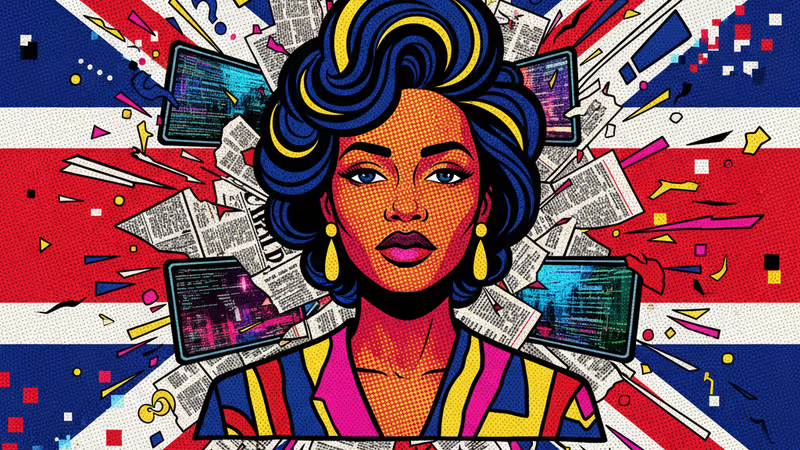
영국 GB 뉴스의 메건 마클 관련 가짜뉴스 사태를 통해 본 미디어의 위기. 분노를 수익으로 바꾸는 '미디어 전쟁'이 저널리즘의 미래에 미치는 영향을 분석합니다.