
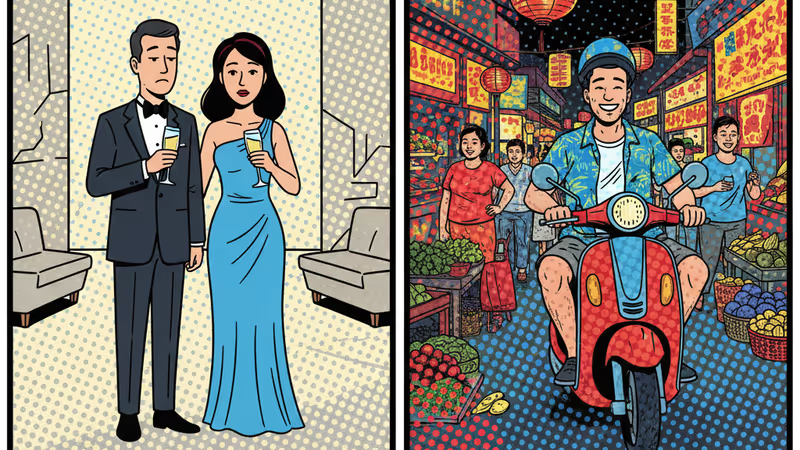
The Unbundling of Luxury: Why 'Budget' Honeymoons Signal a Permanent Shift in Consumer Values
The rise of affordable luxury honeymoons isn't about saving money. It's a strategic shift in consumer values, redefining the future of travel and hospitality.
The Lede: The New ROI is Return on Experience
While headlines focus on the rising cost of weddings, a far more significant trend is emerging in the aftermath: the strategic redefinition of the honeymoon. The growing preference for destinations like Portugal and Colombia over traditional luxury hubs isn't a simple cost-saving measure. It's a market signal that high-end consumers, particularly Millennials and Gen Z, are rejecting the bundled, one-size-fits-all model of luxury. They are actively seeking a higher 'Return on Experience' (ROX), prioritizing authenticity and discovery over legacy brand prestige. This shift is a bellwether for the entire luxury sector, from travel to retail.
Why It Matters: The Rise of 'Stealth Wealth' Travel
The implications of this trend extend far beyond the travel industry. It reflects a broader cultural pivot towards 'stealth wealth' and algorithm-driven discovery. The new status symbol isn't a photograph in front of a recognizable, expensive resort; it's the 'discovery' of a boutique hotel in Cartagena or an under-the-radar Greek island like Naxos. This has several second-order effects:
- The 'Destination Dupe' Economy: Just as in beauty and fashion, consumers are actively seeking destinations that offer the 'vibe' of a luxury hotspot (like Santorini) without the price tag and crowds. This creates opportunities for second-tier cities and regions to capture significant market share from established players.
- Algorithmic Influence: Travel discovery is no longer driven by legacy travel agents or magazines. It's powered by TikTok's algorithm, niche newsletters, and AI-driven recommendations. Destinations that are visually compelling and story-rich have a distinct advantage in this new ecosystem.
- Pressure on Incumbents: Traditional all-inclusive resorts and legacy hotel chains are now competing not just with each other, but with a decentralized network of boutique hotels, high-end rentals, and curated local experiences. Their value proposition of 'reliable luxury' is being challenged by the promise of 'unique adventure'.
The Analysis: From 'Fly-and-Flop' to 'Explore-and-Post'
Historically, the honeymoon was a pre-packaged product—a 'fly-and-flop' reward for the stress of wedding planning, often at a resort where every need was anticipated and bundled. This model, perfected for Baby Boomers and Gen X, prioritized ease and relaxation over everything else. The new model is fundamentally different. It's an active, not passive, experience. It's less about escaping and more about exploring. This shift is fueled by two major forces:
1. The Normalization of Global Mobility: The remote and hybrid work revolution has blurred the lines between travel and life. A generation comfortable with working from a laptop in a different city sees a multi-destination trip through Portugal not as a logistical challenge, but as a natural extension of a flexible lifestyle.
2. The Primacy of 'Story Value': For a digital-native generation, the value of an experience is intrinsically linked to its narrative potential. A trip to a lesser-known part of Puerto Rico or a road trip through Croatia offers a more unique and compelling story to share than a week at a Cancun mega-resort. The perceived 'intelligence' of the choice—finding a hidden gem—has become a form of social capital.
PRISM Insight: The Tech Stack for Decentralized Luxury
This consumer evolution is creating demand for a new technology stack focused on curation and discovery, not just booking. The investment opportunities lie in platforms that facilitate this new mode of travel. We are seeing a shift away from massive aggregators towards tools that enable personalized, high-value experiences. Key areas include:
- AI-Powered Itineraries: Services that use AI to build complex, multi-stop trips based on user preferences for 'vibe' and 'value', effectively acting as a next-generation travel agent.
- Creator-Led Curation: Platforms like Thatch or Substack newsletters where trusted travel creators sell detailed guides and itineraries, monetizing their niche expertise and offering a human alternative to algorithmic recommendations.
- Niche Booking Platforms: Vertically-focused sites that curate specific types of stays (e.g., boutique hotels, architectural homes) are gaining traction over behemoths like Expedia by offering a pre-vetted, high-taste selection.
PRISM's Take: Luxury is No Longer a Price Point, It's a Strategy
Do not mistake this for a temporary, inflation-driven dip in spending. This is a permanent recalibration of what 'luxury' means. The new luxury consumer is acting more like a venture capitalist, seeking out asymmetric opportunities where the experiential upside far outweighs the monetary cost. They are trading the lazy security of the brand name for the intellectual and social rewards of discovery.
The ultimate luxury is no longer being able to afford the expensive thing; it's having the taste, knowledge, and savvy to find the exceptional value that others overlook. For any brand in the aspirational goods and services space, the lesson is clear: the future belongs not to those who sell expensive products, but to those who empower their customers to make smart, story-worthy choices.
관련 기사

욕설이 통증을 줄이고 근력을 향상시킨다는 사실을 아시나요? 과학적 원리와 헬스, 바이오해킹에 미칠 영향을 심층 분석합니다.
라이프 해킹 열풍의 의미는? 바나나 껍질 까는 법부터 호흡법까지, 일상을 최적화하려는 트렌드가 만드는 새로운 비즈니스 기회와 기술의 미래를 분석합니다.

디즈니가 팝펑크, 컨트리 등 다양한 장르의 커버 앨범을 내는 이유. 단순한 리메이크를 넘어 IP의 생명을 연장하는 디즈니의 비즈니스 전략을 분석합니다.

영국 GB 뉴스의 메건 마클 관련 가짜뉴스 사태를 통해 본 미디어의 위기. 분노를 수익으로 바꾸는 '미디어 전쟁'이 저널리즘의 미래에 미치는 영향을 분석합니다.