
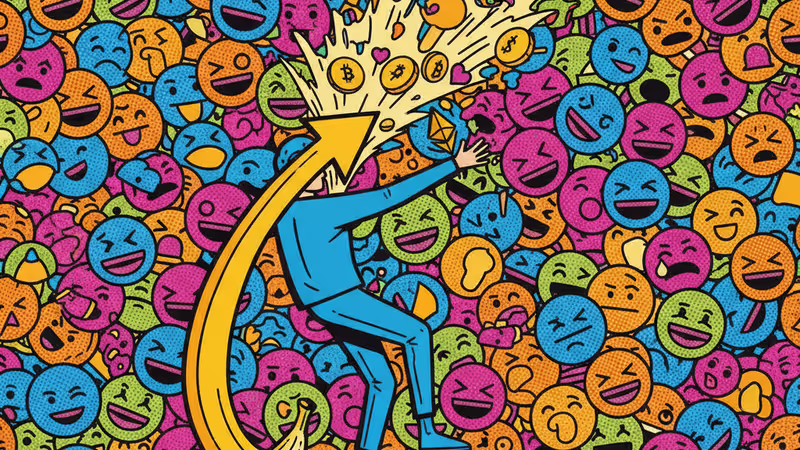
The Stupidity Economy: How Viral Fails Became a Digital Gold Rush
It's not just about memes. Viral 'stupidity' is a powerful economic engine driving the attention economy. PRISM analyzes the impact on tech, brands, and society.
The Lede: The High-Stakes Business of Online Blunders
While your feed fills with screenshots of hilariously bad takes and logic-defying posts, a powerful economic engine is humming in the background. Content aggregators and social platforms are not merely documenting human folly; they are mining it. The constant stream of public blunders, curated by communities like the 90,000-strong Facebook group 'More stupidity should be painful!!!', is a highly efficient, low-cost fuel for the attention economy. For leaders, this isn't trivial entertainment—it's a raw look at the mechanics of viral engagement and a critical new vector for brand risk.
Why It Matters: The Ripple Effects of Weaponized Stupidity
The seemingly harmless act of mocking a foolish comment has systemic consequences. This content format has become a cornerstone of platform strategy, with significant second-order effects:
- Platform Monetization: Outrage and ridicule are powerful emotional triggers that generate massive engagement—clicks, comments, shares. For platforms like Meta and X, this is engagement gold. The algorithms don't distinguish between insightful debate and a digital pile-on; they only see interaction, which is directly monetizable through ad impressions.
- Brand and Reputation Risk: In this economy, any entity—corporate or individual—is one poorly-worded post away from becoming the main character in a global mockery cycle. The speed at which a minor gaffe can be decontextualized, amplified, and turned into a meme represents a significant and unpredictable threat to brand reputation.
- Erosion of Discourse: The normalization of public shaming as entertainment degrades the quality of online conversation. It incentivizes performative dunks over nuanced discussion, contributing to polarization and a culture of intellectual tribalism. Common sense isn't just uncommon; it's being algorithmically disincentivized.
The Analysis: The Evolution of Public Shaming
This phenomenon is not new, but its modern incarnation is dangerously potent. We've evolved from the contained schadenfreude of 'America's Funniest Home Videos' to a permanent, searchable, and globally distributed digital pillory. The ecosystem has three key players:
1. The Unwitting 'Creator': The individual who makes the original post. Their intent is irrelevant once the content is picked up by the machine.
2. The Aggregator/Curator: Online communities and media brands (like the one in the source article) that act as tastemakers. They find, frame, and package the content for their audience, adding a layer of commentary that signals how the audience should react (e.g., laughter, scorn).
3. The Platform/Algorithm: The true power broker. The platform's algorithm identifies the content's potential for high engagement and distributes it far beyond its original context, ensuring maximum velocity and impact. The platform is the primary financial beneficiary of this entire cycle.
PRISM Insight: The Coming Automation of Outrage
The next frontier is the intersection of the Stupidity Economy and generative AI. We are on the cusp of two significant developments:
- AI-Generated Rage Bait: Imagine AI models trained to create subtly 'stupid' or controversial content perfectly engineered to provoke a response and go viral. This moves from capturing accidental blunders to manufacturing them at scale for engagement farming.
- AI-Powered Curation: AI tools will soon be able to scan billions of data points in real-time to identify, clip, and package the most mockable content seconds after it's posted. This will dramatically accelerate the cycle time from post to global meme, shrinking the window for any possible correction or deletion.
The investment implication is clear: the market for sophisticated AI-driven brand monitoring, crisis management, and sentiment analysis tools will explode. Protecting against algorithmically-amplified reputational attacks will become a non-negotiable cost of doing business.
PRISM's Take: It's a Feature, Not a Bug
It's easy to dismiss viral 'stupidity' as a trivial internet sideshow. That is a strategic error. This content reveals the raw, unfiltered incentive structure of the modern web: emotion, particularly outrage and ridicule, is the most valuable currency. The platforms are built to find and exploit it. This isn't a bug in the system; it is the system. For any leader, brand, or individual operating online, the critical realization is that you are participating in this economy whether you like it or not. The only choice is whether you understand its rules and the forces at play, or whether you risk becoming its next product.
관련 기사

무소속 대선 후보 RFK 주니어가 NFL 스타 애런 로저스를 부통령 후보로 고려 중입니다. 이들의 연대가 미국 대선의 판도를 어떻게 바꾸고 있는지 심층 분석합니다.

중일 정치 갈등에도 불구하고 상하이에서 일본 스시 체인 '스시로'가 폭발적 인기를 끄는 현상을 분석합니다. 정치와 소비의 괴리, 그 의미는?
크리스티아누 호날두의 최신 사진은 단순한 자기과시를 넘어, 그의 거대한 CR7 비즈니스 제국과 퍼스널 브랜딩 전략을 보여주는 결정적 단서입니다. PRISM이 그 이면을 분석합니다.
테일러 스위프트의 새 다큐는 단순한 비하인드가 아니다. 39초 의상 교체부터 브랜드 전략까지, 엔터테인먼트 산업의 미래를 바꿀 핵심 인사이트를 분석한다.