
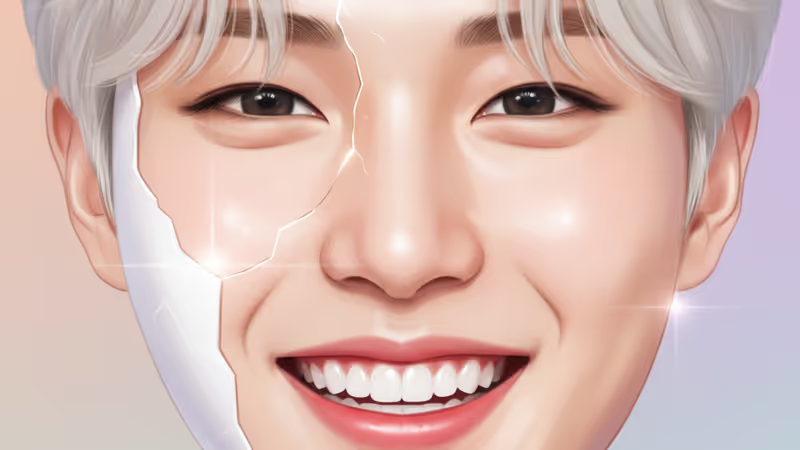
The Smile Line Rebellion: How a K-Pop 'Scandal' Exposes a Crack in the Perfection Machine
An attack on a K-Pop idol's smile lines backfired, signaling a major shift in beauty standards and fan power. PRISM analyzes the industry implications.
The Lede: Beyond the Fan Wars
A failed attempt to critique a rookie idol’s smile lines has become a critical data point for the future of the multi-billion dollar K-Pop industry. What began as a trivial online post targeting Hearts2Hearts’ Ian didn't just fail; the scale and speed of the fan-led defense signal a seismic shift in consumer values. For executives in tech, entertainment, and branding, this isn't just gossip—it's a market indicator that the long-reigning aesthetic of manufactured perfection is facing a powerful, grassroots rebellion rooted in a demand for authenticity.
Why It Matters: The ROI of Authenticity
The swift and overwhelming backlash against the criticism is the real story. It demonstrates a profound change in the idol-fan contract. The market—the global fandom—is now actively rejecting the hyper-critical, unattainable beauty standards that the industry itself has cultivated for decades. This has immediate second-order effects:
- Brand Resilience: Idols who display more natural, human traits are paradoxically becoming more resilient to online attacks. Authenticity is developing into a form of reputational armor, with fans acting as a decentralized, highly motivated PR army.
- Marketing Strategy Pivot: The playbook of promoting idols as flawless, doll-like figures is losing its efficacy. The new growth vector lies in marketing relatability. This incident provides a clear business case for agencies to lean into less-processed visuals and more genuine storytelling.
- Risk Mitigation: By celebrating natural features, fan communities are lowering the immense psychological pressure on young idols, potentially reducing the long-term risks of burnout and mental health crises that can disrupt a group's career trajectory and damage an agency's reputation.
The Analysis: From Manufactured Dolls to Human Idols
For twenty years, the K-Pop industry has operated on a simple premise: idols are aspirational products. In the 2nd and 3rd generations (e.g., Girls' Generation, EXO), perfection was the goal. Companies meticulously controlled every aspect of an idol’s image, and any deviation—a pimple, a wrinkle, a candid facial expression—was airbrushed out of existence. Smile lines, known as 'palja jureum' (팔자 주름) in Korea, were seen as flaws to be erased with fillers or lasers, a signifier of aging to be combatted at all costs.
The Ian incident represents a direct challenge to this legacy. The current 5th generation of idols is rising in an era dominated by two conflicting forces: the emergence of hyper-realistic AI influencers and a Gen Z-driven demand for raw authenticity. While some groups are being marketed for their “AI-generated” visuals, the fierce defense of Ian's smile lines shows a powerful counter-trend. Fans are no longer passive consumers of a manufactured image; they are active curators of a narrative they want to believe in. The criticism of Ian, a '09-liner, was perceived not just as an attack on her, but as an attack on the very idea that a young performer should be allowed to look human.
PRISM Insight: The High-Definition Paradox
This cultural shift is being accelerated by technology. The universal adoption of 4K and 8K resolution cameras makes the old methods of hiding imperfections virtually impossible. Every pore, fine line, and expression is captured in stark detail. The industry can no longer hide behind low-resolution video or heavily processed photos. Technology has forced a choice: either double down on uncanny-valley levels of digital alteration or embrace the high-definition reality.
The backlash in favor of Ian suggests that audiences are opting for the latter. For investors, this signals a shift in where value will be created. The focus should move from agencies with the best cosmetic and digital touch-up resources to those with the best narrative and community management capabilities. The winning companies will be those that use technology not to erase humanity, but to foster a deeper, more authentic connection between artists and their digitally-native fanbase.
PRISM's Take: The Most Valuable Asset is Humanity
The so-called "Smile Line Scandal" is a misnomer. It is the "Smile Line Validation." This event is a critical signal that the K-Pop machine's obsession with an impossible standard of beauty is becoming a strategic liability. The original poster expected agreement and instead found themselves rendered obsolete, their critique rejected as a relic of a bygone era.
In an age where AI can generate a technically "perfect" face in seconds, an idol’s genuine smile, complete with the lines it creates, has become a radical act of authenticity. It is a differentiator that cannot be replicated by code. The agencies that recognize this and build their strategies around protecting and celebrating their artists' humanity will not only survive this transition—they will define the future of global pop culture.
관련 기사

2023년 신곡 없이 '올해의 가수' 1위에 오른 지드래곤. K팝 전문가들이 그를 선택한 이유와 이것이 업계의 미래에 시사하는 바를 심층 분석합니다.

263만 유튜버 나름TV의 K팝 아이돌 학폭 폭로 사건을 심층 분석합니다. 크리에이터 경제와 팬덤 문화가 충돌하며 K팝 산업의 검증 시스템에 중대한 질문을 던집니다.

BTS 정국의 타투 논란 심층 분석. K팝 아이돌의 자기표현과 팬덤의 소유권 의식 사이의 충돌이 우리에게 시사하는 바를 알아봅니다.
BTS 뷔의 엉뚱한 '열애설'은 단순 해프닝이 아니다. 팬덤이 주도하는 새로운 콘텐츠 소비 방식과 '관계성' 경제의 부상을 심층 분석한다.