
The Shrinking Sky: How a Reclined Seat Exposes Air Travel's Looming Crisis
A viral flight dispute over a reclined seat isn't just etiquette; it's a stark indicator of shrinking airline profitability, passenger experience degradation, and a looming tech-enabled future for travel.
The Shrinking Sky: How a Reclined Seat Exposes Air Travel's Looming Crisis
The Lede: Why Should a Busy Executive Care?
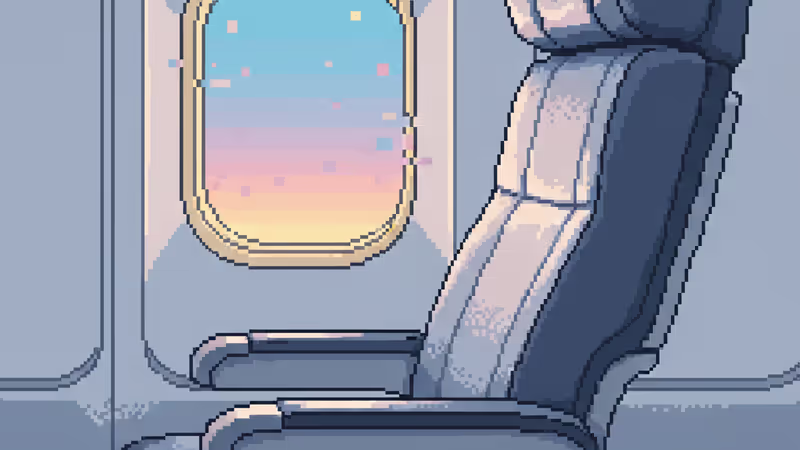
A seemingly trivial dispute over a reclined seat on a nine-hour economy flight recently went viral, igniting furious debate across social platforms. But for executives tracking global trends and consumer sentiment, this isn't just another Reddit spat. It's a stark, visceral symptom of a deeper systemic malaise in the global airline industry: the unsustainable squeeze between passenger expectations, diminishing space, and the relentless pursuit of profitability. This 'micro-aggression in the macro-economy' signals eroding customer experience, escalating in-flight tensions, and a brewing demand for disruptive innovation that could reshape the future of travel.
Why It Matters: Industry Impact, Second-Order Effects
The viral story, where a passenger's standard recline prompted an 'unfriendly giant' behind them to yell about 'invading his space,' is a canary in the coal mine for airline brand equity and operational stability. Airlines have, for decades, traded comfort for capacity, leading to a steady reduction in seat pitch. This strategy, while boosting per-flight revenue, has quantifiable second-order effects:
- Increased 'Air Rage' Incidents: From minor altercations to serious disruptions, passenger friction exacerbates flight attendant stress and increases operational costs (e.g., diversions).
- Eroding Brand Loyalty: A consistently uncomfortable experience fosters resentment, driving passengers to choose based solely on price, further commoditizing the industry.
- Regulatory Scrutiny: As public frustration mounts, calls for government intervention on minimum seat pitch or design standards become louder, threatening airlines' operational flexibility.
- Pressure on Ancillary Revenue: While 'comfort' add-ons (extra legroom seats) are profitable, they simultaneously highlight the base product's inadequacy, creating a perception of nickel-and-diming for basic human dignity.
This incident vividly illustrates the breaking point of the current economic model for air travel, where the social contract between passenger and carrier is fracturing under physical constraints.
The Analysis: Historical Context, Competitive Dynamics
The roots of this conflict trace back to deregulation in the 1970s and the subsequent rise of low-cost carriers (LCCs) that prioritized volume over luxury. This shift compelled legacy airlines to compete on price, often by reducing amenities, service, and crucially, seat pitch. Over the last three decades, average economy seat pitch has shrunk from around 35 inches to often less than 30 inches, with seat width also narrowing. This 'sardine-can' strategy reached its zenith, and now the cracks are showing.
Competitively, this creates a fascinating dynamic:
- The Race to the Bottom: Many airlines continue to maximize seat count, believing price is the ultimate differentiator.
- Premium Economy's Rise: Savvy airlines are creating 'comfort tiers' – premium economy – as a profitable middle ground, acknowledging the demand for more space without committing to full business class luxury.
- Disruptor Opportunity: The intense dissatisfaction creates a fertile ground for new airlines or even adjacent travel tech companies to differentiate by radically rethinking the cabin experience, focusing on personalized comfort, or even alternative travel modes.
The 'right to recline' debate is a proxy for the broader question: What is the acceptable baseline for comfort and personal space in a modern public transport system?
PRISM Insight: Investment Implications & Tech Trends
For investors, passenger friction is a key indicator of market opportunity. The current model is unsustainable for long-term customer satisfaction and brand value. We anticipate significant investment shifts:
- Intelligent Cabin Design: Expect R&D into modular seating, advanced materials for thinner yet more comfortable seats, and reconfigurable cabins that adapt to route demands.
- Personalized Comfort Tech: Smart seats with individual climate control, integrated noise cancellation, and even biofeedback sensors to manage stress could become standard. VR/AR for immersive entertainment could also mitigate the feeling of confinement.
- Data-Driven Passenger Management: AI-powered systems could predict and potentially de-escalate conflicts by identifying high-stress zones or individuals, or optimize seat assignments based on passenger profiles (e.g., height, recline preference).
- New Business Models: Could we see 'comfort-as-a-service' offerings, or dynamic pricing models that allow passengers to bid for extra space, or even opt into 'no-recline' zones for a slight discount?
The imperative is clear: airlines must innovate beyond merely packing more bodies. The future of air travel demands a tech-driven reimagination of the passenger experience.
PRISM's Take:
The viral reclining seat incident isn't a mere human interest story; it's a critical stress test of the global airline industry's viability and customer value proposition. The erosion of basic comfort has reached a tipping point, turning standard features into flashpoints. For airlines, the challenge is not just about managing etiquette, but about fundamentally redesigning the passenger journey to reclaim dignity and reduce friction. The solution will likely come from a blend of smarter cabin architecture, advanced personalization technologies, and a renewed focus on customer well-being as a core brand differentiator. Companies that fail to adapt, prioritizing short-term capacity gains over long-term customer satisfaction, risk not only public backlash but also significant market disruption.
관련 기사

트럼프 백악관이 '가짜 평화상'을 월드컵 트로피 크기로 요구했던 충격적인 비화. 이 사건이 현대 정치의 이미지 전략과 명예 추구에 던지는 메시지를 심층 분석합니다.
영국 86세 노인이 나뭇잎 뱉었다가 거액 벌금 부과. 상식 밖 행정이 촉발한 논란을 통해 과도한 규제, AI 감시 시대의 윤리적 딜레마를 분석합니다.

테일러 스위프트와 트래비스 켈시 커플이 스포츠와 팝 문화를 융합하며 창출하는 전례 없는 문화적, 경제적 파급력을 분석합니다. 팬덤 경제와 미래 마케팅 전략에 미치는 영향을 PRISM이 심층 조명합니다.

할리우드 거장 롭 라이너 가족의 비극은 중독 치료의 현주소를 조명합니다. 닉 라이너 사건을 통해 중독 치료의 비용, 효과성, 시스템 한계, 그리고 미래 기술의 역할을 분석합니다.