
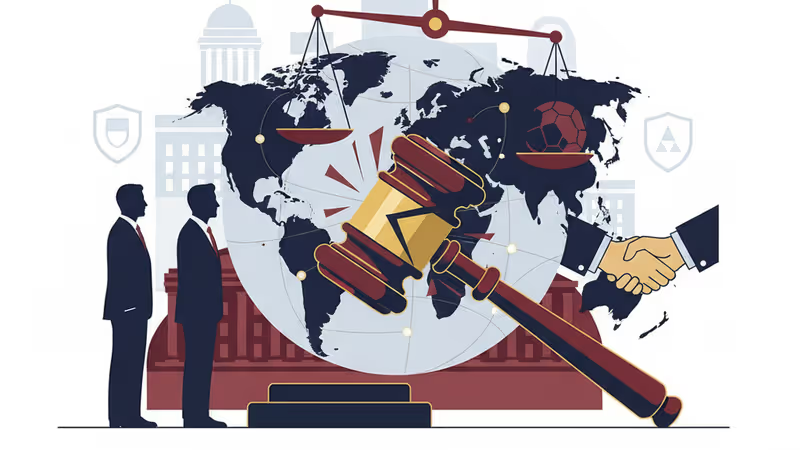
Israel's Detention Crisis: The Strategic Fallout of Prison Abuse Allegations
Beyond a human rights crisis, allegations of abuse in Israeli prisons are a strategic liability, fueling radicalization and diplomatic isolation. An analysis.
The Lede: Beyond Human Rights, A Geopolitical Flashpoint
Allegations of systematic sexual abuse and torture within Israeli prisons are escalating from a human rights crisis into a significant geopolitical liability for Israel. For global leaders and executives, this is not merely a regional legal issue; it's a potent driver of instability, radicalization, and diplomatic isolation that threatens to derail broader Middle East de-escalation efforts. The weaponization of these claims in the global information war is creating tangible strategic and economic risks that can no longer be ignored.
Why It Matters: The Second-Order Effects
The immediate horror of the allegations masks a cascade of strategic consequences that will shape the conflict for years to come. Understanding these ripple effects is critical for assessing regional risk.
- Erosion of Diplomatic Cover: Credible reports from the UN and rights groups provide ammunition for legal challenges against Israel in international forums like the ICC and ICJ. This complicates military and diplomatic support from key Western allies, who face immense domestic pressure to hold Israel accountable to international law.
- Fuel for Radicalization: Historically, prisons have been incubators for extremism. Widespread accounts of humiliation and abuse are a powerful recruitment tool for militant groups, creating a feedback loop of violence that undermines any prospect of a long-term political settlement.
- The Narrative War: In the digital age, graphic personal testimonies are more powerful than official statements. These allegations are shaping global public opinion, energizing boycott and divestment campaigns, and creating a hostile operating environment for international corporations with ties to Israel.
The Analysis: A System Under Pressure
Allegations of detainee mistreatment are not new to the Israeli-Palestinian conflict. However, the period since the October 7 attacks has seen a documented escalation in both the volume and severity of these claims, pointing to a systemic shift.
A Post-October 7 Paradigm Shift
The national trauma of October 7 created a political and social environment in Israel where a 'gloves-off' approach to security is widely tolerated. Rights groups argue this has fostered a "culture of impunity" within the prison service and military. The Israeli government's blanket denials are increasingly at odds with reports from international bodies and even internal leaks, such as the CCTV footage that prompted a high-level military resignation.
The Legal Grey Zone
The extensive use of 'administrative detention'—holding individuals indefinitely without charge or trial—is a core part of the problem. This system operates in a legal grey area that removes the oversight and accountability inherent in a normal judicial process. When combined with a heightened security imperative, it creates conditions ripe for the kind of abuse now being alleged on a widespread scale.
A Global Precedent
The situation draws unavoidable parallels to the Abu Ghraib scandal during the Iraq War. That crisis demonstrated how the actions of soldiers and guards in detention facilities could inflict more lasting strategic damage on a nation's reputation and war aims than losses on the battlefield. The world is watching to see if Israel will learn from that history or repeat it.
PRISM Insight: The Tech-Fueled Transparency War
This conflict is being fought as much on digital platforms as on the ground, and detention centers are a new front in this information war. The verification of abuse claims is a paramount challenge, pitting state secrecy against citizen-led digital forensics. Open-source intelligence (OSINT) analysts are cross-referencing survivor testimonies with leaked documents and satellite data to build cases. Simultaneously, the threat of deepfakes and manipulated media is used by all sides to discredit authentic evidence. For businesses and governments, the key takeaway is that in a hyper-connected world, no 'black site' remains dark for long. The future of accountability may lie in immutable ledger technology for evidence chains or mandated body-cam ethnography in all detention facilities—technologies that force transparency on closed systems.
PRISM's Take: A Strategic Own Goal
While Israel's security imperatives following the October 7 attacks are undeniable, the alleged adoption of systematic abuse as a tool of war is a catastrophic strategic failure. It is an approach that trades tactical information, which may be of dubious quality when extracted under duress, for long-term strategic liabilities. By allegedly abandoning established legal and moral red lines, Israel is not enhancing its security; it is actively corroding it. This policy deepens Palestinian alienation, alienates crucial global allies, and damages the moral and legal foundations of the state itself. True security cannot be built on a foundation of impunity. An immediate, transparent, and internationally credible investigation is not a concession—it is a strategic necessity for Israel's own long-term interests.
관련 기사
대만이 중국의 기습 공격에 대비해 분산형 지휘체계로 전환합니다. 우크라이나 전쟁의 교훈이 대만 해협의 지정학적 구도를 어떻게 바꾸는지 분석합니다.

미국의 시리아 IS 보복 공습은 단순한 군사 작전을 넘어, 트럼프 행정부와 시리아 신정부의 새로운 협력 관계를 알리는 지정학적 변곡점입니다.

트럼프 행정부가 브라운대 총기난사 사건을 계기로 다양성 비자 추첨 프로그램을 전격 중단했습니다. 이 결정의 지정학적 파장과 미국의 미래에 미칠 영향을 심층 분석합니다.

2025년 말, 우크라이나 전쟁은 교착 상태에 빠졌습니다. 서방의 장기 지원과 푸틴의 강경 발언 속에서 종전 협상의 핵심 쟁점과 지정학적 함의를 분석합니다.