
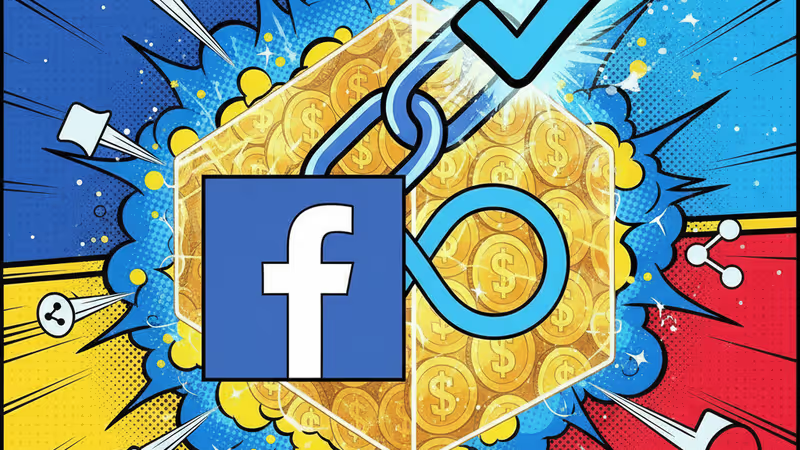
Facebook's Link Paywall: Meta Verified Reimagines Basic Sharing
Facebook is testing a paywall for sharing links, requiring a Meta Verified subscription. PRISM analyzes the impact on users, businesses, and the future of social media monetization.
The Lede: Is Your Social Share Now a Premium Feature?
Imagine a world where sharing a simple link to an article, a product, or even a personal blog post on social media comes with a price tag. Meta, the behemoth behind Facebook and Instagram, is reportedly testing exactly that. Recent reports indicate that Facebook users might be limited to just two link posts unless they subscribe to 'Meta Verified' for $14.99 a month. This isn't merely a minor policy tweak; it signals a seismic shift in how we interact with the digital commons and how businesses must strategize their online presence.
Why It Matters: The Erosion of Organic Reach and the Open Web
For decades, social media platforms have thrived on the free flow of information, with links acting as vital arteries connecting users to the broader internet. This test, if widely implemented, carries profound implications:
- For Users: It transforms a fundamental, once-free functionality into a premium perk. This could lead to significant user frustration, a diminished experience, and potentially, an exodus to platforms that still champion open sharing.
- For Businesses & Publishers: Organic reach on Facebook has been notoriously challenging for years. Limiting link posts further chokes this channel, forcing publishers and marketers into a difficult choice: pay for Meta Verified for basic functionality or increase ad spend to compensate. This directly impacts traffic generation, content distribution strategies, and ROI calculations for digital campaigns.
- For the 'Open Web': This move is another step towards the enclosure of the internet within platform silos. By disincentivizing the sharing of external links, Meta reduces Facebook's role as a discovery engine for the wider web, prioritizing native content and potentially further isolating users within its ecosystem.
The Analysis: A Gamble on Monetization Amidst 'Enshittification'
Meta's foray into paywalling basic link sharing isn't an isolated incident; it's part of a broader trend of platform monetization and a potential response to what critics like Cory Doctorow term 'enshittification'.
Historical Context & Competitive Dynamics:
- From Open to Enclosed: Facebook's evolution has seen a gradual shift from an open platform facilitating connections to a highly curated, algorithm-driven feed. Previous moves prioritized 'meaningful social interactions' – often at the expense of external link visibility.
- Meta Verified's Evolving Role: Initially launched to provide identity verification, enhanced support, and expanded reach for creators, Meta Verified is now being tested as a gatekeeper for core functionalities. This expands its utility far beyond its initial promise.
- Platform Precedents: While platforms like X (formerly Twitter) have introduced premium tiers for enhanced features (e.g., longer posts, better visibility), directly paywalling *basic sharing* is a more aggressive step. TikTok's success is largely built on native, short-form video content, naturally reducing its reliance on external links. Meta seems to be pushing Facebook further in this direction.
- The Ad Revenue Squeeze: With economic headwinds and increased competition in the digital ad space, tech giants are aggressively seeking diversified revenue streams. Subscription models offer predictable income, but the risk lies in alienating the core user base.
PRISM Insight: The Unseen Costs of Monetization
This test reveals a critical inflection point in the platform economy. The implicit social contract of 'free services in exchange for data and ad views' is rapidly eroding. The investment implications are clear: platforms are prioritizing short-term revenue diversification over long-term user goodwill and the health of the open internet. For investors, this signals Meta's aggressive stance on monetizing every possible interaction, but also highlights the increasing pressure on their core ad business. For tech trends, it underscores the ongoing tension between platform profitability and user experience, pushing the boundaries of what consumers are willing to pay for in a digital environment.
PRISM's Take: A Risky Bet on User Patience
Meta's experimental paywall for link sharing is a high-stakes gamble. While it *could* potentially reduce spam, encourage more native content, and provide a new revenue stream, the immediate backlash from users and businesses is likely to be significant. It frames a fundamental act of sharing as a luxury, fundamentally altering the utility and appeal of Facebook. For savvy executives and digital strategists, this move is a loud siren call: diversify your digital presence now. Relying heavily on any single platform, especially one increasingly willing to paywall core functionalities, is an unsustainable strategy in this evolving landscape. The future of sharing on social media might come with a fee, and understanding its true cost is paramount.
관련 기사

2019 국제 풍경 사진전은 기술과 예술의 결합, 포스트 프로덕션의 자유, AI 시대 창작자의 역할 변화를 보여주며 미래 비주얼 콘텐츠의 방향을 제시합니다.

15년간 팬심을 사로잡은 웹툰 '포트 쉐리'의 성공 비결을 분석합니다. 창작자의 심오한 콘텐츠 전략, 크리에이터 이코노미에서의 역할, 그리고 미래 콘텐츠 트렌드를 조명합니다.

미어캣의 사회적 지능과 협력 행동이 미래 기술과 디지털 콘텐츠 시장에 던지는 통찰. 바이럴 콘텐츠를 넘어선 심층 분석을 PRISM에서 만나보세요.

아만다 사이프리드가 '더 하우스메이드'에서 선보인 '역할 속 역할' 연기를 심층 분석하며, 심리 스릴러의 미래, 데이터 기반 스토리텔링, 그리고 배우의 진화하는 가치를 PRISM 관점에서 조명합니다.