
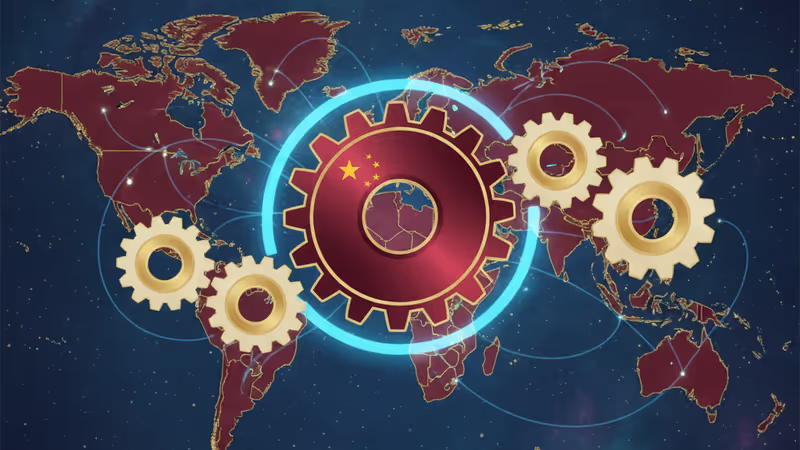
China Taps the Brakes on Steel Exports, Signaling Move to Ease Trade Friction
China is set to impose an export licensing system on steel products from January 1, a strategic move seen as an attempt to cool rising trade tensions with its new, vital export partners in the developing world.
China has announced it will implement an export licensing system for around 300 steel products starting January 1. While technical on its face, the move is being interpreted as a clear signal that Beijing is proactively trying to manage a significant source of trade friction with its crucial emerging market partners.
The policy's intent becomes clearer in the broader context of China's shifting trade landscape this year. Amid rising global protectionism, China’s export sector has shown remarkable resilience. Even as shipments to its largest market, the United States, dropped by 18.3% year-on-year in the first 11 months, China’s overall exports still managed to grow by 6.2%.
This resilience is partly due to strong performance in high-tech exports like EVs, batteries, and solar equipment. But just as critical, according to analysis from the South China Morning Post, has been a deliberate pivot to emerging markets—especially in Southeast Asia, Africa, and Latin America—where trade barriers are lower and demand is growing. These markets are increasingly vital for keeping China's export engine running.
Yet these new relationships are becoming delicate. While most developing economies haven't adopted an openly adversarial stance, trade frictions are accumulating, with steel emerging as the most visible flashpoint.
From early last year through September this year, China faced 54 trade remedy cases targeting its steel exports—more than in the previous five years combined. Last year alone saw countries like Brazil, South Africa, and Turkey impose new anti-dumping duties. This year, Vietnam and Malaysia, China's largest and third-largest trading partners among developing countries, followed suit. Mexico also recently introduced tariffs of up to 50% on steel imports from several Asian countries, including China.
본 콘텐츠는 AI가 원문 기사를 기반으로 요약 및 분석한 것입니다. 정확성을 위해 노력하지만 오류가 있을 수 있으며, 원문 확인을 권장합니다.
관련 기사
트럼프 전 대통령이 '역대 최강' 군함 건조 계획을 밝혔으나, 미 해군은 한 달 전 비용 문제로 소형 군함 계획을 폐기한 바 있어 현실성 논란이 예상됩니다.
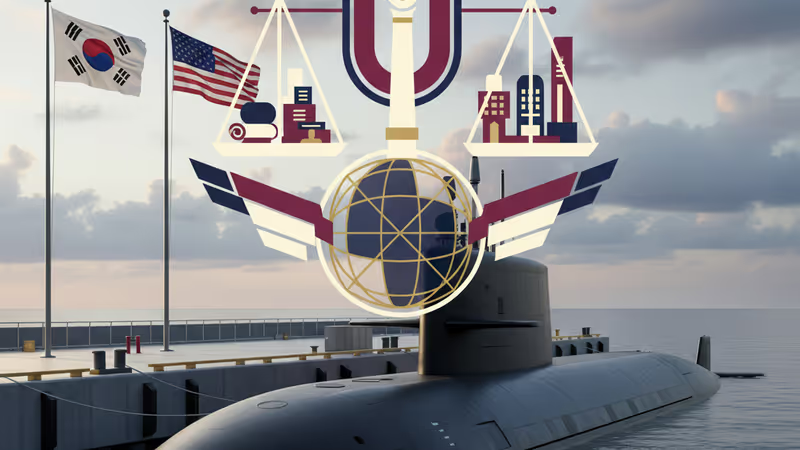
미 해군의 로스앤젤레스급 핵추진 잠수함 USS 그린빌이 12월 23일 부산항에 입항했다. 대한민국 해군은 이번 방문이 한미 연합 방위태세 강화의 계기가 될 것이라고 밝혔다.
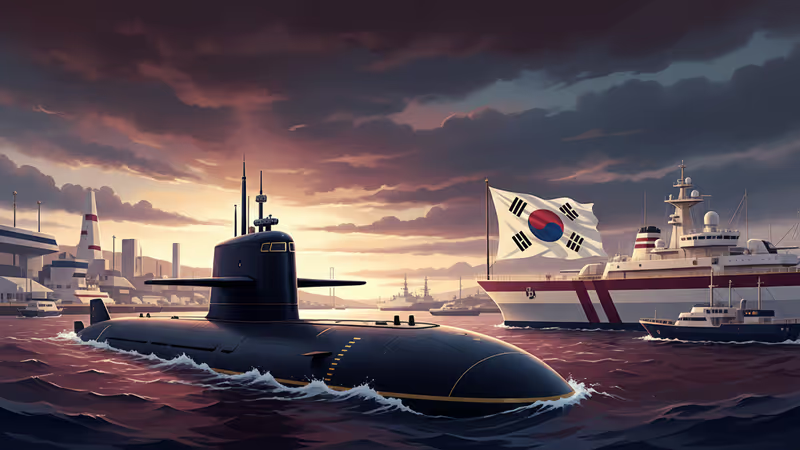
미 해군의 핵추진 공격 잠수함 USS 그린빌호가 12월 23일 부산항에 입항했다. 이재명 정부 출범 후 첫 방문으로, 한미 연합 방위태세 강화와 북한에 대한 전략적 메시지 발신이라는 의미를 갖는다.

트럼프 행정부 출범 초기 5개월 간 미국 농무부(USDA) 인력이 2만 명 감소했다는 로이터 보도를 바탕으로, 그 배경과 농업 부문에 미칠 잠재적 영향을 분석한다.