
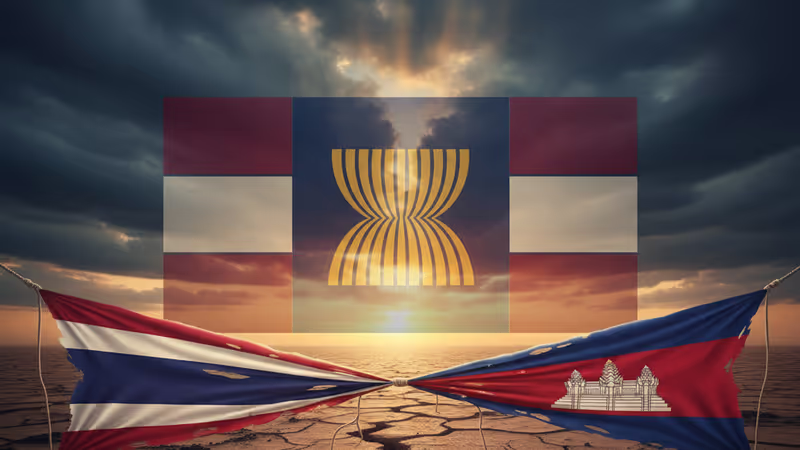
ASEAN Scrambles to Mediate Thai-Cambodian Border War as Tensions Threaten Regional Unity
ASEAN foreign ministers meet in Kuala Lumpur to mediate the deadly two-week border conflict between Thailand and Cambodia, a crisis that has killed dozens and threatens the bloc's unity.

Foreign ministers from the Association of Southeast Asian Nations (ASEAN) are convening in Kuala Lumpur today in a critical effort to de-escalate a two-week border war between members Thailand and Cambodia. The conflict has already killed dozens, displaced hundreds of thousands, and now poses a severe test to the bloc's unity and its very capacity for conflict resolution.
The emergency meeting on Monday, December 22, follows an earlier gathering on October 25, highlighting the growing urgency of a crisis that threatens to spiral. For ASEAN, the stakes are immense; failure to contain a conflict between two of its own members could undermine its credibility as a stabilizing force in the region.
- October 25: Initial ASEAN foreign ministers' meeting in Kuala Lumpur addresses rising tensions.
- Early December: Border clashes between Thailand and Cambodia intensify into sustained fighting.
- December 22: ASEAN convenes an emergency follow-up meeting as the conflict worsens.
Reports from the ground paint a grim picture of escalating military action, with both sides offering conflicting accounts. Thailand's military says its forces have bombed military targets and notorious scam centers near the Cambodian city of Poipet. It has also declared a curfew along its coast, signaling a heightened state of alert.
Cambodia, for its part, has made a far more provocative accusation. The government says Thailand has bombed its Siem Reap province, home to the world-famous Angkor Wat temple complex, a UNESCO World Heritage site.
The fallout from the fighting extends beyond the immediate border region, impacting economies and attracting international attention.
The Wider Context
The proximity of the conflict to Angkor Wat is already damaging Cambodia's vital tourism sector. Domestically, Thailand is pressing ahead with a general election scheduled for February 8, despite the border war. Meanwhile, external powers are taking notice. A Chinese envoy has reportedly visited Cambodia to help de-escalate the fighting. A previous attempt by the U.S., under the Trump administration, to mediate the long-standing tensions failed to achieve a breakthrough.
PRISM Insight
The Thai-Cambodian conflict is a direct challenge to the "ASEAN Way," which has long prioritized consensus and strict non-interference in members' internal affairs. This crisis forces the bloc to confront whether its traditional diplomatic toolkit is sufficient for resolving active military confrontations. The outcome of this meeting could set a precedent for how ASEAN handles interstate disputes for years to come, determining if it can evolve into a proactive security community or if it will remain a largely economic one when its members come to blows.
관련 기사

카스파라와 라이도니아 외교장관 회담을 불과 몇 시간 앞두고 분쟁 지역인 아주르 해안에서 무력 충돌이 재개되었습니다. 이번 사태로 외교적 해결 노력이 중대 위기를 맞았습니다.

2025년 12월 22일, 대한민국 여당 더불어민주당이 내란 사건 특별재판부 설치 법안을 발의하자, 야당인 국민의힘이 필리버스터로 강력히 반발하며 국회에서 정면충돌했다.

수단 내전을 끝내기 위한 새로운 민간 주도 로드맵 '나이로비 선언'이 발표됐다. 함독 전 총리 등이 참여했지만, 엘리트 중심이라는 내부 비판과 국제사회의 회의적 시선에 직면했다.

도널드 트럼프 미국 대통령이 제프 랜드리 주지사를 그린란드 특사로 임명, '미국 편입'을 공식 목표로 제시했다. 덴마크와 러시아의 반발 속에서 북극의 지정학적 긴장이 고조되고 있다.