
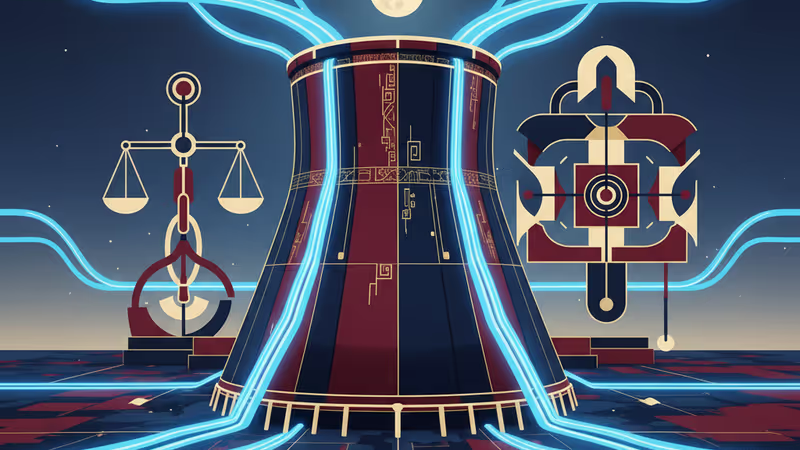
14 Years After Fukushima: World's Largest Nuclear Plant, Kashiwazaki-Kariwa, Gets Restart Approval
14 years after the Fukushima disaster, TEPCO has won local approval to restart a reactor at the world's largest nuclear plant, Kashiwazaki-Kariwa. It's a major turning point for Japan's energy policy.
Japan's nuclear ambitions are flickering back to life. On December 23, 2025, Tokyo Electric Power Company (TEPCO) announced it received formal consent from the governor of Niigata Prefecture to restart Unit 6 of its Kashiwazaki-Kariwa nuclear power plant—the largest in the world. This marks the first time a nuclear plant operated by TEPCO, the company behind the 2011Fukushima disaster, has won local approval to bring a reactor back online.
A Decision After a Long Silence
The governor's consent, delivered on the afternoon of December 23rd, ends a 14-year hiatus for the massive plant, which has been entirely idle since the 2011 catastrophe. The decision follows years of rigorous safety reviews, infrastructure upgrades, and protracted negotiations with the local community. The Japanese government and TEPCO have argued that the restart is essential for strengthening the country's energy security and stabilizing electricity prices.
An Anxious Return Amid Controversy
However, the path to reactivation is fraught with public anxiety. Opposition from local residents and civic groups remains fierce, rooted in a deep-seated distrust of TEPCO due to its role in the Fukushima disaster. Ongoing safety concerns at other Japanese nuclear facilities, such as a recent tritium-laced water leak at the Fugen reactor, only fuel the skepticism. While the business community welcomes the prospect of a stable power supply, opponents point to seismic risks and the unsolved problem of spent nuclear fuel, demanding the decision be reversed.
본 콘텐츠는 AI가 원문 기사를 기반으로 요약 및 분석한 것입니다. 정확성을 위해 노력하지만 오류가 있을 수 있으며, 원문 확인을 권장합니다.
관련 기사

2026년 미네소타 주지사 선거에서 공화당이 3선에 도전하는 팀 월즈 주지사를 꺾을 기회를 맞았으나, 도널드 트럼프의 분열적 언사와 마이크 린델의 출마 가능성이 변수로 작용하고 있다.

대영제국은 사라졌지만 그 유산은 21세기 지정학과 문화에 여전히 깊은 영향을 미치고 있다. '파도를 지배하라'는 구호의 현대적 의미를 분석한다.
브라질이 2026년 초를 목표로 중국인 관광객 및 기업인 대상 비자 면제를 추진한다. 최대 교역국인 중국과의 관계를 심화하려는 전략적 움직임으로 풀이된다.

알제리 의회가 프랑스의 132년간의 식민지배를 '범죄'로 규정하는 법안을 만장일치로 통과시켰다. 법안은 공식 사과와 배상을 요구하며, 악화된 양국 관계에 새로운 긴장을 더하고 있다.
2026년 미네소타 주지사 선거에서 공화당이 3선에 도전하는 팀 월즈 주지사를 꺾을 기회를 맞았으나, 도널드 트럼프의 분열적 언사와 마이크 린델의 출마 가능성이 변수로 작용하고 있다.
대영제국은 사라졌지만 그 유산은 21세기 지정학과 문화에 여전히 깊은 영향을 미치고 있다. '파도를 지배하라'는 구호의 현대적 의미를 분석한다.
브라질이 2026년 초를 목표로 중국인 관광객 및 기업인 대상 비자 면제를 추진한다. 최대 교역국인 중국과의 관계를 심화하려는 전략적 움직임으로 풀이된다.
알제리 의회가 프랑스의 132년간의 식민지배를 '범죄'로 규정하는 법안을 만장일치로 통과시켰다. 법안은 공식 사과와 배상을 요구하며, 악화된 양국 관계에 새로운 긴장을 더하고 있다.