
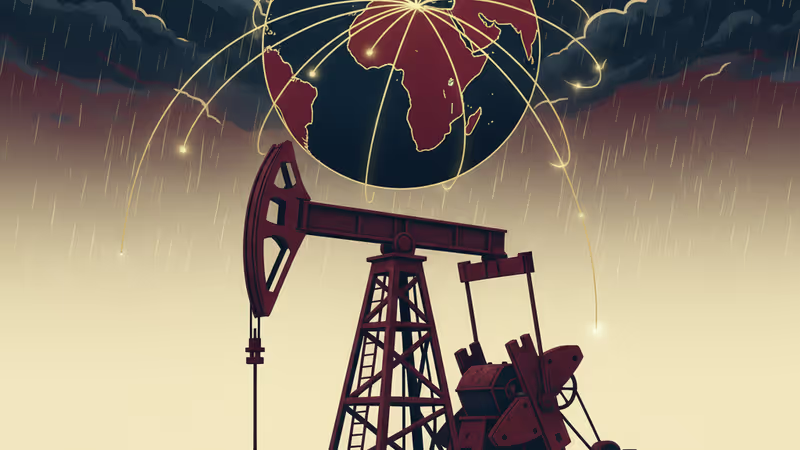
Venezuela Has the World's Largest Oil Reserves. Why Won't U.S. Companies Go Back?
Despite pressure from the Trump administration, U.S. oil giants are reluctant to return to Venezuela, home to the world's largest oil reserves. We analyze the reasons, from political risk to crumbling infrastructure.
Why would America's oil giants turn their backs on the world's largest crude reserves? Despite the Trump administration's intensifying pressure on Venezuela's President Nicolas Maduro and its calls for U.S. companies to return, the industry isn't interested. Currently, Chevron is the only major U.S. oil company still operating in the country.
According to Politico, some American oil companies have already told President Trump they have no plans to re-invest, even if a regime change occurs. This hesitation is rooted in a painful history where firms like ConocoPhillips and ExxonMobil saw their assets expropriated and were forced out.
A Mountain of Above-Ground Risk
The primary deterrent for these companies is profound unpredictability. Scott Modell, CEO of the energy consulting firm Rapidan, told NPR that stabilizing the 'above-ground political risk' in Venezuela will take years, and companies aren't going to rush back in. The analysis suggests that even if Maduro falls, the entire ecosystem—courts, regulators, and state-owned oil institutions—will need a lengthy overhaul to become reliable and predictable.
Crumbling Infrastructure and a Broken Economy
Beyond politics, the physical and economic barriers are immense. Venezuela's oil infrastructure is in a state of severe decay. Wells and pipelines are corroded, and blending facilities need urgent repairs. Frequent power grid failures regularly shut down oil operations. Modell notes that companies would have to worry about basics like reliable water and power.
The country's shattered economy further dampens any investment appeal. Hyperinflation, an exodus of the prime working-age population, and rampant government corruption make it nearly impossible for a company to rationally justify a multi-billion dollar investment in an environment where the basic rule of law is absent.
Better Bets, Like Guyana
Crucially, oil majors have safer, more attractive places to invest their capital. The massive offshore discoveries in neighboring Guyana present a prime example. No matter how much the Trump administration incentivizes a return, global energy giants are now pickier with their projects. By all current measures, Venezuela doesn't make the cut.
本コンテンツはAIが原文記事を基に要約・分析したものです。正確性に努めていますが、誤りがある可能性があります。原文の確認をお勧めします。
関連記事

ナイジェリア北東部ボルノ州の州都マイドゥグリのモスクで爆発が発生。夕方の礼拝中を狙った攻撃で、少なくとも7人が死亡したと報じられている。過激派組織ボコ・ハラムの活動地域で緊張が高まっています。
米司法省は、ジェフリー・エプスタイン事件に関連する可能性のある100万件以上の追加文書を発見したと発表しました。透明化法に基づき、被害者保護のための編集作業を経て数週間以内に公開される見込みです。

2025年、パキスタンはインドとの軍事衝突を機に国際舞台へ復帰。米国との関係改善や中東での影響力を拡大したが、国内では経済的苦境と政治的対立が続いている。その光と影を分析する。

フランスとの関係が改善する一方、日本との関係が悪化する中国。その背景を「パンダ外交」から読み解く。実はこの外交術、共産党ではなく蔣介石が1941年に始めたものだった。
ナイジェリア北東部ボルノ州の州都マイドゥグリのモスクで爆発が発生。夕方の礼拝中を狙った攻撃で、少なくとも7人が死亡したと報じられている。過激派組織ボコ・ハラムの活動地域で緊張が高まっています。
米司法省は、ジェフリー・エプスタイン事件に関連する可能性のある100万件以上の追加文書を発見したと発表しました。透明化法に基づき、被害者保護のための編集作業を経て数週間以内に公開される見込みです。
2025年、パキスタンはインドとの軍事衝突を機に国際舞台へ復帰。米国との関係改善や中東での影響力を拡大したが、国内では経済的苦境と政治的対立が続いている。その光と影を分析する。
フランスとの関係が改善する一方、日本との関係が悪化する中国。その背景を「パンダ外交」から読み解く。実はこの外交術、共産党ではなく蔣介石が1941年に始めたものだった。