
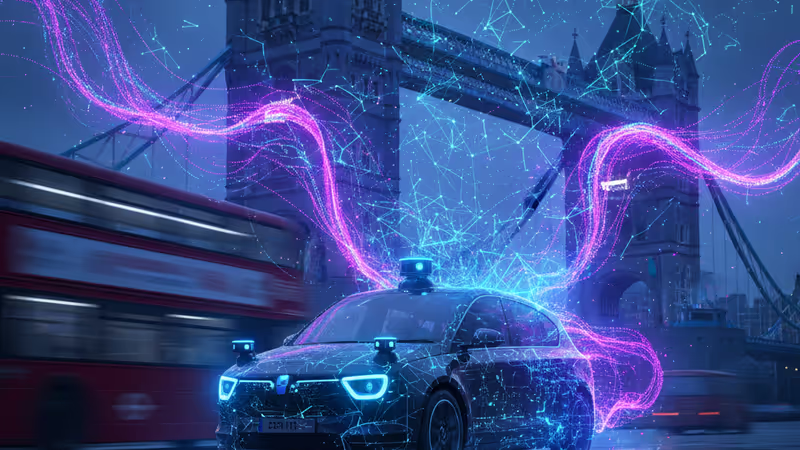
London's 2026 Robotaxi Race Heats Up: Uber and Lyft to Deploy Baidu's Self-Driving Cars
Uber and Lyft are bringing Baidu's Apollo Go robotaxis to London in 2026, joining Waymo and Wayve in a heated race to dominate the city's autonomous vehicle market.
London is shaping up to be the next major battleground for autonomous vehicles. Ride-hailing giants Uber and Lyft both confirmed they will begin testing Baidu's Apollo Go robotaxis in the city in 2026, joining an increasingly crowded field that already includes Waymo and local startup Wayve. The move signals that the race for self-driving dominance is shifting from Silicon Valley test tracks to the complex streets of a global megacity.
In a post on X, Lyft CEO David Risher stated his company will launch its test program as soon as it secures local regulatory approval. He noted that Lyft "plans to scale to hundreds" of Baidu's all-electric RT6 SUVs, though he didn't provide a timeline for a full commercial launch. Uber, confirming its own deal with Baidu first announced in July, said it expects to begin testing there in the first half of 2026.
• **Incumbents:** Waymo (Google/Alphabet), Wayve (UK-based startup) • **New Challengers:** Uber (with Baidu), Lyft (with Baidu) • **Key Vehicle:** Baidu's RT6 electric SUV
These twin rollouts aren't isolated events; they're the latest in a clear strategic pivot across the industry. Instead of burning billions to develop their own AV tech from scratch, Uber and Lyft are acting as aggregators, striking deals with specialists like Baidu and Waymo to stand up operations in cities around the world. For these companies, the path to profitability isn't owning the car—it's owning the customer relationship on the app.
本コンテンツはAIが原文記事を基に要約・分析したものです。正確性に努めていますが、誤りがある可能性があります。原文の確認をお勧めします。
関連記事

Uberのサブスク解約問題に米国20州以上がFTC訴訟へ参加。テック業界に蔓延する「ダークパターン」の実態と、消費者・企業が取るべき対策を専門家が徹底分析。
Uber Oneの「解約させない」手口にFTCと24州が提訴。これは単なる一社の問題ではない。サブスク経済に潜むダークパターンの本質と、企業・消費者が取るべき対策を専門家が分析。
Uber Oneの「解約させない」手口にFTCと24州が提訴。これは単なる一社の問題ではない。サブスク経済に潜むダークパターンの本質と、企業・消費者が取るべき対策を専門家が分析。
アスクル、ハウステンボス、アサヒなど日本の主要企業がサイバー攻撃を受け、合計200万件超の個人情報流出と2割以上の売上減という深刻な被害が判明。日本のセキュリティ体制の脆弱性が浮き彫りになっています。